Spinning, Conventional and Electric, The Reels That Fish the Red Sea
Almost everything caught on this coast is caught on one of three reels. A spinning reel does most of the work, a conventional reel takes over when the fish or the depth gets serious, and an electric reel has quietly become standard on the deep drops. What each one actually is, how it works, and which job it belongs to.
Reels are where most people get stuck. The rod makes sense, the line makes sense, and then there is a wall of reels that all appear to do the same thing at prices ranging from a nice dinner to a used car. On this coast it is simpler than a tackle shop makes it look. Almost everything caught in the Egyptian Red Sea, from a needlefish off a harbour wall to a dogtooth tuna on an offshore pinnacle, is caught on one of three reels.
A spinning reel does most of the work. A conventional reel takes over when the depth, the fish or the drag pressure gets serious. An electric reel has quietly become normal on the deep drops. What follows is what each one is, how it works, and which job on this sea it belongs to.
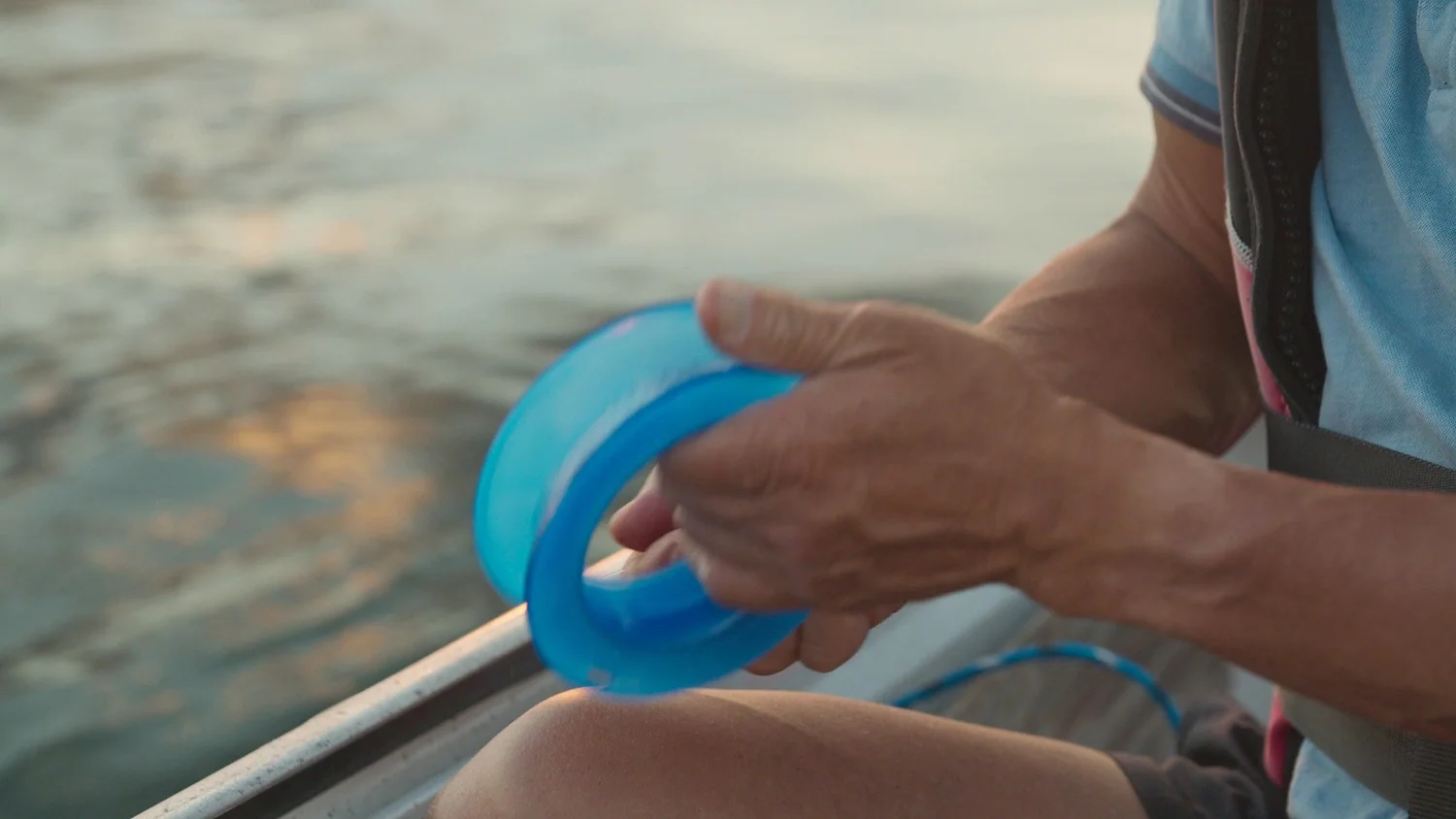
There is a fourth answer, and it is the oldest one here. Plenty of Egyptian fishermen still work a plastic hand spool with no rod, no drag and the line running over a bare finger, and they catch more than most of us do. Worth remembering before anyone gets too attached to hardware.
Spinning reels
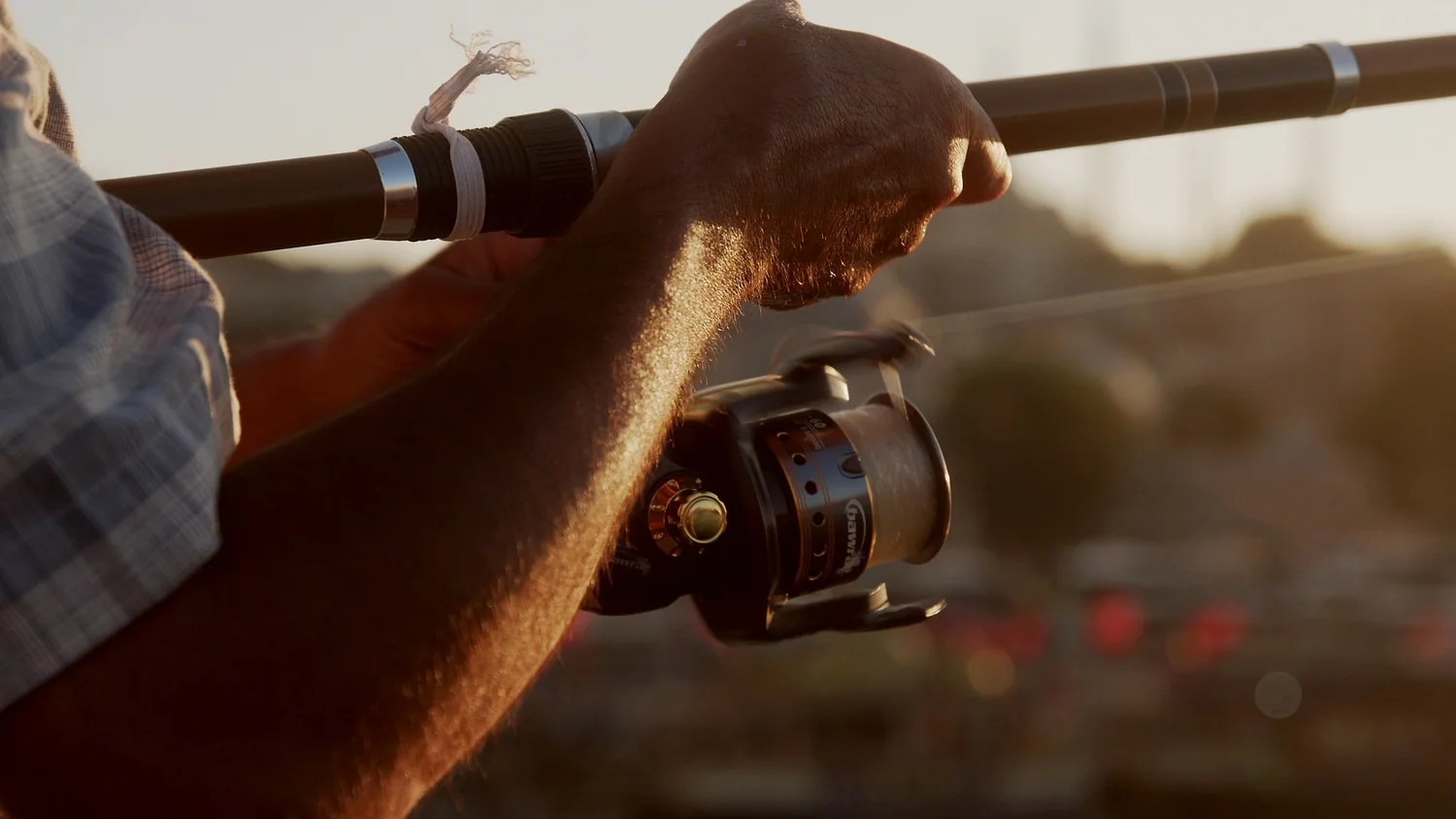
A spinning reel hangs underneath the rod, and its spool does not turn. That one decision explains almost everything else about it. The spool sits fixed and facing forward, so when you cast, the line simply peels off the front lip in coils. Nothing has to spin up and nothing has to slow down. On the retrieve a rotor swings around the outside of the spool and lays the line back on, and the drag is a stack of washers under the knob on top, adjustable by hand mid-fight.
It is the most common reel on the Red Sea for a straightforward reason: almost nothing can go wrong when you cast one. Open the bail, cast, close the bail. There is no overrun to manage and no expensive tangle when a lure stalls in the afternoon wind. A beginner is casting usefully within ten minutes, and the same reel handles a light lure off a breakwater in the morning and a metal jig over a drop-off in the afternoon.
The limitations come from the same place. Because the rotor wraps line around a spool that is not turning, every retrieve adds a little twist. A lure that spins or a fish that rolls on the drag accelerates it, twist becomes a wind knot, and a wind knot fails under load. Swivels and good line management slow it down, but the tendency is built in.
The second limitation is lifting power. The gears drive a rotor around the spool rather than the spool itself, so there is a ceiling on the sustained pressure you can put through the handle, and heat is the practical limit rather than the drag figure on the box. Holding a fish out of coral is harder, because there is no spool to thumb and no instant way to add pressure.
On the Red Sea a spinning reel covers more ground than anything else. Shore casting off breakwaters, marina channels and beach drop-offs from Hurghada down to Marsa Alam, where barracuda, needlefish, queenfish and small trevally sit within a cast of the edge. Casting lures from a boat along reef walls. Popping and stickbaiting for trevally, which is its clearest win, since a large reel and a long rod are the only practical way to throw a heavy surface lure a hundred times in a session. And jigging, dropping a metal jig down a pinnacle for amberjack, dogtooth tuna, snapper and grouper, where a fast retrieve matters more than raw lifting power.
That range explains something visitors find surprising. Plenty of good anglers here fish their whole lives on spinning gear and never feel short of anything. Most Red Sea fishing happens within reach of a cast or a jig drop, from boats between six and twelve metres, over structure in ten to eighty metres of water. If your fishing is lure work along the reef and the occasional deeper drop, one well-chosen spinning setup is not a compromise, it is the correct tool.
Conventional reels
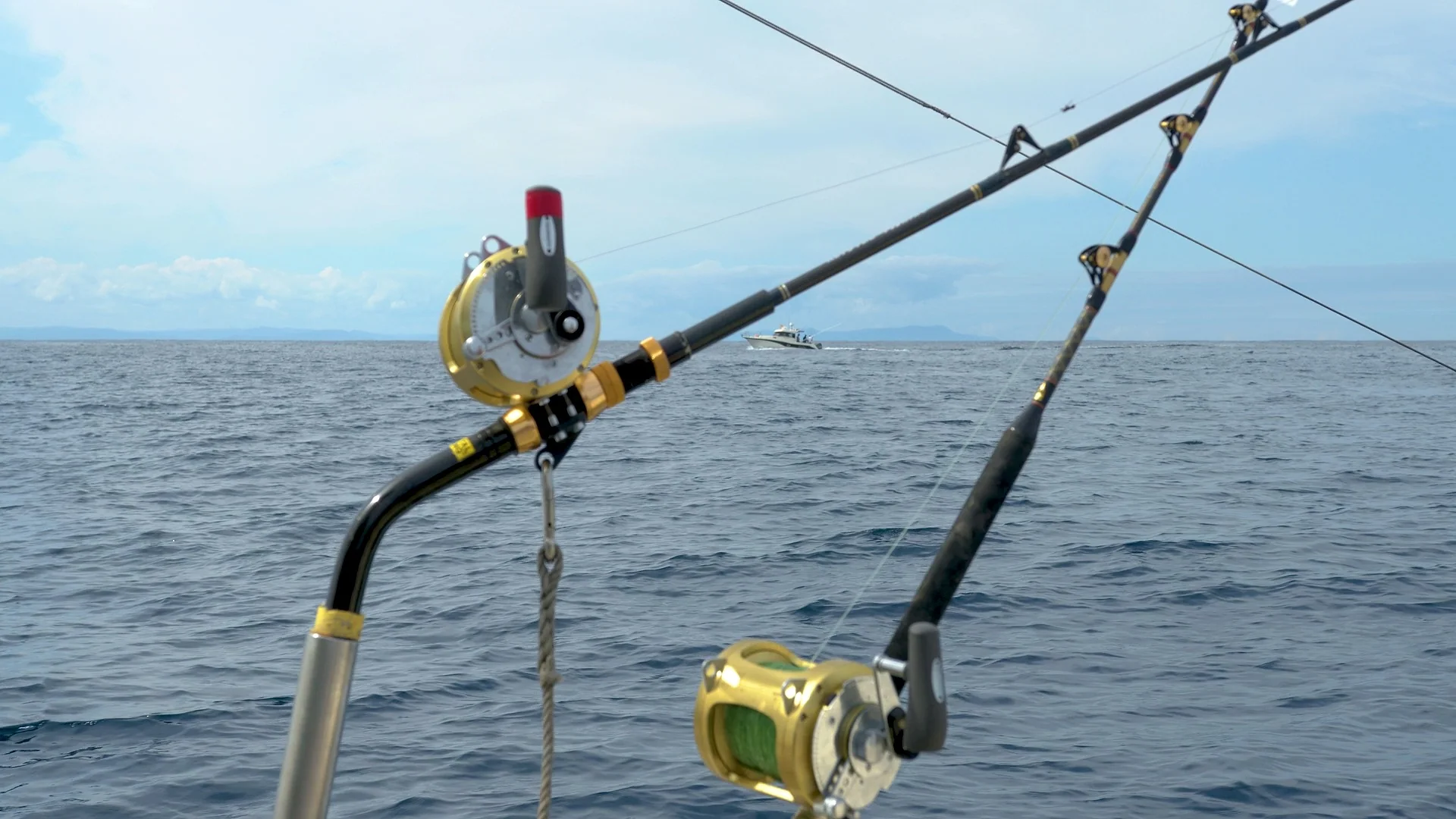
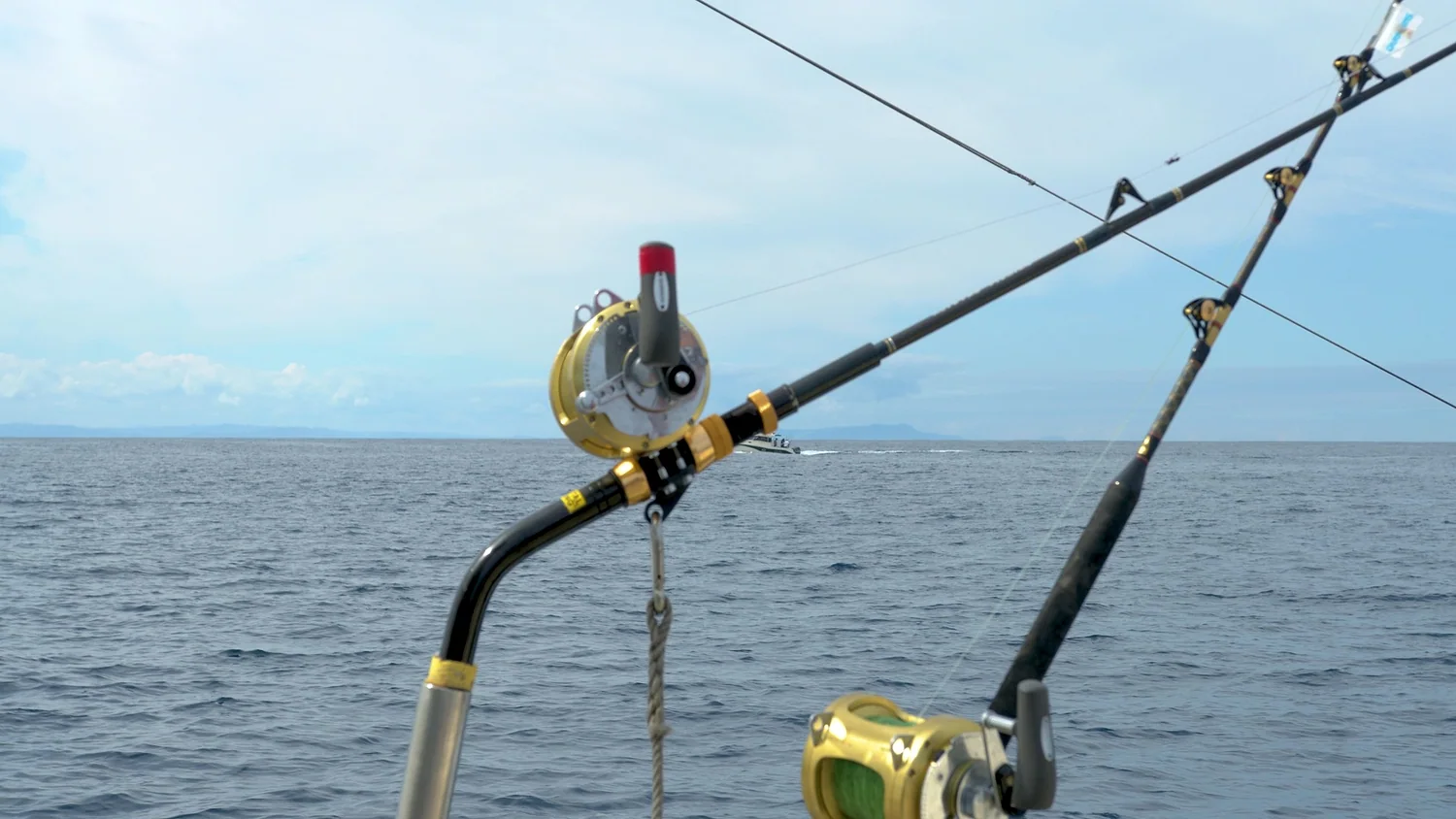
A conventional reel, also called an overhead or a multiplier, sits on top of the rod and in line with it, and the spool turns. It turns when a fish takes line and it turns when you crank. The line runs straight off the top of the spool and out through the guides without ever being wrapped around anything.
There are two families. A star drag reel sets pressure with a star wheel behind the handle and drops the bait with a free spool lever. A lever drag reel puts everything on one lever moving between free spool, a preset strike position and full, so you set the drag before the trip and know exactly where the reel is during the fight. Heavier models add a second, lower gear, and dropping into it to lift a big fish is the difference between a slow gain and no gain at all.
The differences follow directly from the spool turning. Line goes on and comes off straight, so there is no built-in twist. The gears drive the spool itself, in line with the frame, so for a given size the reel lifts more and keeps lifting, and the larger drag stack runs cooler and holds its setting through a long fight. You can thumb the spool, which gives complete control of a bait going down and an instant way to stop a fish heading for coral. And because the reel sits above the rod, the pull works with the rod and your body, which is what makes fighting from a belt or harness practical.
The cost is casting. The spool has to spin up with the lure and slow down with it, and when the lure hits the water or stalls in the wind the spool keeps going. That is a backlash. Casting one well is a learned skill, and learning it in an afternoon northerly is an expensive way to spend a day. They are poor with light lures, and they are not the reel you take for a walk along a breakwater.
Where they dominate is anything that pulls hard, sits deep, or runs on a set drag for hours. Trolling is the obvious one and close to universal here: a lever drag reel in a rod holder, drag set once at strike, waiting for a king mackerel along a reef edge or for tuna, dorado and sailfish further out. Everything about trolling suits a lever drag, because the fish hooks itself against a number you chose in advance.
Bottom fishing is the other place the difference shows. Dropping bait to structure in forty to a hundred and twenty metres for grouper, snapper and emperor is a game of stopping a fish in the first few seconds, before it gets back into the reef. A thumb on the spool and a direct crank win that exchange more often than a spinning reel does, which is the honest reason most people who fish the bottom here end up with an overhead. From there it extends into deep dropping and heavy offshore work.
Electric reels
An electric reel is a conventional reel with a motor and gearbox built into the frame, powered from the boat's twelve volt system or a portable lithium pack. The drag is still mechanical and the fight can still be yours. What the motor does is retrieve at a speed you set, and what the digital counter does is tell you exactly how much line is out. Most models let you programme a stop, so the rig comes up and holds at a chosen depth on its own.
They have become common here because of the shape of the coast. The Egyptian Red Sea drops away quickly, and within a short run of some reefs there is several hundred metres of water underneath the boat. There is a fishery down there, deep snappers and groupers and the occasional deep-water oddity, and it was largely out of reach until small boats started carrying the batteries and the gear to work it.
Deep dropping is where it earns its place. A typical drop is a multi-hook rig with half a kilo to a kilo and a half of lead, sent down two hundred metres or more. By hand that is several minutes of cranking per drop before you have caught anything, and you may need fifteen drops to find the fish. The counter matters as much as the motor, since deep fish sit in narrow bands and returning to the exact depth is the difference between a pattern and a guess.
As a rough guide, an electric reel is unnecessary above sixty or eighty metres, where it mostly removes the part you came for. Past about a hundred and twenty metres it is a genuine convenience. Past two hundred, on repeated drops, it is close to a requirement for anyone who wants to fish the depth properly. It also opens deep fishing to anglers who cannot crank a heavy rig up all day, which is a fair point that rarely gets made.
The criticisms are worth taking seriously. The first is a matter of taste: a motor doing the work is not everyone's idea of fishing, and nobody has to pretend otherwise. The second is not. Deep slope species are long-lived, slow to mature and held in small local populations, and they do not come back quickly once a spot has been worked hard. Barotrauma means a fish brought up from two hundred metres almost never survives release, so catch and release does not exist at that depth. An electric reel does not create that problem, but it removes the physical limit that used to keep the numbers small, which puts the limit back on the angler.
The practical objections are smaller. They are expensive and heavy, they depend on a battery, and salt and heat are hard on electronics, so the sensible ones can still be cranked by hand when the motor gives up a long way from shore.
Which reel for which type of fishing
| The fishing | The reel |
|---|---|
| Shore casting, breakwaters and beaches | Spinning |
| Casting lures from a boat along the reef | Spinning |
| Popping and stickbaits for trevally | Spinning, large size |
| Jigging pinnacles and drop-offs | Spinning or conventional jigging reel |
| Bottom fishing over reef, 40 to 120m | Conventional |
| Trolling for king mackerel, tuna, sailfish | Conventional lever drag |
| Deep dropping past 150m | Electric |
| One setup that does almost everything | Spinning |
The practical version is short. If you are casting lures, jigging, fishing from shore, or you want one setup that handles most of what this coast offers, a spinning reel is where you start, and for many anglers it is where they stop. If your fishing is trolling offshore, working the bottom over reef, or chasing large pelagic fish that need sustained pressure, a conventional reel stops being optional. Past a hundred and fifty metres an electric is the tool for the job, and the restraint has to come from you.
Two things matter more than the choice and get a fraction of the attention. The first is what you tie to the end of it, since line rating, leader, knots and hooks account for most of the fish lost on this coast. The second is maintenance. The Red Sea is hot and unusually salty, around forty parts per thousand against a global average nearer thirty five, and gear ages faster here than the same gear anywhere else. Rinse with fresh water at low pressure, never blast a hose into the drag, dry it out of the sun, and a mid-priced reel will outlive an expensive one that lives in a wet bag.
Final thoughts
Most experienced Red Sea anglers end up owning both, and almost none bought both at once. The usual sequence is a mid-size spinning reel that does everything, a heavier spinning setup once popping or jigging takes hold, a conventional reel the first season trolling becomes serious, and an electric only if deep dropping becomes a habit. Each one arrives because the fishing asked for it, which is the right order.
The question is never which reel is better. A spinning reel and a lever drag are answers to different problems, and both live on the same boat because this sea sets both problems, often on the same day. Understand what each one is doing mechanically and the choice stops being a matter of opinion.
Buy the reel that matches the fishing you actually do, not the fishing you imagine. Then look after it, learn your knots, and set your drag with intent rather than by feel. And on anything deep, decide what you are keeping before the rig goes down, because at three hundred metres that decision has already been made for you by the time the fish reaches the surface.
A spinning reel's spool stays still and the line peels off the front. A conventional reel's spool turns in both directions. Every other difference follows from that.
Nothing spins up on the cast, so a spinning reel cannot overrun. That is why it is the first reel almost everyone learns on.
A spinning rotor adds a little twist on every retrieve. Left alone it becomes a wind knot, and wind knots break under load.
The gears drive the spool directly and in line with the frame, so sustained pressure and depth control are far easier. That is what keeps a fish out of the coral.
Set the strike position before you start and the fish hooks itself against a known drag figure while the rod sits in the holder.
Unnecessary above 60 to 80m, useful past 120m, close to essential past 200m on repeated drops. The depth counter matters as much as the motor.
Barotrauma from a few hundred metres is almost always fatal. Anything you bring up from that depth is a fish you chose to kill, so choose before you drop.
The Red Sea runs around 40 parts per thousand salinity. Rinse at low pressure, keep water out of the drag, dry in the shade.
Leave a comment
Keep reading, and open the whole Atlas.
A free account unlocks every dive site guide and map, the marine life library, member reports, and the full incident log. Free to join.
Join free to keep reading