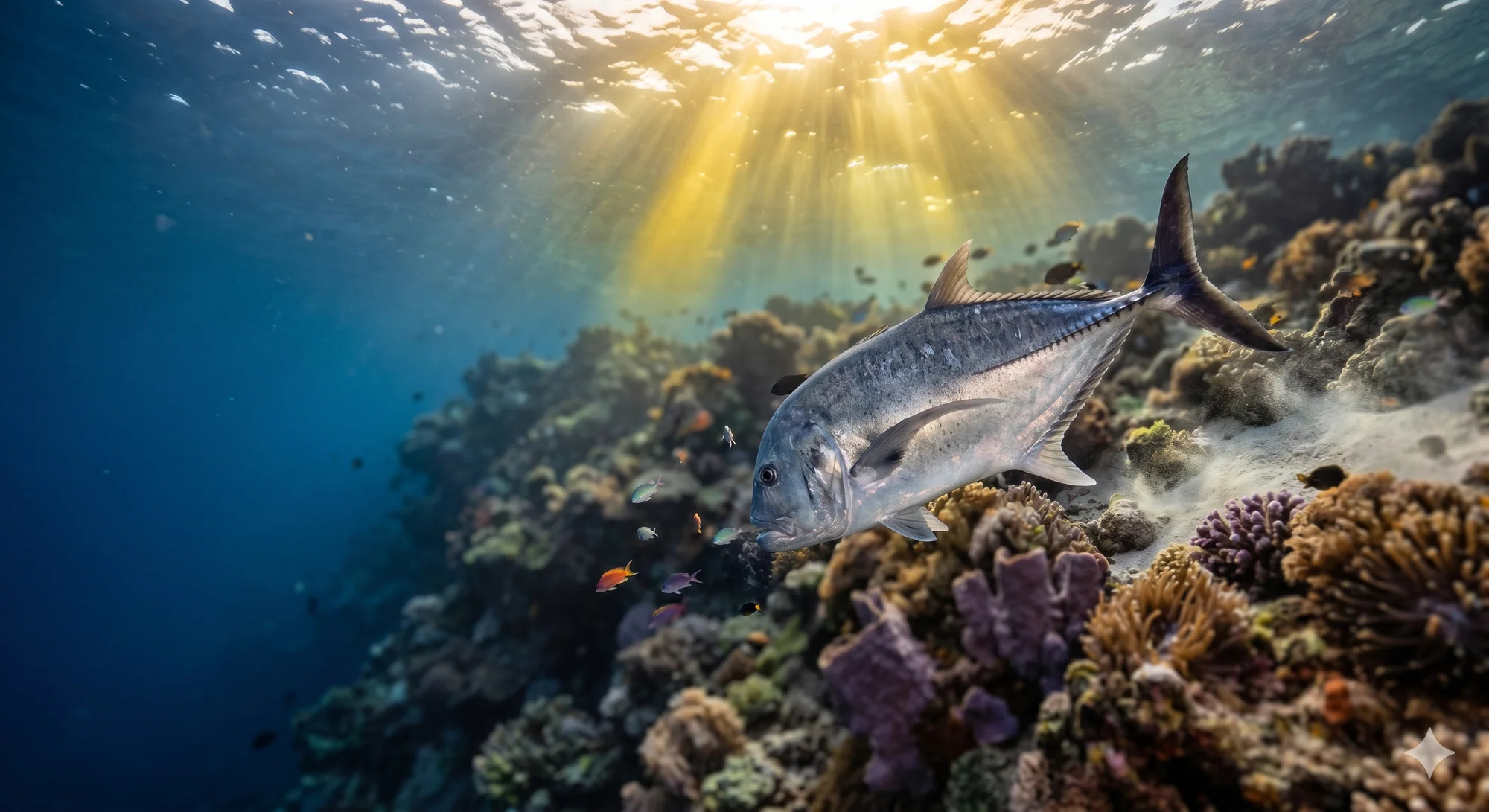
Caranx ignobilis
Giant Trevally
The apex predator of the reef system: aggressive, intelligent, and capable of destroying tackle that should have held. Year-round on outer reef walls.
The giant trevally is the largest member of the trevally family and one of the apex predators of the Indo-Pacific reef system. Adults exceed 80 kilograms and reach 170 centimetres. They are silver or dark grey with a characteristic steep forehead profile and a deeply forked tail adapted for bursts of speed. Unlike the pelagic tunas and billfish, the GT is a reef-associated species, patrolling the outer reef edge, ambushing from coral structure, and hunting in relatively defined territories.
The giant trevally is encountered by both divers and fishermen in the Red Sea, and both groups tend to form strong opinions about the species. Divers see them hunting the surface during the daylight push of baitfish, the spectacular GT attack on seabirds has been filmed in the Maldives and is documented in the Red Sea, and hunting cooperatively along the reef edge at dawn and dusk. Anglers see them destroy well-made terminal tackle, cut leaders on coral, and run until the drag smokes.
In the Red Sea, giant trevally are present year-round but most active and catchable from May through September. They are found on outer reef walls, in channels between reefs, and on the edges of offshore structures. The Straits of Tiran and the outer reef systems around Hurghada are productive areas.
The giant trevally is an ambush predator with documented intelligence. The behaviour of GT attacking seabirds, taking terns and small boobies at the surface by monitoring the birds' diving behaviour and intercepting them from below, is one of the most remarkable predation strategies in fish biology and demonstrates a capacity for learned and targeted behaviour that most people do not associate with fish.
On reef edges, GT patrol at dawn and dusk, hunting the natural corridors through which baitfish move between deeper water and reef-feeding areas. This timing creates specific, predictable windows for surface fishing with poppers, lures that produce surface disturbance and that GT will attack from well below the surface, often launching entirely clear of the water on the strike. The physics of a 15-kilogram fish accelerating from 10 metres to strike a surface lure is responsible for the cracked rods, failed knots, and overrun reels that define GT fishing.
When hooked, a GT makes immediately for the reef structure and attempts to cut the leader on coral. Staying out of the coral on the initial run is the entire game.
Giant trevally are classified Least Concern globally, but like many large reef predators they are sensitive to local depletion. As apex predators, they maintain reef health by controlling populations of smaller reef fish, and their removal from heavily fished areas has cascading effects on reef ecosystems.
In the Red Sea, GT populations are generally healthy at less-accessed offshore sites and less healthy near populated areas with significant artisanal fishing pressure.
Atlas Position
The giant trevally is the reason serious anglers come to the Red Sea with heavy popping gear. The fish, the fight, the reef edge at dawn, it is one of those species that creates a specific, repeatable experience that no other species replicates. Popping for GT on a productive reef edge is as good as it gets in Red Sea sport fishing.
Sign in to share a sighting, behaviour note, or encounter.
No verified sightings yet. Be the first Atlas member to log an encounter.
Keep reading, and open the whole Atlas.
A free account unlocks every dive site guide and map, the marine life library, member reports, and the full incident log. Free to join.
Join free to keep reading