Ras
Hankorab
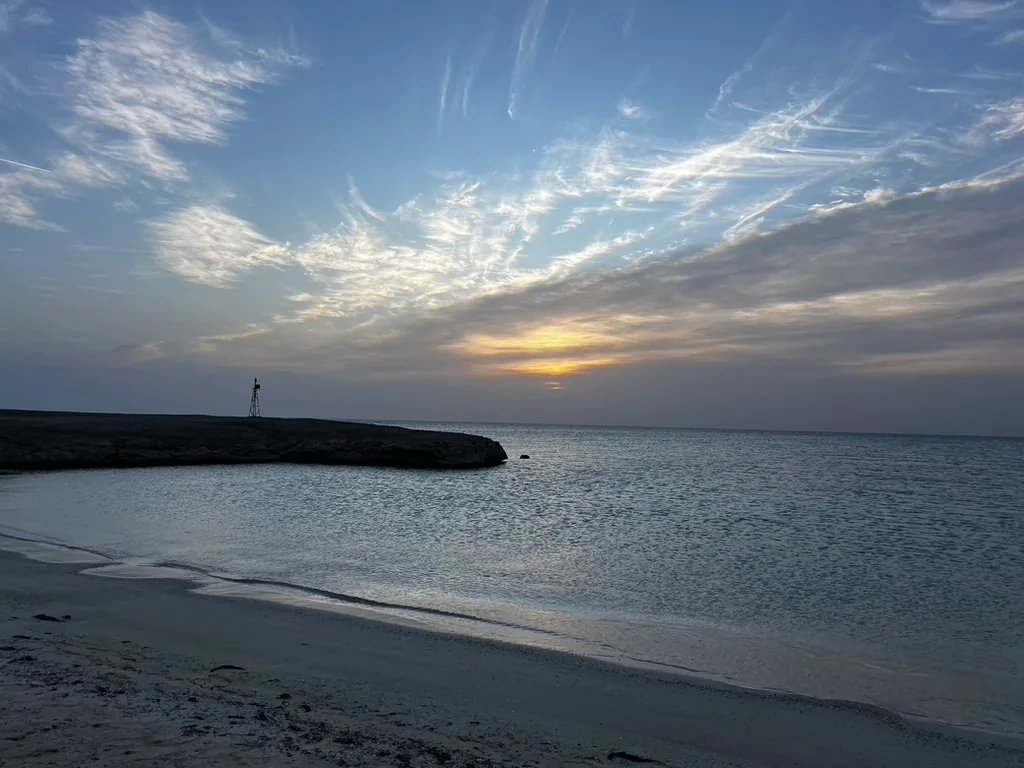
One of the most intact beaches on the African continent, 2.5 kilometres of white sand inside a protected national park, 56 kilometres south of Marsa Alam.
Protected, raw and worth the drive
Ras Hankorab, also known as Sharm El Luli, is a bay on the southern Red Sea coast, 56 kilometres south of Marsa Alam inside Wadi El Gemal National Park. The road is unpaved but sedan cars can make it in dry conditions. Most people reach it in about 45 minutes from Marsa Alam. Liveaboard vessels also stop here on the southern route, and it is a standard overnight anchorage for the deep south circuit.
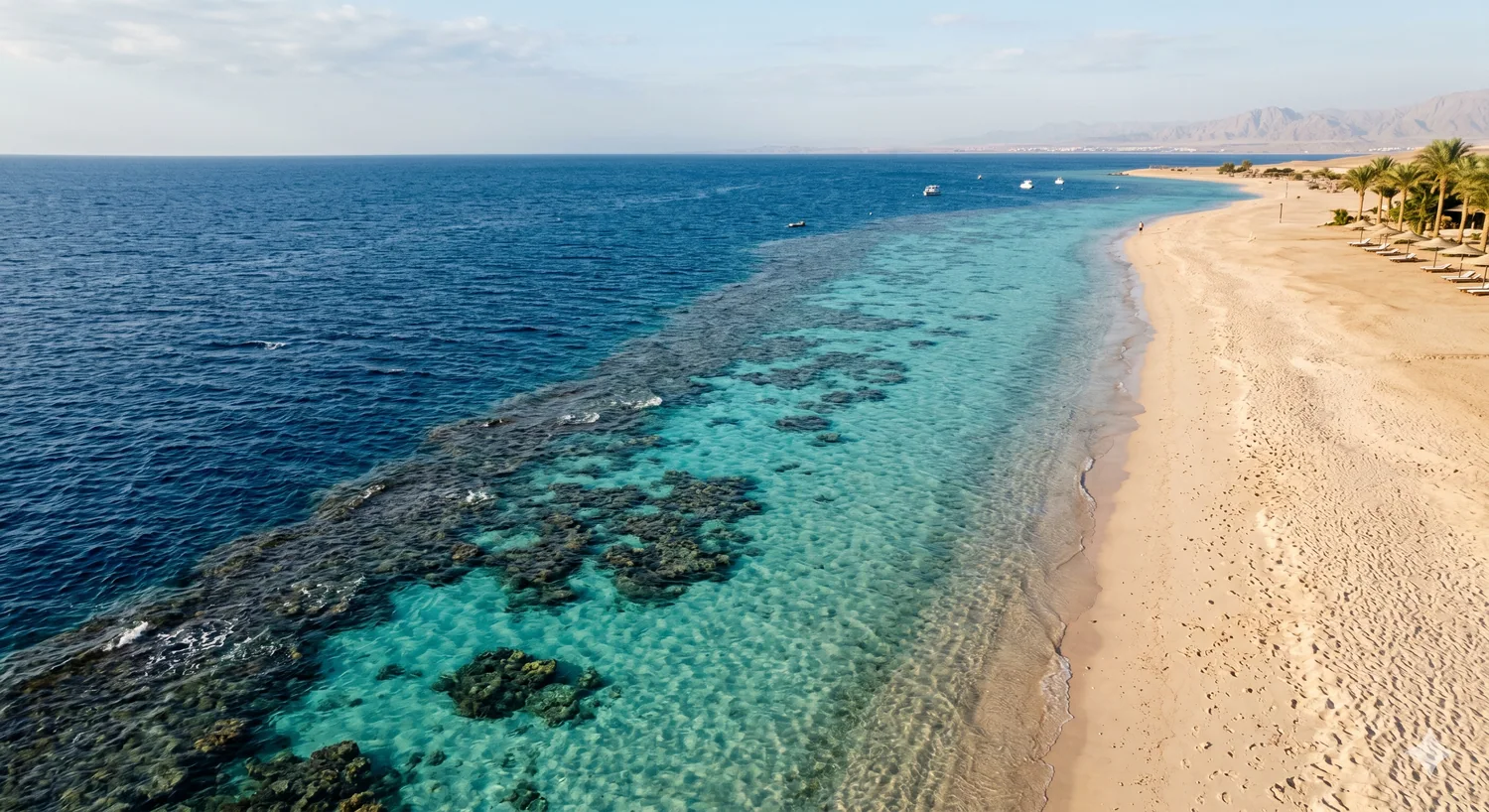
The beach runs for roughly 2.5 kilometres of white sand in a sheltered bay, backed by bare desert hills. At low tide the shallows form a wide, shallow lagoon: flat-calm, pale turquoise, warm. The reef begins close to shore and is in outstanding condition. Sea turtles nest on the beach. Dugongs have been sighted in the seagrass beds nearby. The snorkelling from shore is among the best available on the Egyptian coast without getting on a boat.
Camping is permitted inside the national park with a coast guard permit arranged in advance. There is nothing at the beach itself: no facilities, no shade structures, no vendors. You bring everything you need and you take everything back. For those who make that deal, Ras Hankorab is one of the very few places in Egypt where the desert, the beach and the reef exist together, unchanged, with no development between you and them.
The site's status has been in flux. In 2025 Egyptian activists, including members of the diving community, launched a public campaign called Save Honorab to halt a development project at the site. The campaign kept the beach accessible to campers in the interim and appears to have delayed the project. What has been proposed is not a large hotel. What has been discussed is stone rooms and huts in keeping with the desert landscape. Ownership and planning questions remain unresolved. The Atlas is watching and will update this page as the situation develops.
What you will find here
By road or boat, both work
The road from Marsa Alam is unpaved desert. Sedan cars can navigate it in dry conditions. The drive takes roughly 45 minutes and passes through the Wadi El Gemal area before reaching the beach. Day trips can be arranged through operators in Marsa Alam and the beach is accessible to all visitors during the day. Overnight camping is currently permitted for Egyptian residents with a coast guard permit arranged before arrival. Liveaboard vessels also stop here on the southern route. Fly into Marsa Alam (RMF). Bring all food, water and supplies; there is nothing at the beach.
Keep reading, and open the whole Atlas.
A free account unlocks every dive site guide and map, the marine life library, member reports, and the full incident log. Free to join.
Join free to keep reading