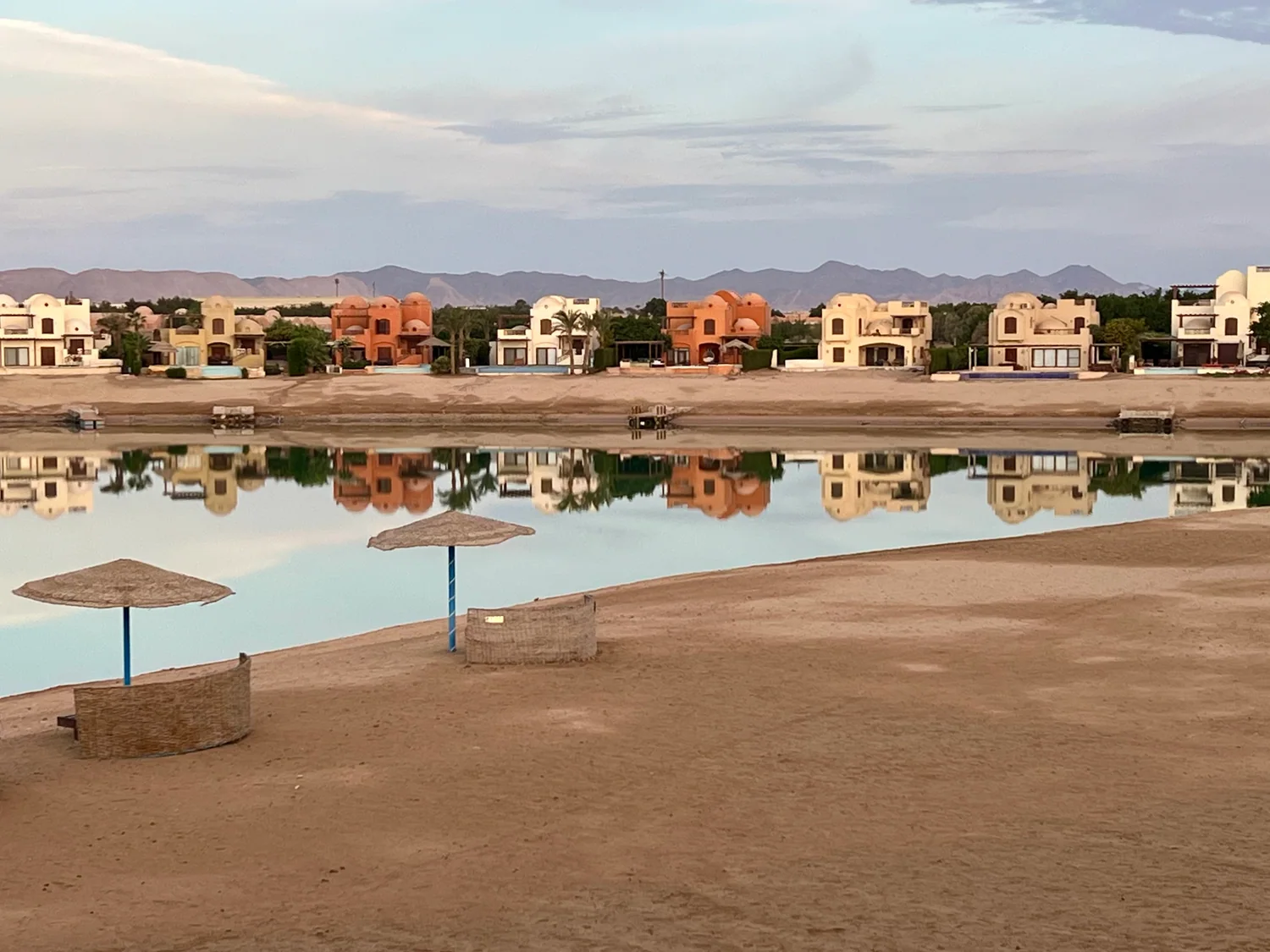
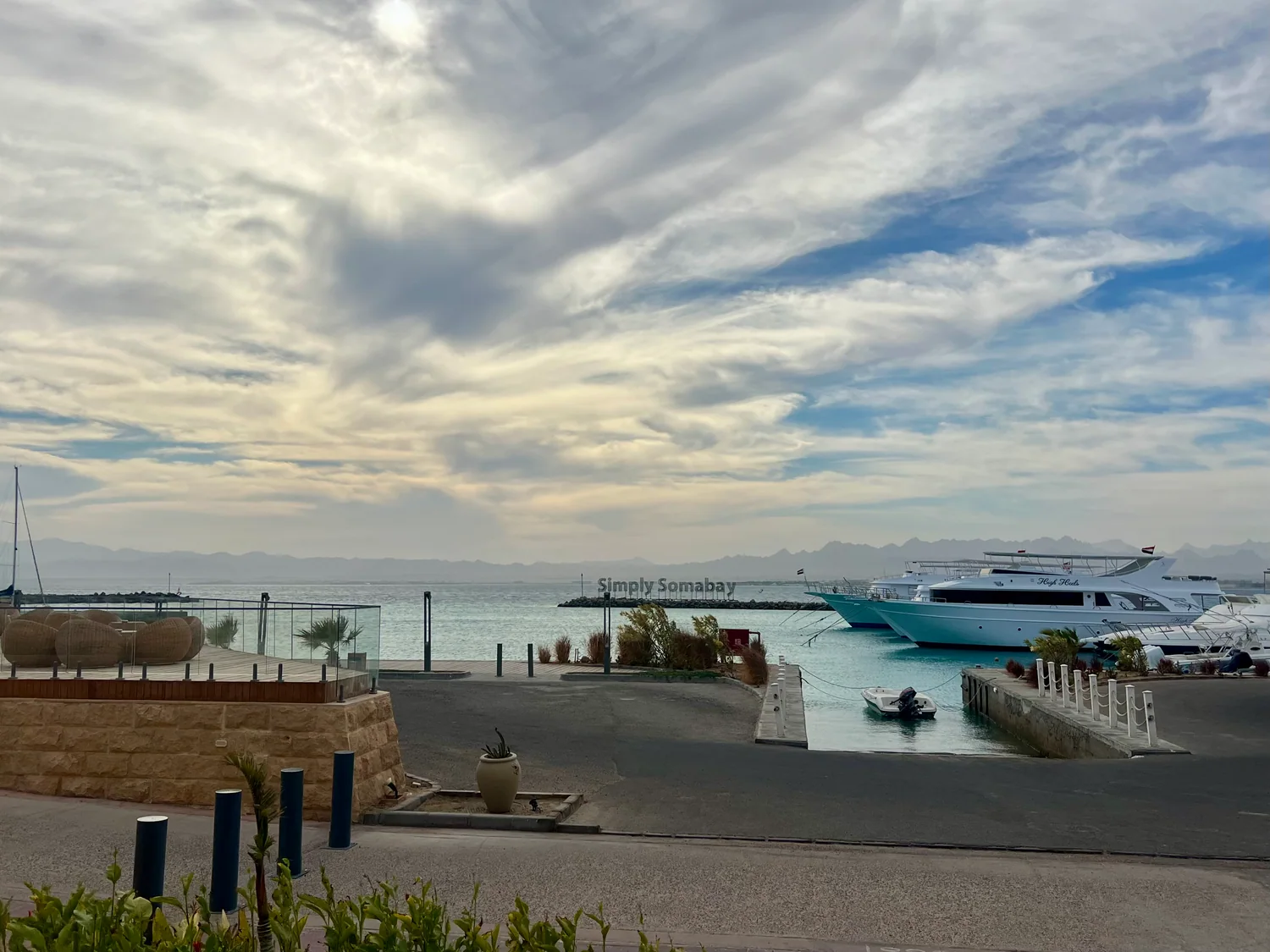
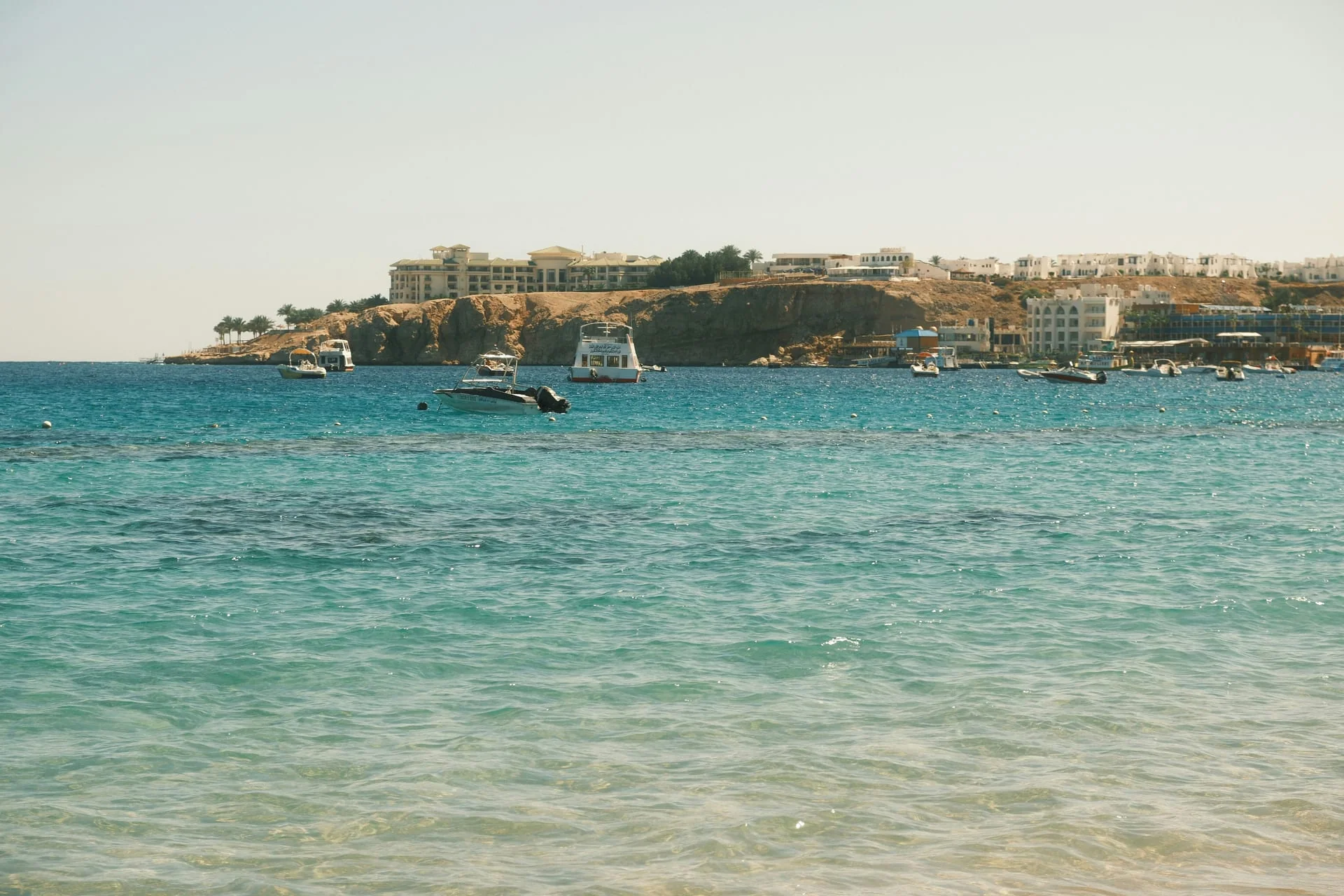
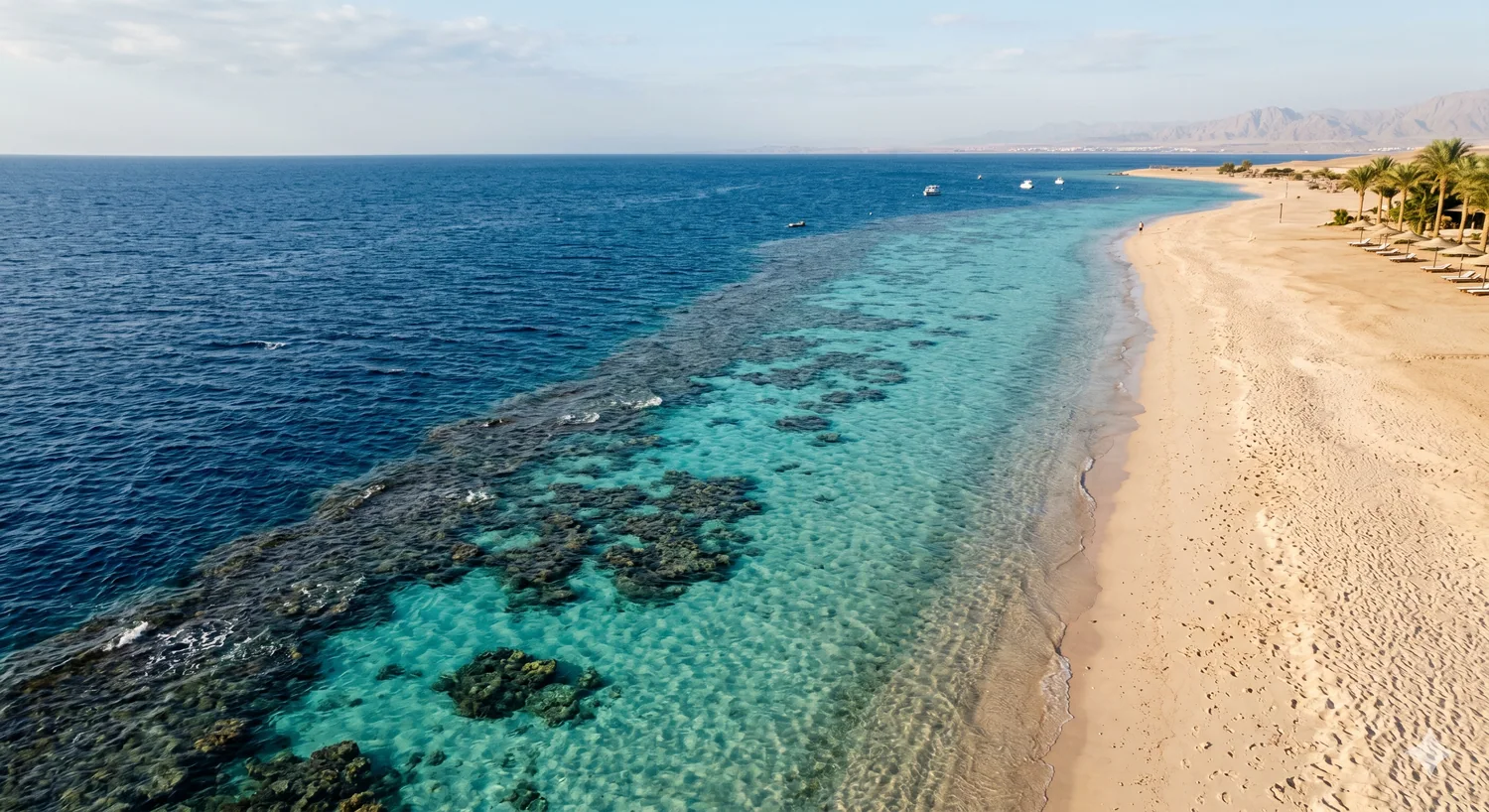
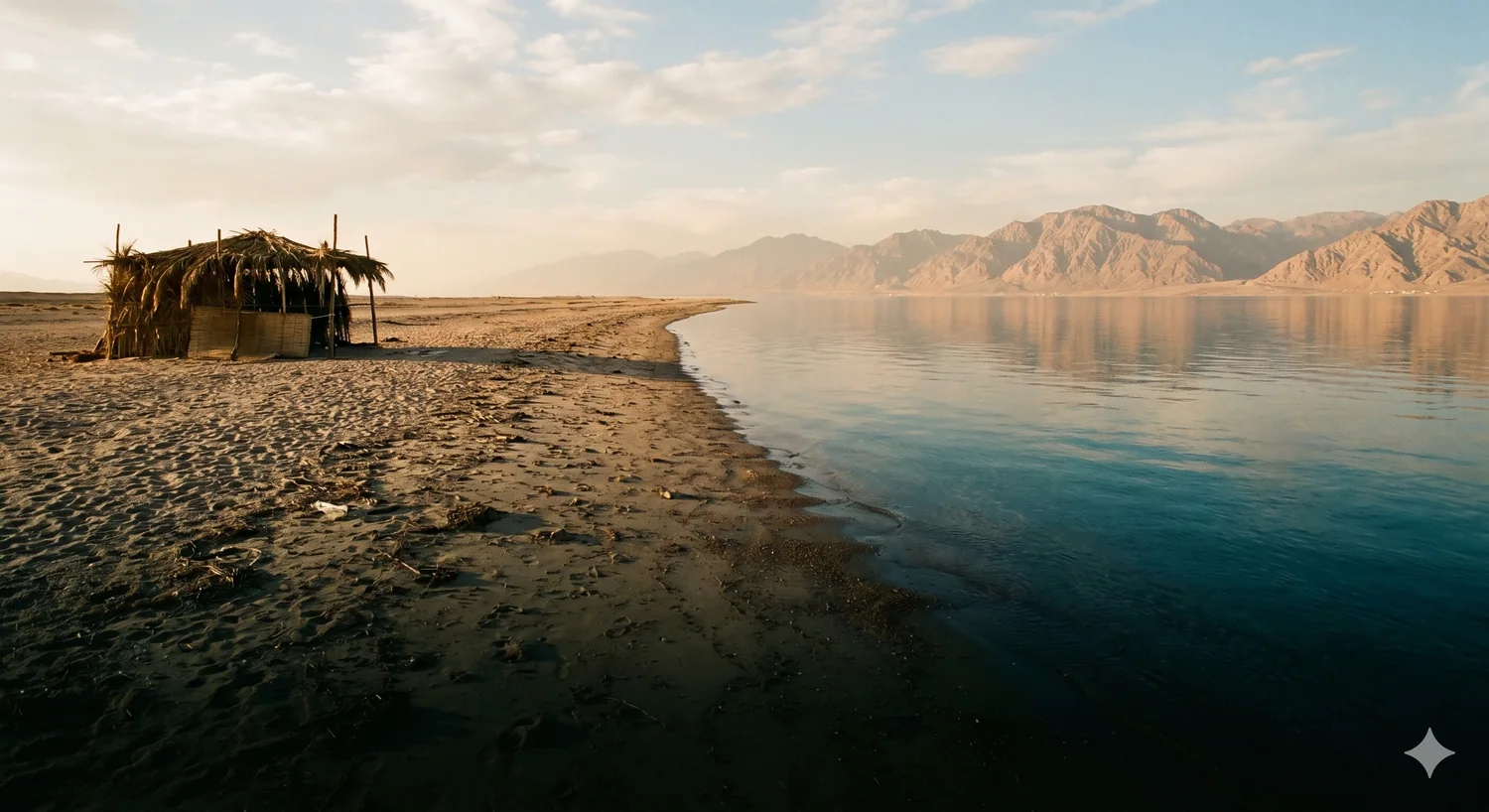
 Image: AI generated
Nuweiba
Quiet, authentic and unhurried. The Sinai beach that time forgot, with Bedouin camps, extraordinary stargazing and one of the clearest stretches of water on the Gulf of Aqaba coast.
The Sinai beach that time forgot
Nuweiba sits on the Gulf of Aqaba coast of North Sinai, 45km north of Dahab and 60km south of Taba. It is one of the quietest settlements on the Sinai coastline, a small town backed by desert mountains, with a working port, a scattering of Bedouin camps and a stretch of beach that has remained largely unchanged for decades.
The town divides loosely into two parts. The port area handles the ferry crossing to Aqaba, Jordan, a practical piece of infrastructure that gives Nuweiba a modest strategic importance it would not otherwise have. North of the port, the Tarabin strip is the social quarter: a line of Bedouin camps, seafood restaurants and small guesthouses along the beach. South of town, Muzayna Bay is Bedouin country: date palms, quiet coves and some of the cleanest snorkelling water on the Gulf coast.
What Nuweiba offers is the opposite of a resort: authentic, unhurried and entirely unmediated. The Muzayna Bedouin have lived here for generations and the culture is accessible in a way that the more developed parts of Sinai no longer permit. For travellers who want to sit still, watch the Saudi mountains across the water and be left completely alone, Nuweiba is one of the last places in Egypt where that is genuinely possible.
The Gulf of Aqaba carries a geological restlessness that Nuweiba knows well. In late 1995 a severe earthquake struck the central Gulf directly offshore from the town. Shockwaves reached Cairo; buildings on the far shore sustained structural damage. The quake left visible coral damage along the Aqaba coast, though no tsunami was generated. The same tectonic fault that created the Dead Sea, the Jordan Valley and the Red Sea itself runs beneath this coastline: a reminder that the mountains and the water here are not stable geography but an active rift system still pulling apart at close to 2cm per year.
Camps, lodges and open desert
One of the most famous camps in Sinai, a beloved independently run eco-camp on the beach south of Nuweiba. Simple palm-and-reed huts, a garden restaurant and a community of travellers who return year after year. The definitive Nuweiba experience.
An eco-resort 23km north of Nuweiba toward Taba, one of the original wilderness lodges in Sinai. Cabins and tents on a quiet beach, communal dining and a philosophy of low-impact living that has not changed since it opened. No TVs, no nightlife, no noise.
The largest conventional property in the area, a full-service resort with a private beach, aqua park and multiple pools. A reliable mid-market choice for families wanting more facilities than the camps offer, without travelling to Sharm el-Sheikh.
A cluster of small Bedouin camps along the Tarabin beach strip, the northern, more social side of Nuweiba. The closest thing the town has to a waterfront restaurant and cafe scene. Ideal for independent travellers who want to be in the centre of what little action there is.
Beaches, bays and Bedouin country
Desert, reef and open sky
Ras Shaitan and Muzayna Bay both offer excellent shore snorkelling. The Gulf of Aqaba water here is consistently clear, and the reef begins close to shore. One of the most straightforward reef experiences in Sinai.
A handful of small dive centres operate from the camps. The sites around Ras Shaitan are the main draw, accessible, uncrowded and in good condition. Not a liveaboard destination, but a quiet alternative to Dahab's busier dive scene.
The mountains behind Nuweiba are Bedouin country, with ancient trails, hidden valleys and campsites far from any road. Jeep and camel safaris can be arranged through any of the camps, with overnight options.
The famous slot canyon is roughly 30 minutes by jeep from Nuweiba, closer and easier to reach from here than from Dahab. A half-day trip into one of Sinai's most visually striking geological formations.
Nuweiba's near-complete absence of light pollution makes it one of the best stargazing locations in Egypt. The sky on a clear night between October and March is exceptional. Ask your camp about sitting in the dunes after midnight.
The Aqaba–Nuweiba ferry is the only sea crossing between Egypt and Jordan. The fast ferry takes about 1 hour; the slow ferry around 3–4 hours. A practical crossing for travellers exploring both countries, or simply worth making for the Gulf views.
How to reach Nuweiba
Nuweiba is most commonly reached from Dahab to the south, 45 minutes by shared taxi or private car. From Sharm el-Sheikh, the drive takes roughly 2.5 hours. There are no direct international flights; all air arrivals come through Sharm. The ferry from Aqaba, Jordan arrives directly at Nuweiba Port and is the entry point for travellers coming from Jordan. Shared taxis run between Nuweiba and Dahab regularly; onward connections north to Taba are also available.
Keep reading, and open the whole Atlas.
A free account unlocks every dive site guide and map, the marine life library, member reports, and the full incident log. Free to join.
Join free to keep reading