Abu Nahas, The Wrecks
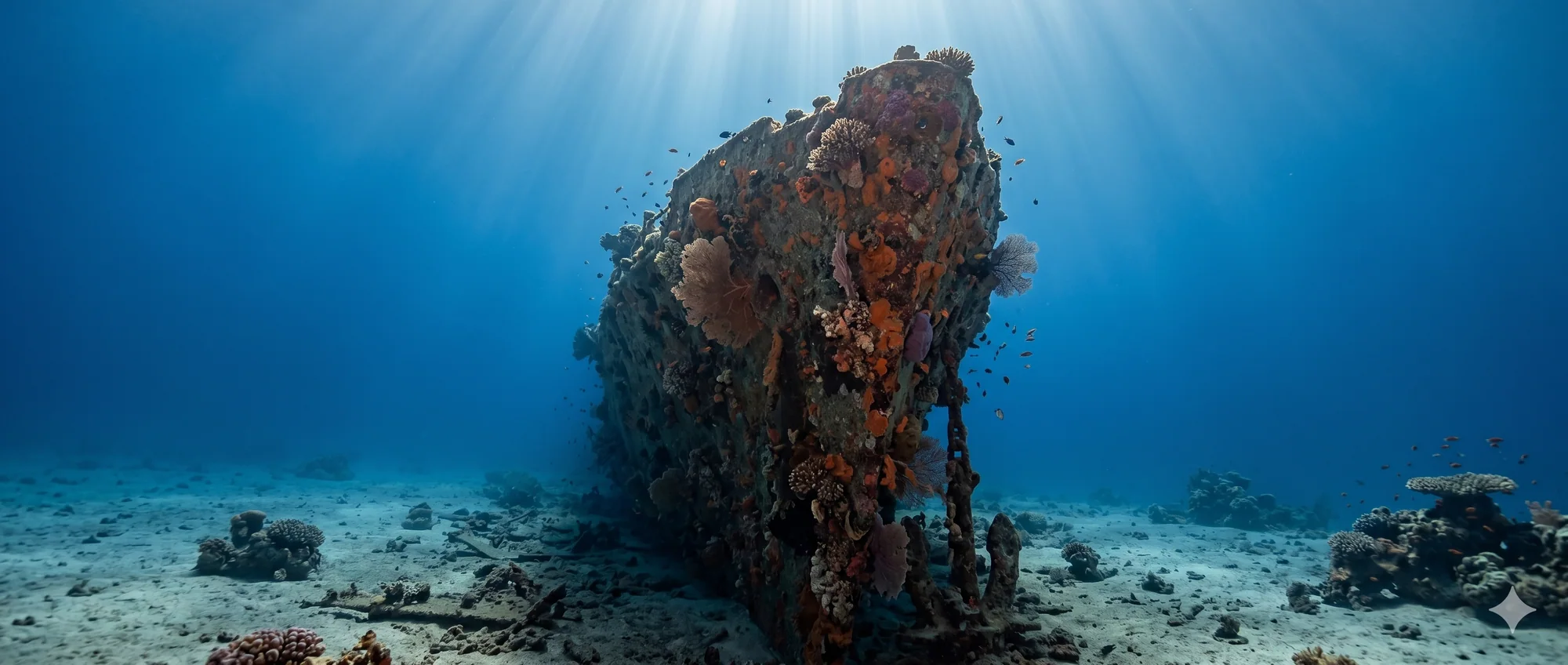
Abu Nahas, Sha'ab Abu Nahas in Arabic, meaning "Father of Bad Luck", is a submerged reef in the Strait of Gubal, roughly 45km from Hurghada. The north and northwest face of the reef is where four ships came to grief over the course of 114 years. They sit strung along approximately 500 metres of reef edge, each one a different era, a different cargo, a different story. A full day here rarely covers all four.
The Giannis D is the most visited wreck on the reef, a Greek cargo ship that struck the northwest corner in 1983, now lying on its port side in three sections with one of the most celebrated engine room penetrations in the Red Sea. The Carnatic is the oldest and the most beautiful: a P&O steamship from 1869, her iron skeleton draped in 150 years of dense coral growth, wine bottles still visible in the silt on the hull floor. The Tile Wreck, listed as the Chrisoula K but the subject of a genuine and unresolved identity dispute, carried Italian granite floor tiles in 1981, and those tiles remain scattered across the seabed. The Kimon M is the deepest and the least visited, a large cargo ship that carried lentils and now lies on its starboard side at 30–32m, more deteriorated than its neighbours.
Four wrecks on a single reef, each with its own character, each worth a dedicated dive. The Giannis D and Carnatic are consistently named among the finest wreck dives in the Red Sea. Abu Nahas is the reason Hurghada deserves to be on any serious diver's itinerary.
Start at the mast, it sits at 4–6m and makes a perfect reference point and safety stop. Work down the port side to the bow at 10–18m, then aft to the engine room at around 13m. The engine room penetration is the dive: the ship lies on its side, so every corridor and companionway is at a 90-degree tilt to what your brain expects. Machinery is intact, glassfish fill the space, and natural light filters through. Exit aft and work to the stern at 24–28m before ascending. Torch essential for the interior.
The most beautiful wreck on the reef. The wooden decks and superstructure have fully rotted away over 155 years, leaving the iron ribcage completely exposed and covered in dense stone and leather corals. You swim freely through the skeleton, no penetration equipment required, as the entire hull is open. Start at the bow at 16m and work aft toward the stern at 24–27m. The Victorian long-bladed propeller at depth is iconic. Wine bottles from 1869 remain visible in the silt on the hull floor, visible, not touchable. The engine and boiler structure are intact amid the coral.
The bow barely breaks the surface, you can see it from the dive boat before you enter. Drop down to the mid-section at 15–19m where the Italian granite floor tiles are scattered across the seabed and piled in the holds, exactly as they were when the ship went down. Strong natural light cuts through cracks in the hull throughout. The engine room and stern are intact at 26–28m. Note: the identity of this wreck is genuinely disputed, physical evidence suggests it may be the Marcus (1978) rather than the Chrisoula K (1981). Both carried Italian tiles on the same route. The wreck is listed in most dive databases as 'Chrisoula K (Marcus).'
The deepest and least visited wreck on the reef. Dive this one first in the day to manage your nitrogen before the shallower wrecks. The Kimon M is 106m long and lies on its starboard side, more broken up than the Giannis D or Carnatic. The bow is a scattered debris field; the stern and engine structure are the most intact sections at 28–32m. The lentils that gave it its nickname are long dissolved. Resident giant moray eels and batfish. Worth the logbook entry, every serious wreck diver should dive all four.
Four wrecks, one reef
Built in Japan in 1969 as the Shoyo Maru, she became the Giannis D in 1980. Struck the northwest corner of Abu Nahas at full speed on 19 April 1983 while carrying sawn softwood from Rijeka to Jeddah, a navigational error. No casualties. She lies on her port side in three sections. The engine room is considered one of the best recreational penetrations in the Red Sea: accessible, intact machinery, glassfish, and a 90-degree tilt that makes every corridor feel like a different dive. Look closely at the bow: the word 'Markos' is visible through the encroaching corrosion, an earlier name used for the vessel. Locals in the area still sometimes call her the 'Dana' after the large 'D' still visible on the smokestack, a reference to the Danae shipping company.
- –Engine room penetration, best on the reef
- –Mast at 4–6m, perfect safety stop
- –Three sections: bow, amidships, stern
- –Glassfish throughout the interior
- –Resident giant moray eels
A P&O mail steamer carrying cotton, copper plates, 34 passengers, and £40,000 in unfinished gold coins for the Indian Mint. She struck the reef on 12 September 1869. The captain chose not to evacuate immediately, believing the damage minor. Overnight on 14 September the hull broke apart, killing 31 of the 210 aboard. The wooden decks have rotted away over 155 years, leaving the iron skeleton open and accessible, you swim freely through the ribcage. Dense stone and leather coral on every surface. 19th-century wine bottles remain in the silt, still sealed with their original corks. Alongside them: oval bottles of ‘London soda water’ in distinctive opaline glass, each with ‘No. 2’ engraved in the base. Most of the gold was recovered by helmet diver Stephen Saffrey in October 1869; an estimated £8,000 is believed to remain.
- –Oldest wreck on the reef by nearly a century
- –Iron skeleton fully open, no penetration gear needed
- –155 years of dense stone and leather coral growth
- –Victorian long-bladed propeller at depth
- –19th-century wine bottles in the hull silt
Carrying 3,700 tonnes of Italian granite floor tiles from Iskenderun to Jeddah. Struck the reef in August 1981 after a navigational error with the captain off the bridge. No casualties. The Italian tiles remain scattered across the seabed and stacked in the holds. Identity note: physical evidence, engine serial numbers, anchor chain position, and derrick placement, suggests this wreck may actually be the MV Marcus, a different cargo ship carrying identical cargo that struck the same point of the same reef in 1978. The wreck is listed in dive databases as 'Chrisoula K (Marcus).' The dispute is unresolved.
- –Italian granite floor tiles scattered across the seabed
- –Bow barely breaks the surface
- –Natural light through hull cracks throughout
- –Engine room well preserved at 26–28m
- –Identity dispute: Chrisoula K or Marcus?
The largest and deepest wreck on the reef, and the least visited. Built in Germany in 1952, the Kimon M was carrying 4,500 tonnes of bagged lentils from Iskenderun to Bombay when she struck the reef in December 1978. The lentils dissolved long ago. The bow is now a scattered debris field; the stern and engine structure at 28–32m are the most intact sections. Limited current flow around the wreck has restricted marine growth compared to the other three. Dive this wreck first in the day before accumulating nitrogen on the shallower sites.
- –Deepest wreck on the reef, stern at 30–32m
- –106 metres long, the largest of the four
- –Least visited and most broken up
- –Dive first in the day for nitrogen management
- –Resident morays and batfish throughout
The numbers
What you need to know
Access & operators
Know the wreck before you dive it
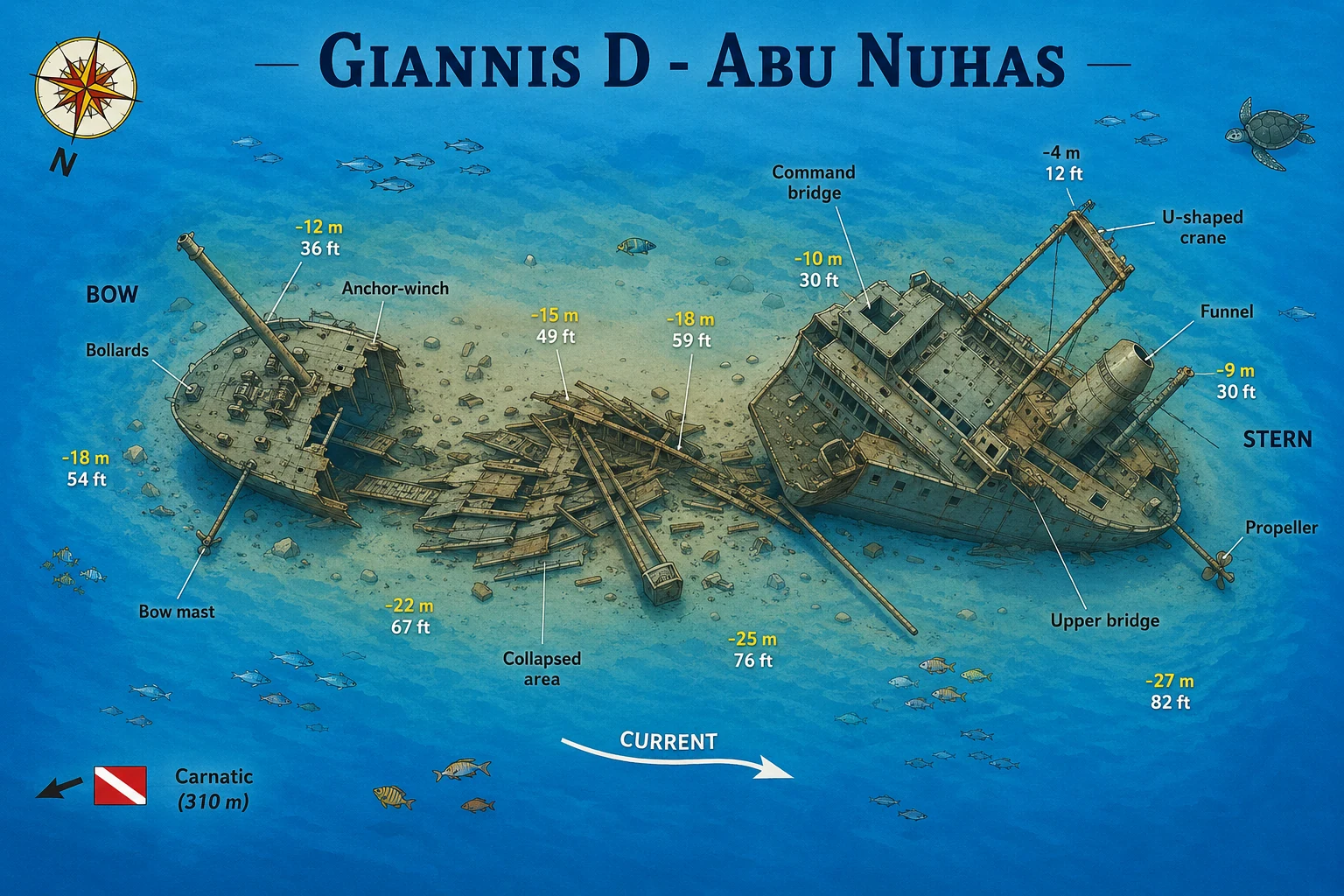
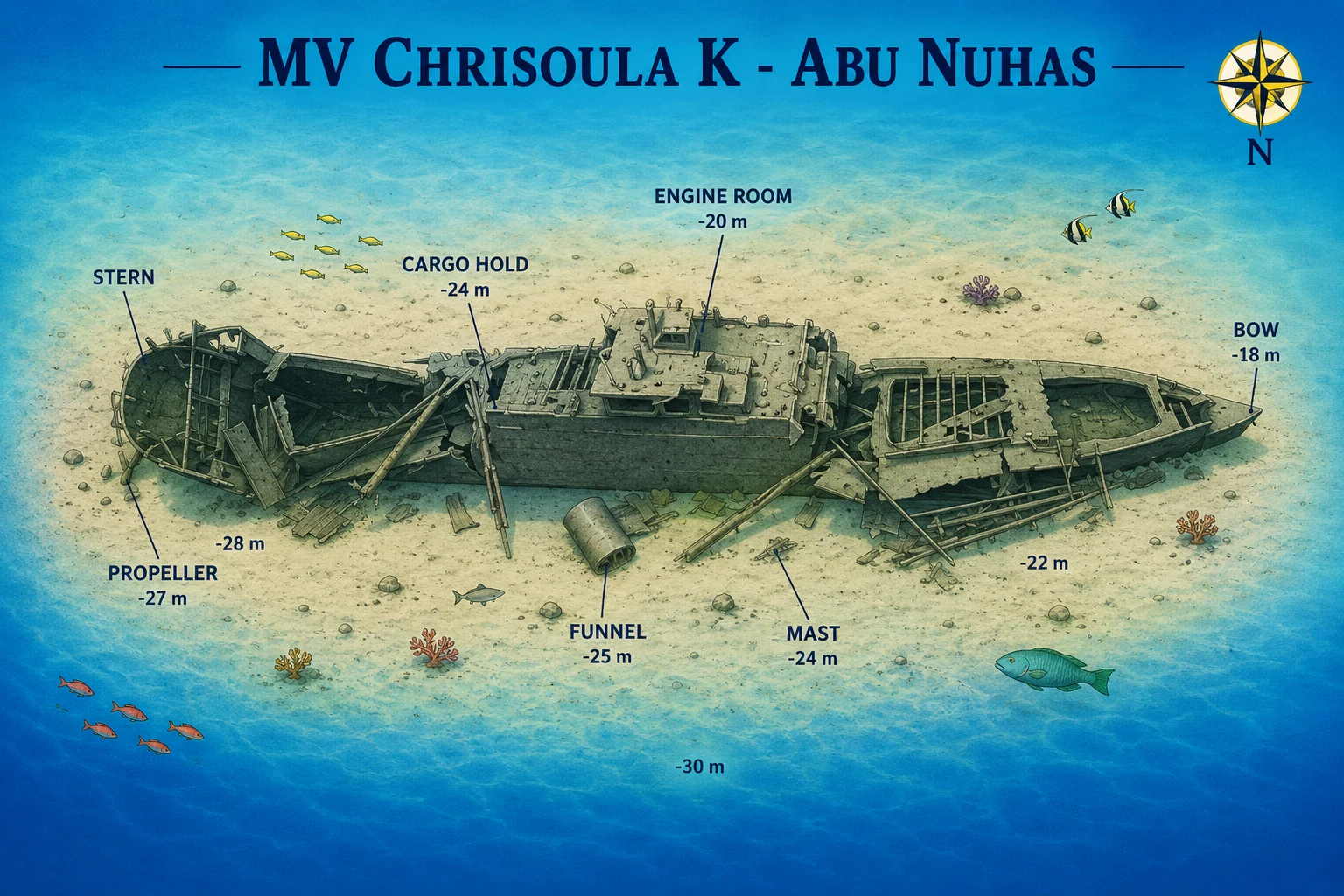
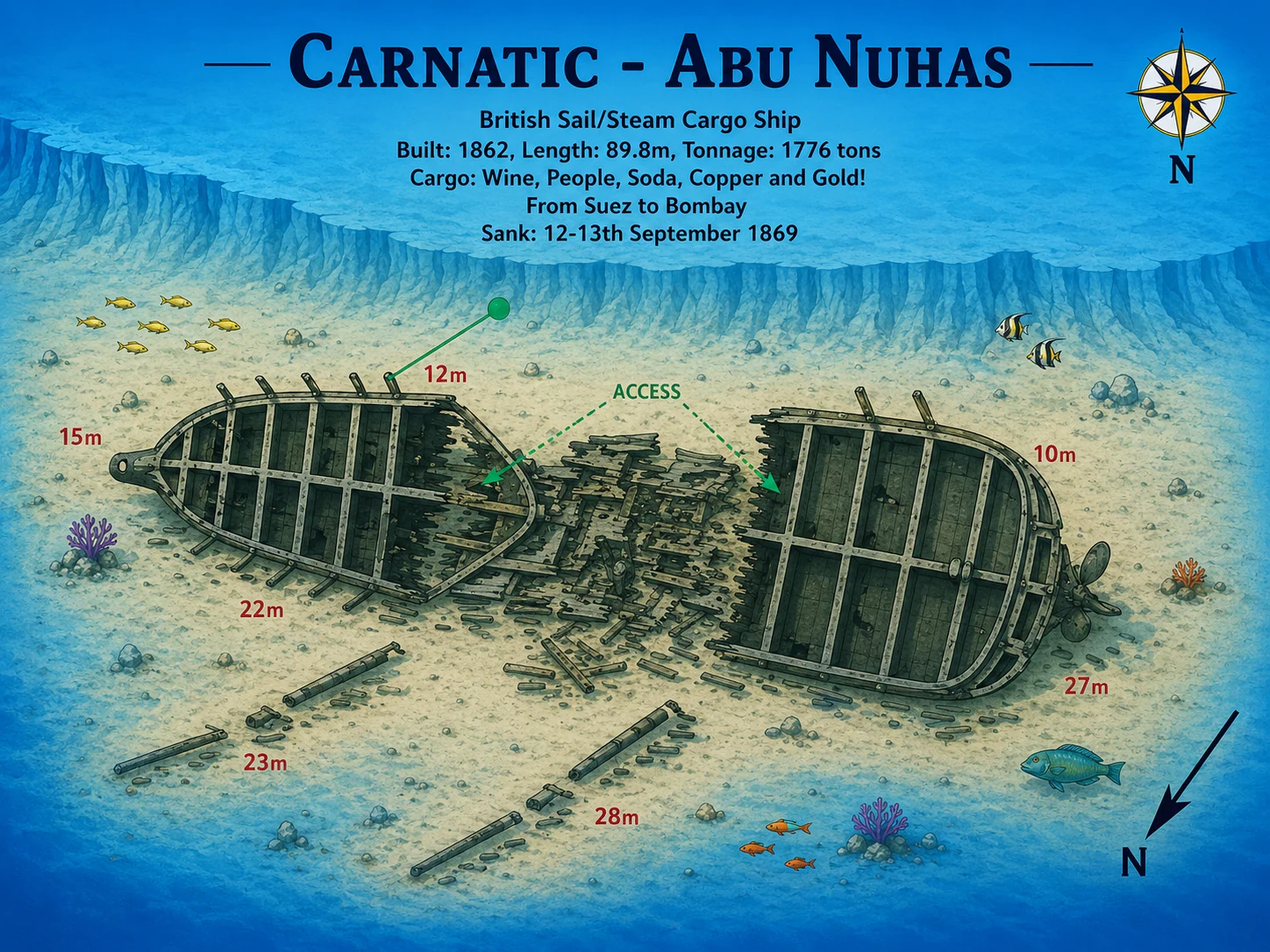
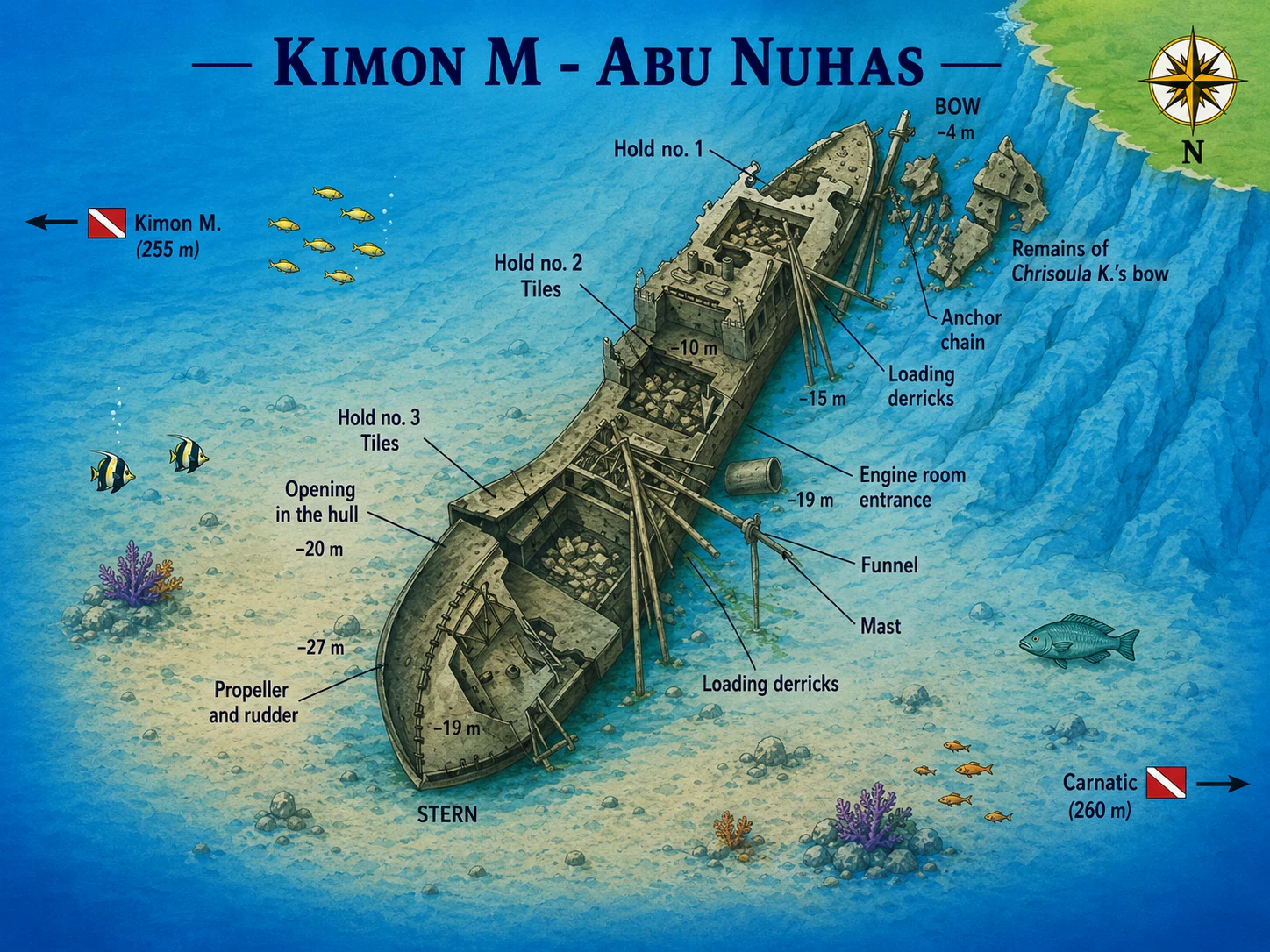
Original maps created for The Red Sea Atlas · Not for navigation
What you might encounter
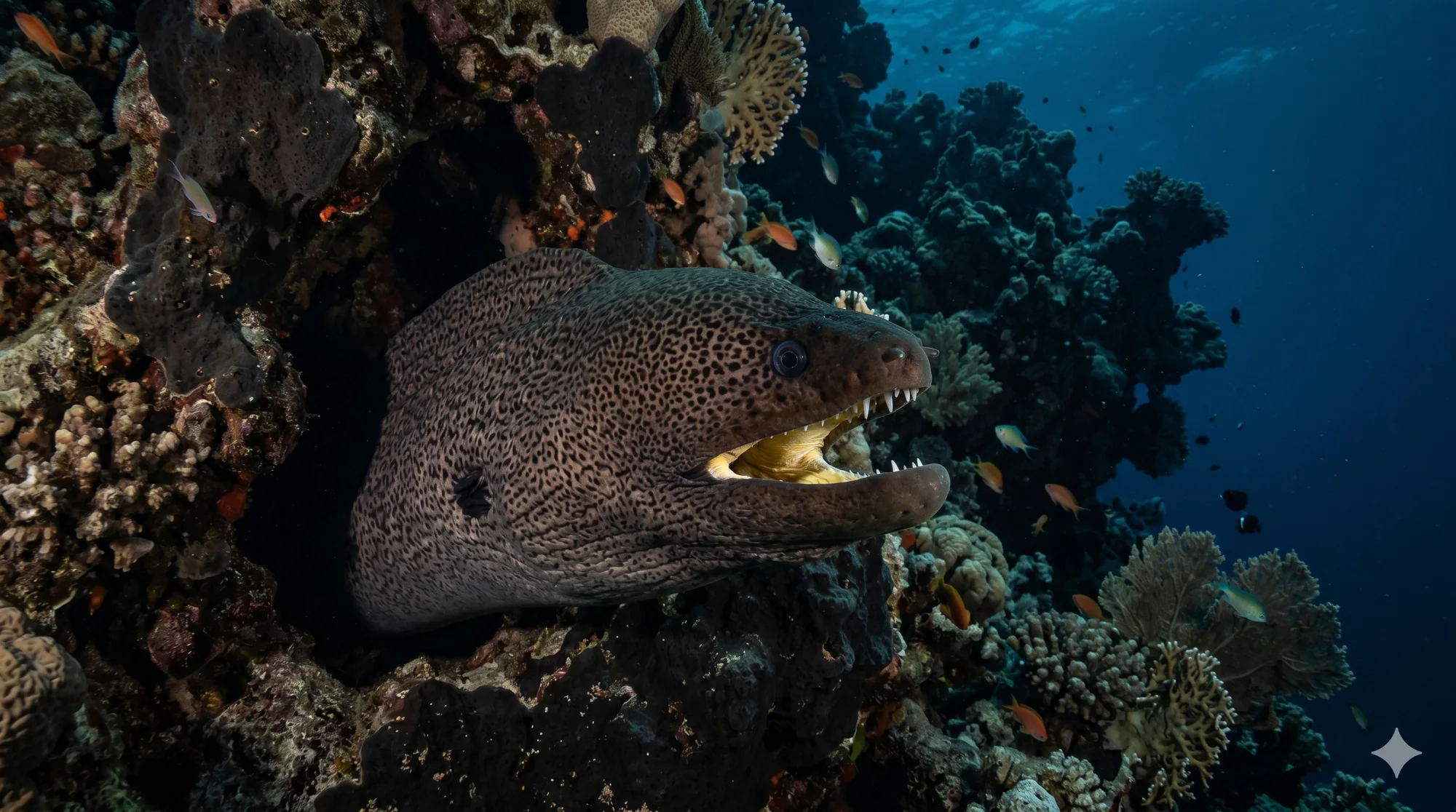
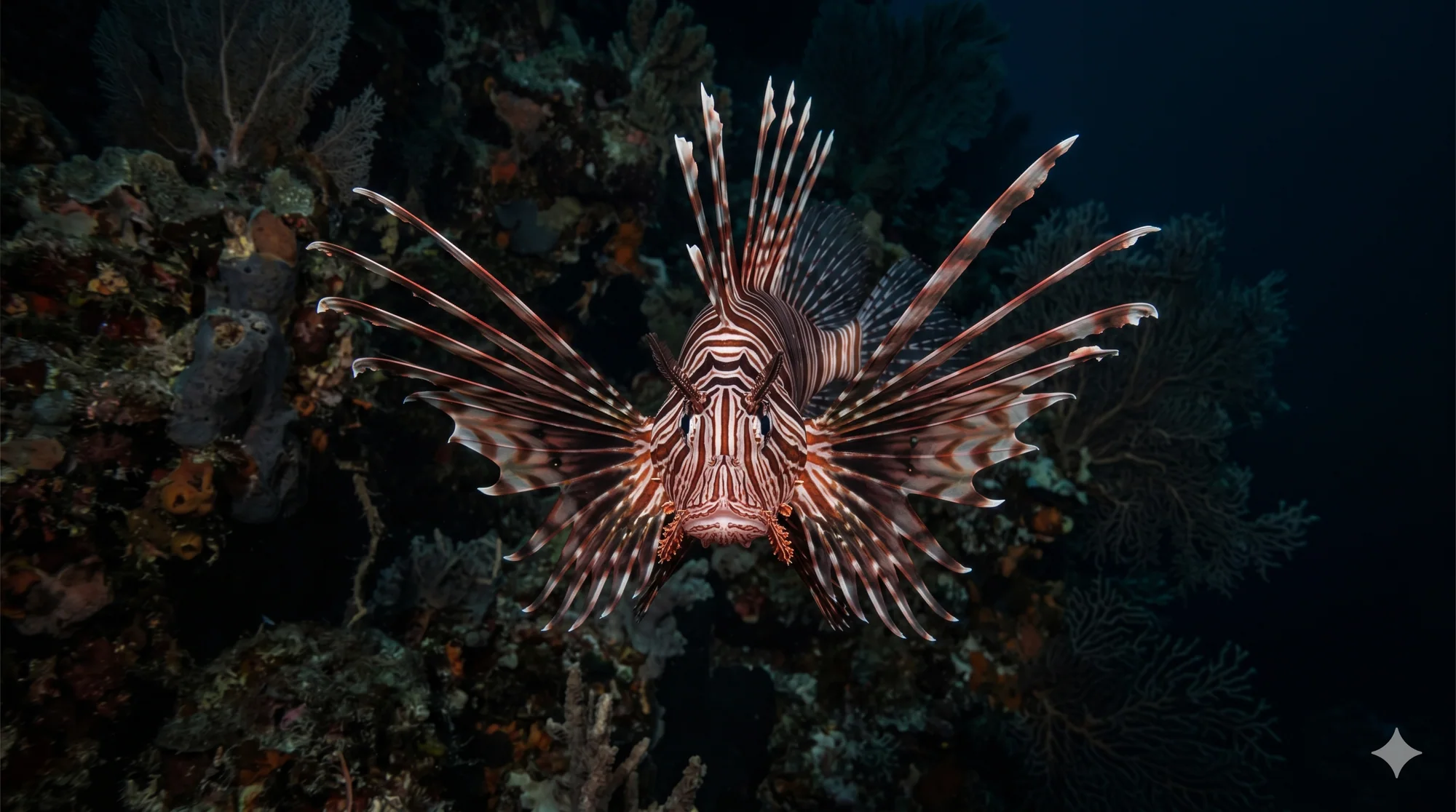
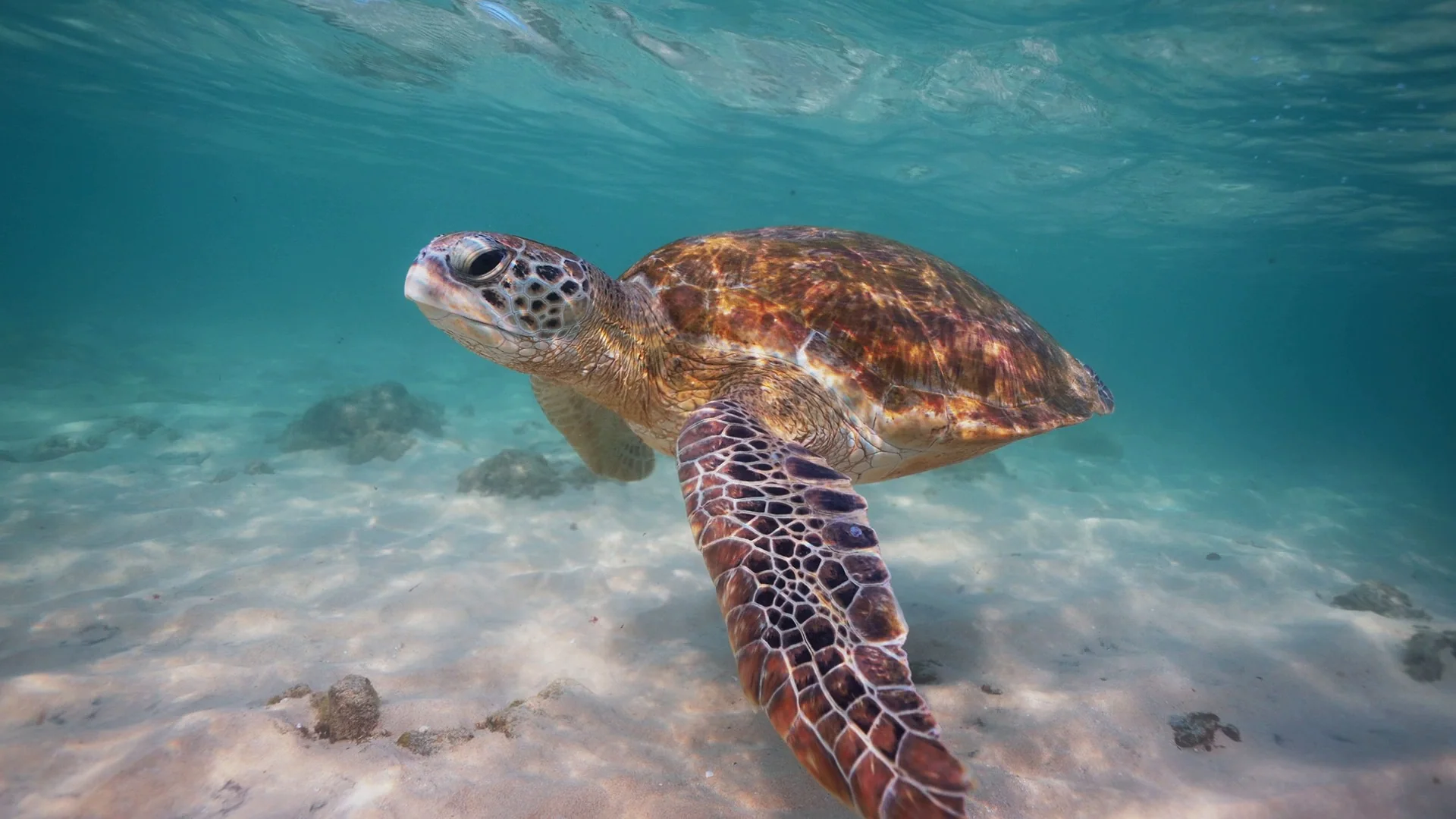
Shot at The Wrecks
Keep reading, and open the whole Atlas.
A free account unlocks every dive site guide and map, the marine life library, member reports, and the full incident log. Free to join.
Join free to keep readingDiver Comments
Share your experience, conditions report or tips about The Wrecks.
No comments yet, be the first to share your experience.