The Red in the Red Sea
The Red Sea's name is widely linked to algal blooms that can colour the water reddish brown. Another theory points to sunlight reflected on the water.
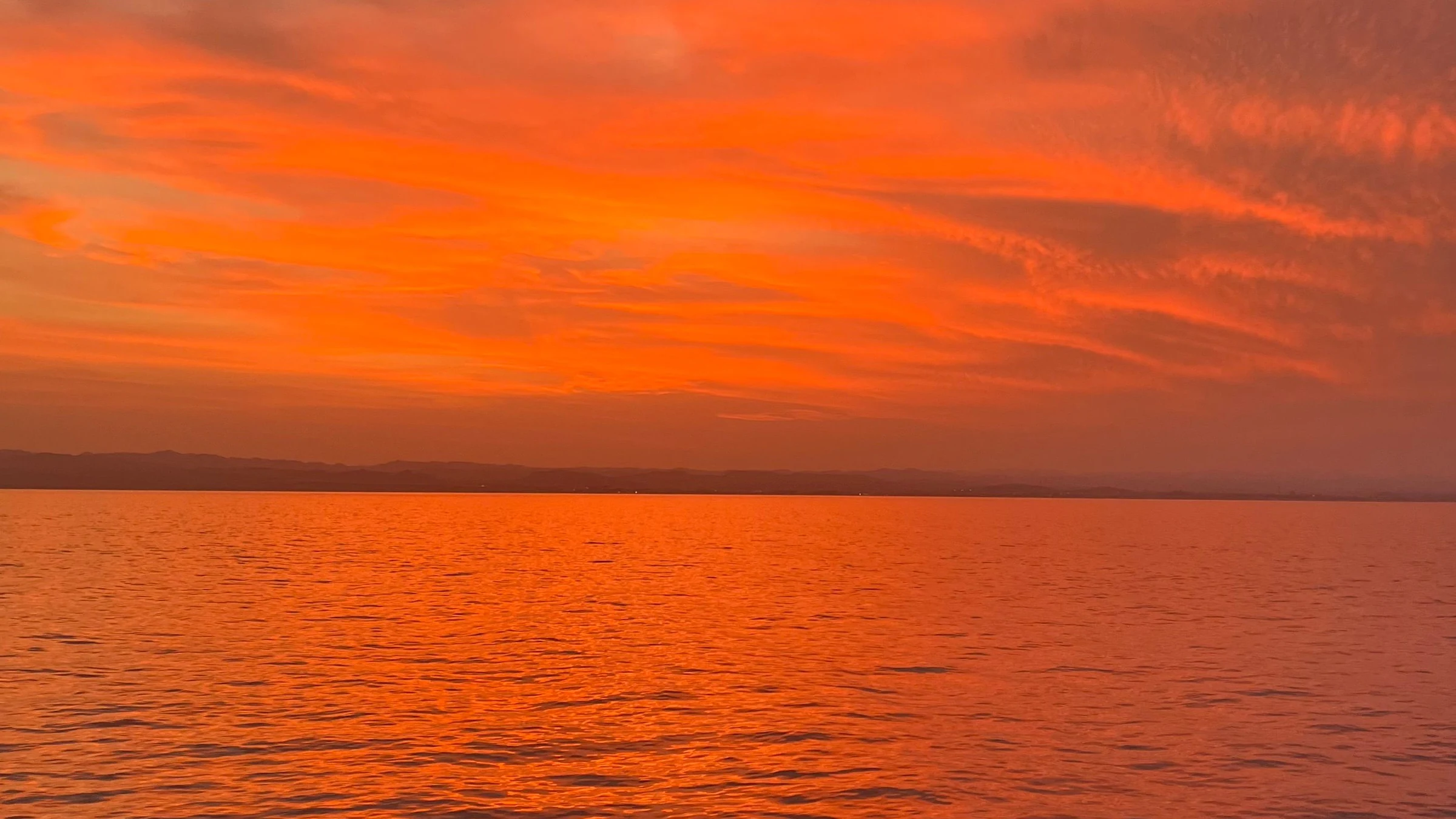
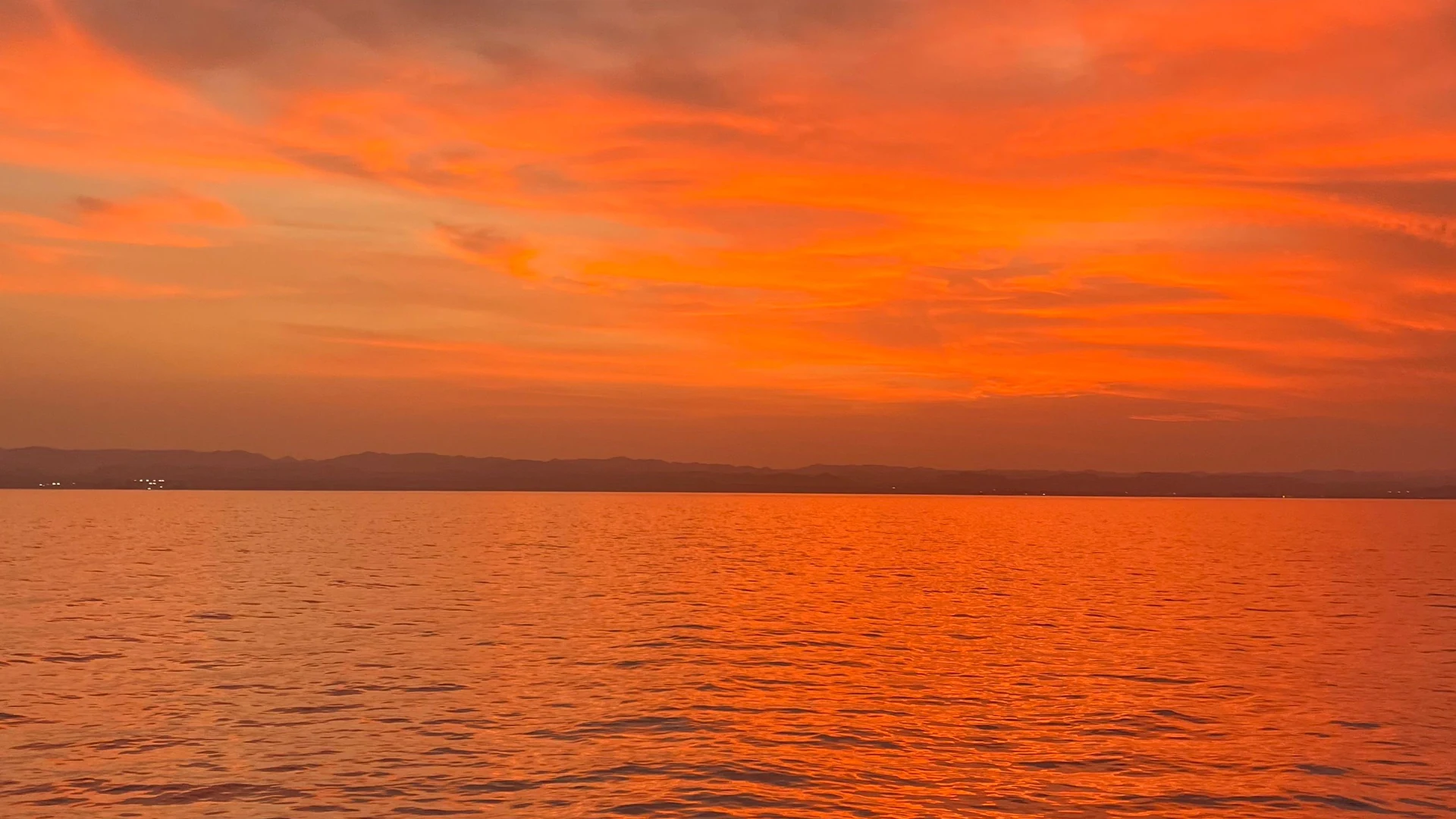
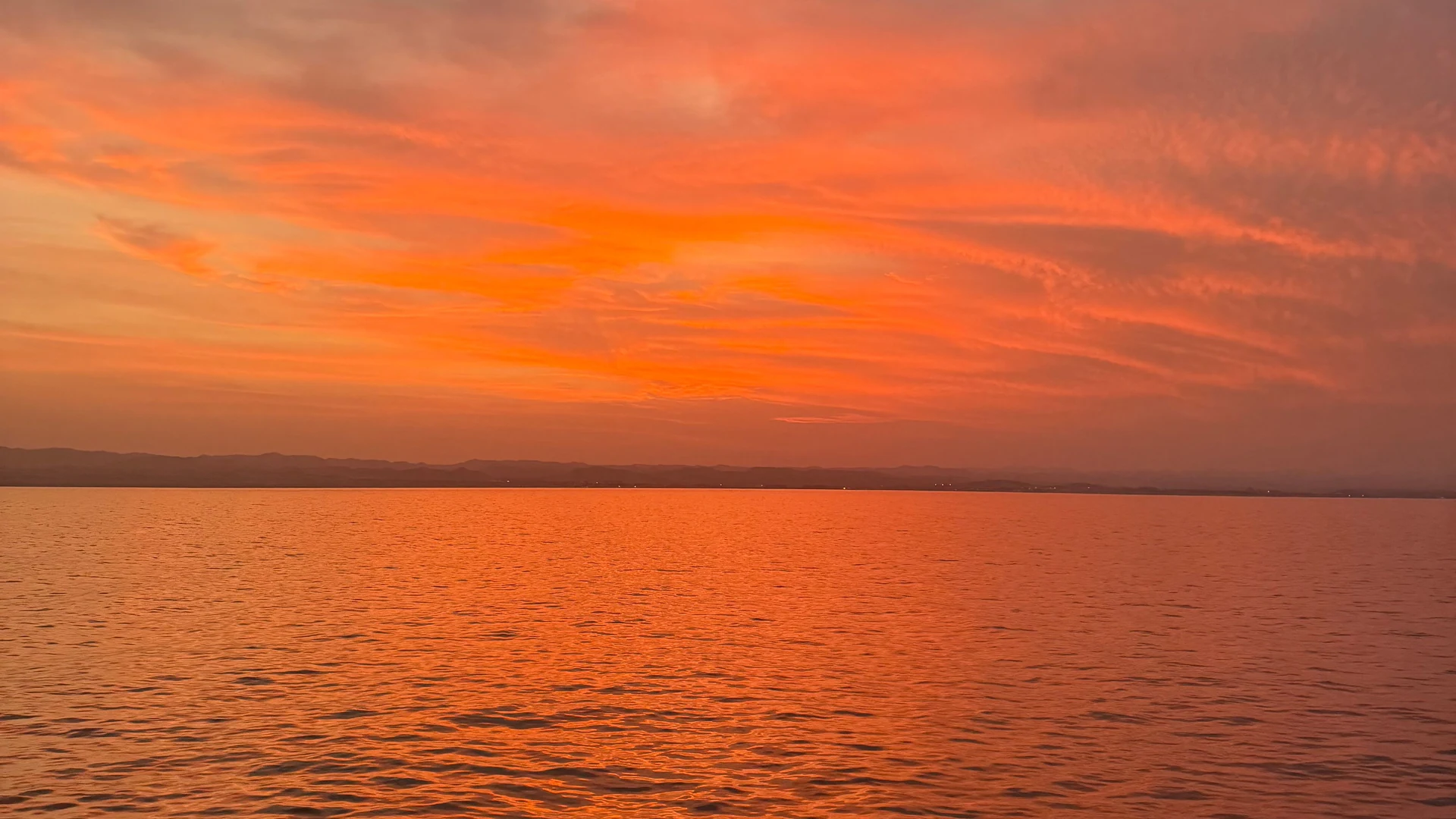
The sky in these photographs is orange and red, and the water has taken on the same colour. A dark line of mountains separates the two. On an evening like this, the name Red Sea seems easy enough to explain.
The main theory commonly cited for the name points to blooms of Trichodesmium erythraeum, a tiny marine organism often called blue green algae. These blooms can turn patches of water reddish brown. Another explanation points to sunlight reflected on the water. Sunset scenes like these show how red that reflection can be.
The bloom theory
The organism at the centre of the bloom explanation is often called blue green algae. More precisely, Trichodesmium erythraeum is a cyanobacterium, a bacterium that uses sunlight to photosynthesise. Its cells form filaments, which can gather into colonies and accumulate at the surface.
In large enough concentrations, those colonies can give the water a reddish brown appearance. John Waterbury, a cyanobacteria researcher at Woods Hole Oceanographic Institution, describes red pigments in the cells and buoyant colonies rising to the surface in calm weather. The colour can come from organisms in the water even under an ordinary daylight sky.
There is a specific Red Sea connection. A scientific review by Birgitta Bergman and colleagues describes blooms that discoloured the water in the Bay of Tor, on the Sinai coast of the Gulf of Suez.
The Smithsonian Science Education Center describes the bloom explanation as a popular hypothesis for the sea's name. Woods Hole Oceanographic Institution goes further, directly attributing the name to these blooms. The ability of the organisms to colour the water is documented, even though the original naming decision cannot be established with the same confidence.
The sunlight explanation
Reflected sunlight is another suggested explanation for the name. In a sunset like this, the water takes on the red and orange of the sky. That visible change makes the connection easy to understand.
Why the sea looks red at sunset
The colour in a sunset has a well understood physical explanation. As the sun gets lower, its light travels through a longer path in the atmosphere. Air molecules scatter shorter blue and violet wavelengths more strongly, leaving the direct light richer in reds and oranges. NOAA explains this as the same scattering process that gives us a blue daytime sky.
Clouds catch that warm light, and the sea surface reflects the bright sky above it. Ripples break the reflection into strips of colour. With a red sky overhead, a stretch of water that looked blue earlier in the day can appear orange, copper or red.
Other ways to read the name
The English name translates the ancient Greek name for the sea. The Online Etymology Dictionary lists several proposed explanations for its red element: algae, red sandstone along the shores, a tribal name, and an ancient association between the colour red and the direction south. In that last interpretation, red would describe a direction rather than the water's appearance.
These suggestions belong to different kinds of history. A bloom or a reflection could explain something a sailor saw. A colour used for a direction could explain a geographical convention. A name associated with a people could survive long after the original association was forgotten. They remain part of the name's history alongside the widely cited bloom theory.
Algal blooms are the main explanation commonly cited for the Red Sea's name. Reflected sunlight is another suggestion. On the evening in these photographs, the name suited the sea.
Keep reading, and open the whole Atlas.
A free account unlocks every dive site guide and map, the marine life library, member reports, and the full incident log. Free to join.
Join free to keep reading
Leave a comment