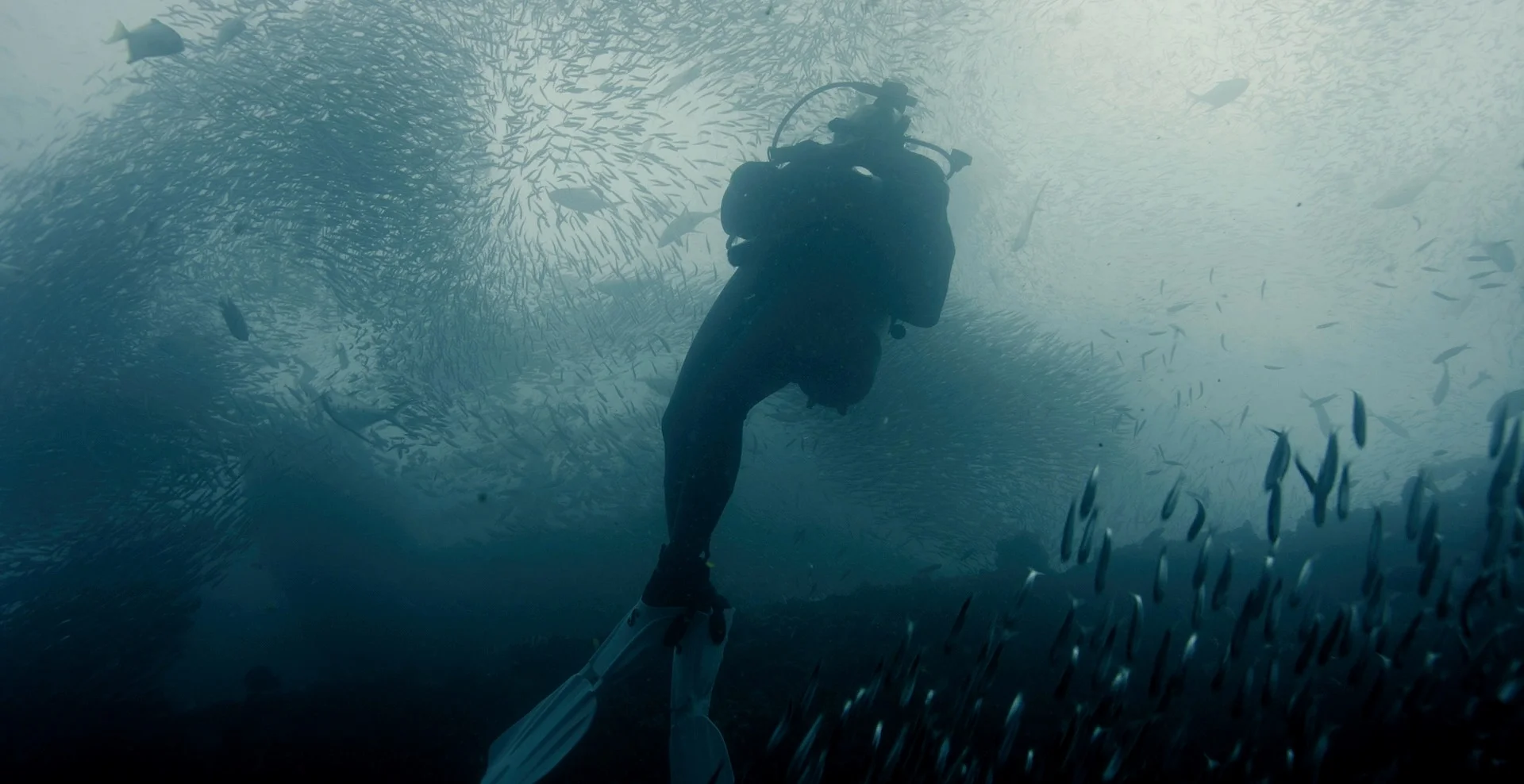
The small fish behind Hamata's giants
Baitballs off Hamata have brought reports of sharks, whale sharks and whales. The small fish supporting these encounters need protection too.
For weeks, crews around Hamata have been finding sardine baitballs. Sharks and whale sharks have been reported around them, along with whales in the area.
These are encounters people travel a long way to see. At the centre of them are small fish that rarely get much attention of their own.
Commercial fishing targets these shoals too. That raises a question worth asking while the animals are still here: how much of their food can we take?
Why the small fish matter
Sardines and similar small fish eat plankton, the tiny organisms drifting in the water. Larger animals then eat the fish. Scientists call them forage fish because so much marine life feeds on them. Research on forage fish describes their role in feeding larger fish, seabirds and marine mammals.
When predators close in, small fish crowd together for protection. That tight group is a baitball. The shape may last only a short time, but the shoals can provide food across a much wider area and over a longer period.
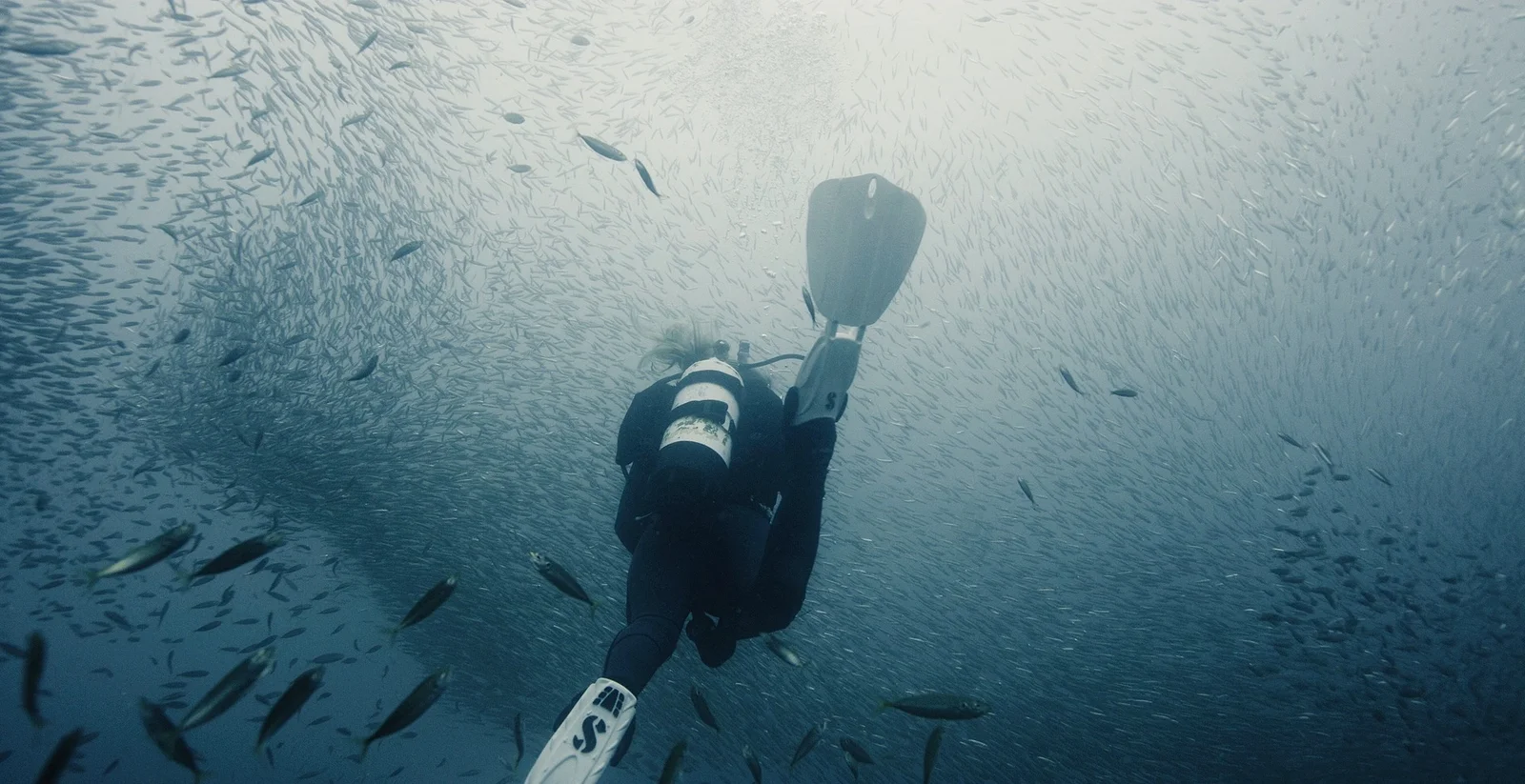
Whale sharks often feed on plankton, and they can eat small fish as well. Researchers have filmed them feeding on anchovies off Djibouti. We still need to establish what they are feeding on at Hamata. Different animals may be using different food in the same productive patch of sea.
Fishing away from coral still has a cost
One defence of fishing in open water is that the equipment stays clear of the reef. That matters, but it leaves out the food being removed.
A net does not need to break coral to affect the animals living nearby. If it takes a large part of the shoal they are feeding on, it has changed what is available to them. Research on Red Sea reefs also shows that reef fish draw food from beyond the coral itself.
The type of fishing matters. A purse seine surrounds a school and closes underneath it. A trawl tows a net. Purse seines can also surround animals feeding on the fish, creating a risk of catching them too. NOAA explains how these nets work.
There is scientific support for managing the catch with predators in mind. A study published in Science found that catch levels considered sustainable for small fish could still have substantial effects on other parts of the food web.
That does not mean every catch has the same effect. Other research shows that leaving more small fish in the sea does not always lead to larger predator populations. Animals have other food sources, and conditions change. Hamata needs its own observations and research.
But staying clear of coral is not enough to call a fishing operation harmless. We also need to know how much food it leaves behind.
Aziab had been watching for weeks
Omar Sherif, founder of Aziab Seafaris, says his team's trips have been encountering baitballs around Hamata for roughly a month and a half. He says their early whale reports received little attention.
Weeks later, a separate report from Red Sea Diving Safari described two whale sharks and numerous other sharks around a baitball.
Omar also raised the conservation argument behind this article: the fish bringing these animals together need protection from heavy fishing pressure.
Aziab's crews have been finding these baitballs on repeated trips. Operators who return to the same waters can notice changes that a single trip misses. Their reports should be taken seriously.
Aziab has helped pioneer small-group sailing on this coast. The company says it became Egypt's first officially licensed sailing charter operator in 2022.
There is an older baitball record from the area too. On 3 August 2016, Red Sea Diving Safari reported four sharks hunting a baitball between Wadi Lahami and Satayah. These gatherings have happened here before, although we do not yet know how regularly they return.
What could this mean for tourism?
Other places have built businesses around encounters like these. South Africa's sardine run attracts specialist wildlife trips. In the Maldives, a study of South Ari whale-shark excursions estimated US$9.4 million in visitor spending in 2013. At Ningaloo in Australia, almost 40,000 visitors took whale-shark trips in 2023.
Those figures belong to established destinations. They show that people will pay to see marine wildlife, but they do not tell us what Hamata would earn.
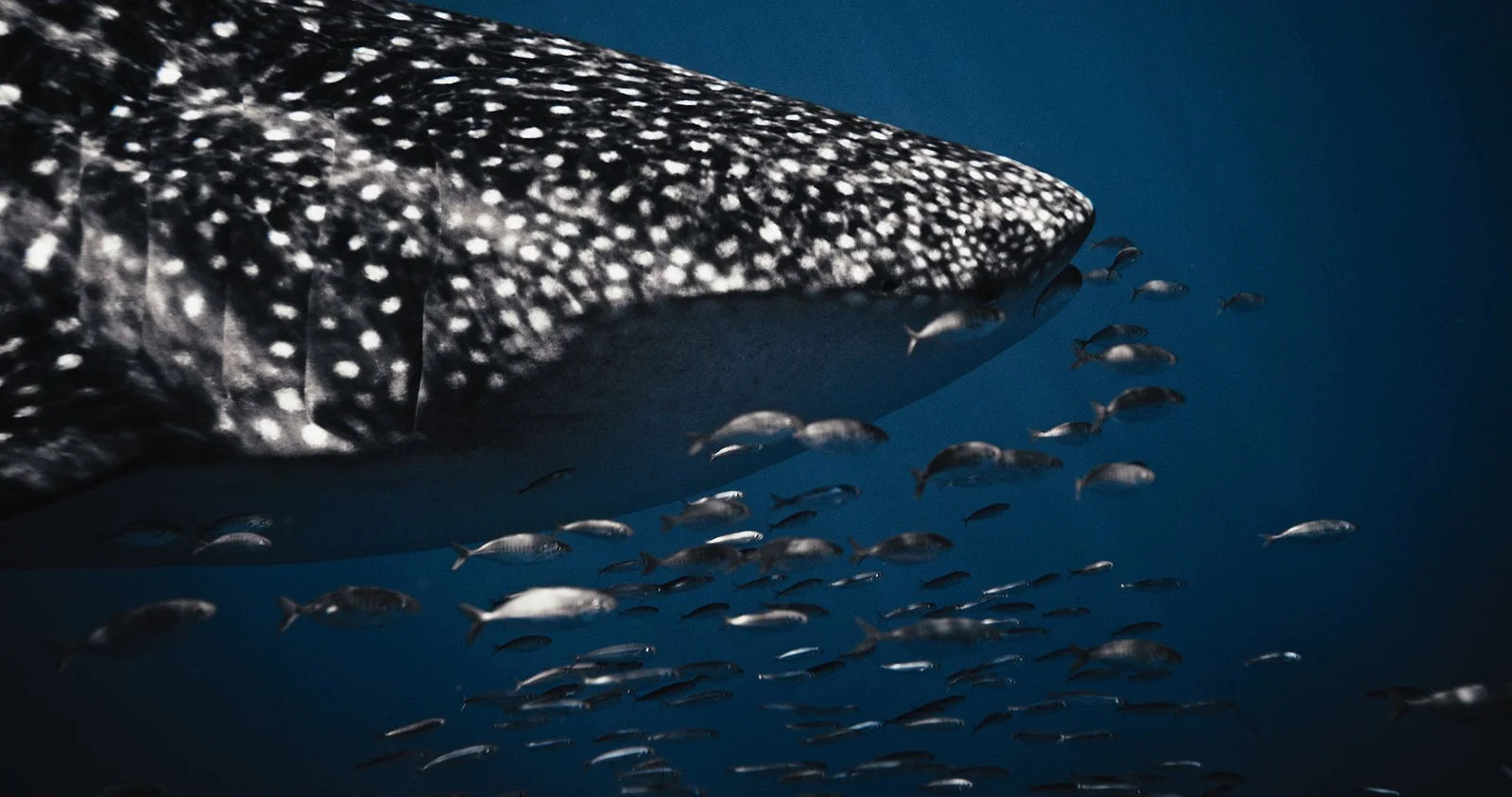
What could one animal contribute? For a whale shark, Rachel Graham's 2004 analysis offers a historical example. She estimated US$3.7 million in national tourism spending from Belize's six-week whale-shark season in 2002, with at least 106 individual sharks identified. Dividing the spending among those sharks gives roughly US$35,000 each for that season.
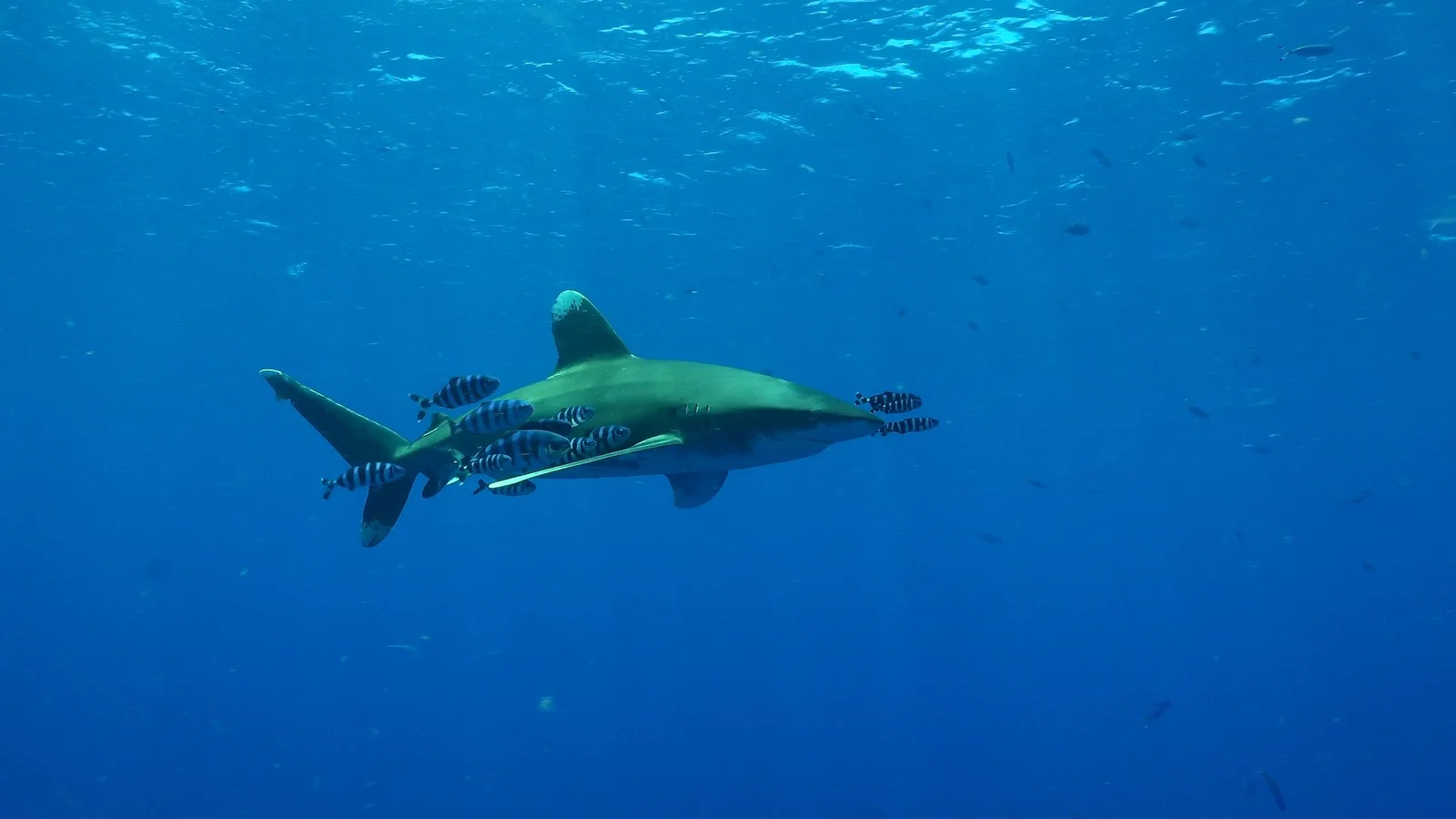
For an oceanic whitetip, the closest Red Sea comparison is a broader estimate for large sharks at the Brothers Islands. Marine biologist and HEPCA scientific adviser Mahmoud Hanafy put their tourism value at US$200,000 per individual per year. His presentation does not give a separate figure for oceanic whitetips or show the underlying visitor-spending calculation, so this is a comparison rather than a measured value for that species.
| Comparison | Annual basis | If repeated for 20 years |
|---|---|---|
| One whale shark, Belize's 2002 season | US$3,700,000 ÷ 106 ≈ US$34,900 | US$34,906 × 20 ≈ US$700,000 |
| One oceanic whitetip, if it matched the Brothers' large-shark estimate | US$200,000 per year, Hanafy's estimate | US$200,000 × 20 = US$4 million |
These are historical dollar figures, without an inflation adjustment. The whale-shark calculation assigns an average share of tourism spending; more unidentified sharks would lower that share. The 20-year totals assume repeated returns and the same annual contribution throughout. Neither example establishes profit, the extra revenue one animal alone creates, or what Hamata would earn.
For an idea of the scale, suppose 3,000 additional visitors came because of a Hamata event and spent US$1,500 each on their stay and activities. That would be US$4.5 million in visitor spending during that season. It is an illustration, not a forecast or a profit figure. We have not established those visitor numbers, spending levels or how many boats and people the area could safely accommodate.
That destination total would already include spending on shark encounters. Adding the individual-animal figures to it would count some of the same money twice.
Nor can we promise an annual event. Omar describes these gatherings returning every few years. Protecting the shoals could preserve feeding opportunities, but currents and other natural conditions will still affect what happens.
Before large catches are taken from these gatherings, we should understand what they support and what protecting them could mean for Hamata.
Protect the feeding grounds
The Atlas supports temporary protection from encircling nets and other methods that remove large catches from active feeding grounds. Authorities should work with scientists, local fishers and operators to decide where those protections apply and how they follow the moving schools.
At the same time, crews can start building a shared record of dates, locations and sightings, with original photographs and footage. Trips that find nothing matter too. They help show whether encounters are becoming more common or whether more people are simply looking for them.
Tourism needs rules as well. Boats and swimmers can interrupt feeding, even when nobody takes a fish. Research at Ningaloo shows why busy wildlife sites need continued monitoring. Hamata would need limits on boats and encounters, and clear rules against chasing or artificially feeding animals.
Local fishers must have a place in that plan. Work in monitoring, guiding and supplying trips could help, but we cannot assume tourism will replace everyone's income. A study of South Africa's sardine-run tourism found that local Indigenous communities received little direct benefit. We should learn from that.
Hamata's baitballs give us a chance to see how much life a shoal of small fish can support. Enough of those fish need to stay in the sea for the animals that depend on them, whether or not a tourist boat is there to watch.
Reporting note: Aziab's recent sightings are attributed to Omar Sherif. The later Red Sea Diving Safari encounter comes from a separate report. Exact dates, first-report claims, whale species and the details of the later encounter have not been independently confirmed. The fish are described locally as sardines; their species still needs confirmation. No tracking evidence establishes that these particular shoals escaped fishing nets. Historical background on southern Egyptian sardine fisheries is available in the FAO's 1989 review.
Image note: The photographs are licensed archive stills, not records of the current Hamata sightings.
Keep reading, and open the whole Atlas.
A free account unlocks every dive site guide and map, the marine life library, member reports, and the full incident log. Free to join.
Join free to keep reading
Leave a comment