Ducks Dive Center
German precision and Egyptian warmth.
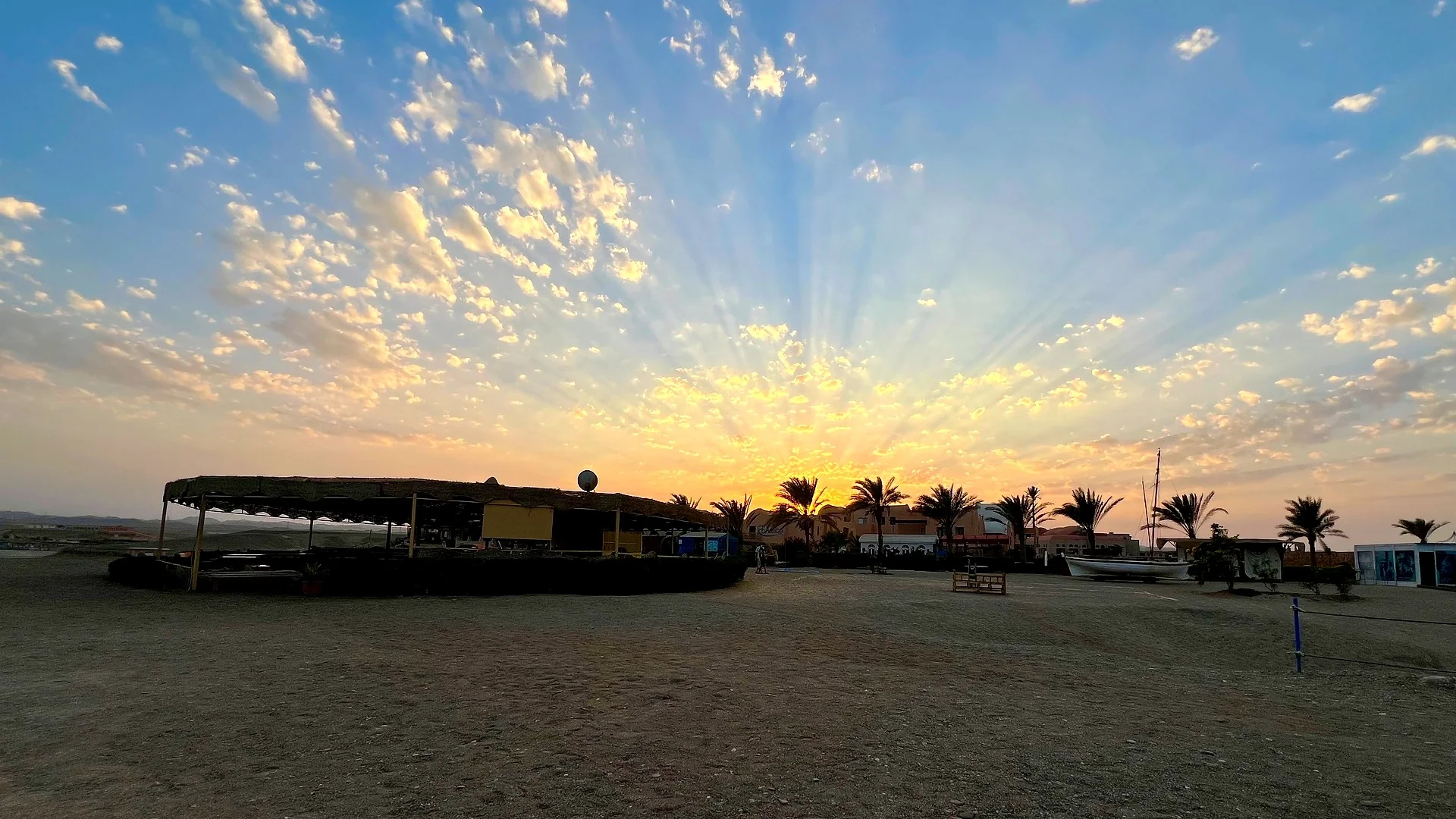
Ducks was founded in 1996 and for nearly three decades operated from Mangrove Bay, roughly 30 kilometres south of Quseir. In early 2025, the centre relocated to Rohanou Beach Resort, a boutique ecolodge property with a private beach and significantly better infrastructure. The house reef, Zerib Kebeer, is directly in front of the resort, steps from the equipment room.
The approach has not changed with the move: small groups, high standards, no shortcuts. The guides know the house reef the way a gardener knows a garden: which crevice holds the nudibranch, where the ghost pipefish shelter, which canyon passage turns blue at 09:30 when the sun clears the plateau. Free nitrox comes as standard for certified divers. Boats go out daily; when the weather closes in, the house reef is always open.
If you are learning to dive, Ducks is worth travelling for. The instructors here are serious about teaching. Small classes, proper time in the water, no pressure to move on before you are ready. Students who come here and then try other centres elsewhere tend to notice the difference.
Day trips reach Elphinstone Reef and the Salem Express wreck. The dive sites of Quseir itself number over thirty, most of them quiet. The divers who find this stretch of coast tend to come back.
quesier@ducks-diving.com
+20 12 07083313
@ducksquesier
Zerib Kebeer
Zerib Kebeer is the reef that sits directly in front of Rohanou Bay, and it has enough variety to fill a week of diving without feeling repetitive. Entry is from the jetty or the rocky shore. The seabed begins shallow and sandy, drops through coral gardens dense with table corals and brain formations, and then breaks into the feature the site is known for: a series of interconnected canyons and swim-throughs on the southern side, where vertical walls reach down to 25 metres and sunlight tracks through the passages as the morning moves.
The macro life is exceptional. Ghost pipefish and sea moths (the Red Sea Walkman) are found on the sandy central section. The canyon walls carry nudibranchs and crinoids. The north reef has a gentler slope with large coral block formations and occasional pelagic visitors: turtles, eagle rays, reef sharks. Manta rays and whale sharks have both been spotted here a handful of times. A mola mola was once recorded here. Visibility holds at 25 to 40 metres year-round and there is almost never a significant current, which makes the site suitable for training as well as for photographers who want time to look.
Ducks dives the house reef in the morning and again at night. Night dives here are particularly good: the canyon passages change character entirely under torchlight, and the sandy floor comes alive with invertebrate activity that is invisible during the day.
Dive Sites
Steps from the equipment room. Canyon maze, swim-throughs, macro photography.
Oceanic white-tips on the south plateau, hammerheads on the north. One of the Red Sea's great walls.
Passenger ferry that sank in 1991. A large, haunting wreck turned reef. Advanced divers.
30+ sites within reach. Abu Humra, The Rock, coral gardens and drop-offs.
Ducks is one of the longest-running independent dive centres on the Egyptian coast. Nearly three decades, the same team, and standards that have not been diluted by scale or turnover. Quseir is quieter than Hurghada and less known than Dahab, which is precisely the point. If you are heading this way, Ducks is where you dive.
Keep reading, and open the whole Atlas.
A free account opens the full Atlas: Ducks Dive Center in full, every dive center on the coast, the dive site catalogue and the incident log. Free to join.
Join free to keep reading