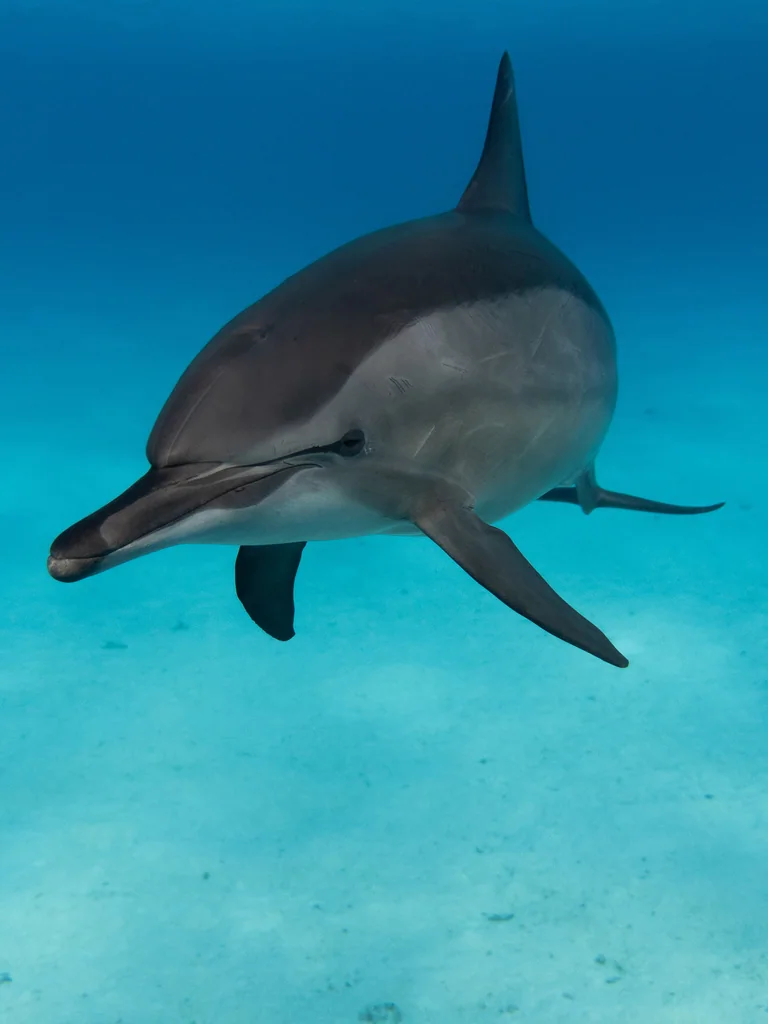
Stenella longirostris
Spinner Dolphin
A resident pod of over 100 dolphins calls Sataya home year-round. The finest dolphin encounter in the Red Sea, and one of the finest in the world.
Sataya Reef, in the far south of Egypt's Red Sea coast, hosts one of the most significant resident spinner dolphin populations in the world. A pod of between 100 and 200 animals has lived in the lagoon for decades, resting during the day in the protected waters of the horseshoe-shaped reef, and moving offshore to hunt at night. This rhythm, hunt at night, rest at day, is characteristic of spinner dolphins globally, but the Sataya pod is unusually large and unusually accessible.
Divers who reach Sataya on a liveaboard typically enter the lagoon in the morning, when the dolphins are in their resting phase. A resting pod presents very differently from an active one, slow, close-knit movement, tight group formation, shallow, regular breathing. The animals are not sleeping but they are conserving energy after a night of hunting. Chasing or crowding a resting pod is the single most damaging thing a diver or snorkeller can do at this site.
The correct approach, which the best operators brief carefully, is to enter the water quietly, maintain a position in the water column, and allow the pod to investigate on its own terms. Spinner dolphins in a resting state will often approach divers out of what appears to be curiosity, making slow passes at arm's reach before returning to the group. These encounters, done correctly, are among the finest wildlife experiences the Red Sea offers.
Spinners are named for their aerial displays, leaping clear of the water and spinning on a longitudinal axis for up to seven rotations before re-entering. The purpose of spinning appears to be social, it may signal readiness to travel or hunt, rather than play, though the distinction is not cleanly understood. At Sataya the spinning displays typically occur in the late afternoon when the pod transitions from resting to active mode before heading offshore.
During resting phases, pods maintain a slow, synchronised movement through the lagoon. Individual animals surface at regular intervals, breathe, and re-submerge in a wave that passes through the group. Approaching from the front or cutting into the group's path disrupts this rhythm and will cause the pod to alter course. Divers who position themselves to the side and remain still, allowing the pod to pass, have much longer and more rewarding encounters.
Dolphin behaviour at these sites is directly affected by the quality of operator briefings and group management. The Sataya pod is habituated to divers, which means encounters are reliable, but also that the animals will simply detour around groups that behave badly. Over time, repeated poor interactions can shift the pod's resting area deeper into the lagoon, away from the entry points.
Spinner dolphins in the Red Sea are not under significant direct hunting pressure. The primary conservation concern is disturbance, boats entering resting areas at speed, snorkellers crowding resting pods, and encounters that are managed for volume of participants rather than quality of experience.
There is documented evidence from other spinner dolphin populations globally that repeated disturbance of resting pods leads to measurable changes in rest duration, calf health, and pod cohesion. The Sataya pod is large and resilient, but it is not inexhaustible.
Atlas Position
Sataya is one of the most important wildlife sites in the Egyptian Red Sea, and its management as a dolphin encounter site determines whether the pod remains accessible to future divers or retreats beyond reach. The Red Sea Atlas supports operators who enforce proper entry protocols at Sataya, quiet water entry, no chasing, resting pod prioritised over active snorkelling experience. If your operator does not brief this, ask before you enter the water.
Sign in to share a sighting, behaviour note, or encounter.
No verified sightings yet. Be the first Atlas member to log an encounter.
Keep reading, and open the whole Atlas.
A free account unlocks every dive site guide and map, the marine life library, member reports, and the full incident log. Free to join.
Join free to keep reading