The Sea Knows How to Heal
For years, the conversation around the ocean has been dominated by decline.
Bleaching reefs. Empty seas. Vanishing wildlife.
The picture is not wrong, but it is incomplete.
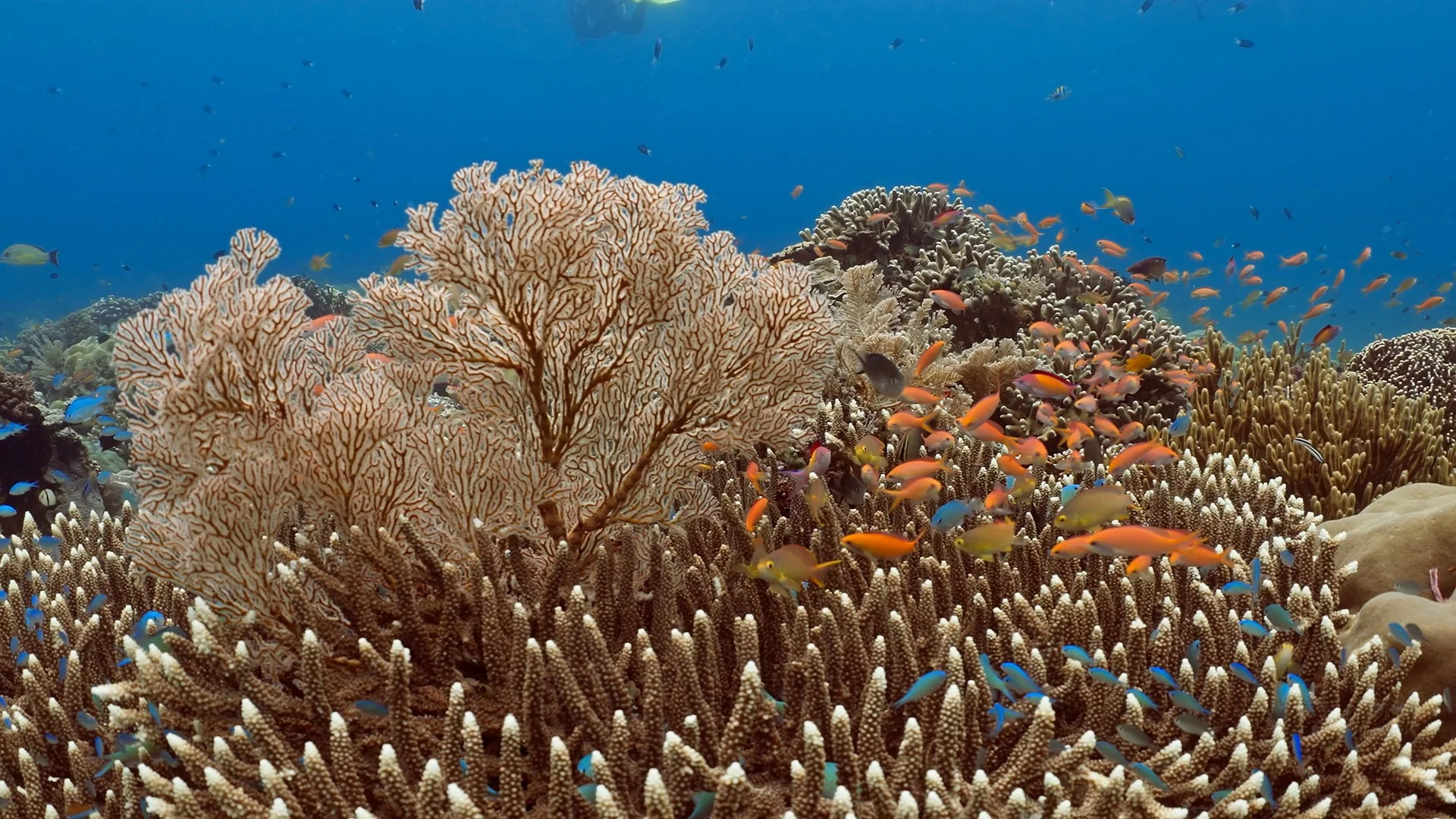
Across the world, whenever a stretch of ocean is genuinely protected and given time to recover, marine life returns. Fish populations rebound. Predators come back. Coral recovers. In some cases, the transformation happens within a single decade.
The lesson is surprisingly simple: the ocean is far more resilient than we give it credit for.
The question is not whether recovery is possible.
The question is whether we are willing to leave enough of it alone.
Why Reefs Matter
Coral reefs cover less than one percent of the ocean floor, yet support roughly a quarter of all marine species at some stage of their lives.
| Share of the ocean floor reefs cover | Under 1% |
| Share of marine species that rely on them | About 25% |
| People fed by reef fisheries | Hundreds of millions |
They are underwater cities, built over thousands of years by tiny coral animals. Around that structure gathers an entire ecosystem: fish, sharks, rays, crustaceans, molluscs, and countless organisms most divers never notice.
But reefs are more than beautiful places to dive.
They provide food, protect coastlines from storms, support local economies, and sustain entire coastal communities. In the Red Sea, reefs are not just part of the landscape. They are one of the reasons many coastal towns exist at all.
When a reef disappears, the loss extends far beyond the underwater world.
Protection Works
Conservation often sounds complicated.
In reality, the most successful marine conservation strategy ever discovered is remarkably straightforward.
Protect an area.
Stop extracting from it.
Wait.
Around the world, marine reserves have shown the same pattern repeatedly. Fish populations increase. Large predators return. Biodiversity rises. Adjacent fisheries often improve as marine life expands beyond protected boundaries.
The ocean does not need us to rebuild it.
It needs us to stop damaging it long enough for natural processes to take over.
The challenge is that truly protected ocean remains rare.
While marine protected areas cover a growing percentage of the world's seas, only a small fraction are fully protected from extraction. Many still permit activities that continue to degrade marine habitats.
| Ocean inside a protected area, on paper | About 10% |
| Ocean fully protected from extraction | About 3% |
| The global target agreed for 2030 | 30% |
A line on a map is not the same thing as protection.
Protection only works when it is enforced.
The Red Sea's Hidden Advantage
Most coral reefs around the world are struggling with rising temperatures.
When water becomes too warm for too long, corals expel the microscopic algae that provide most of their energy. The result is bleaching, and prolonged bleaching can lead to widespread mortality.
The Great Barrier Reef has experienced repeated bleaching events. Large parts of the Caribbean have suffered severe declines.
The northern Red Sea is different.
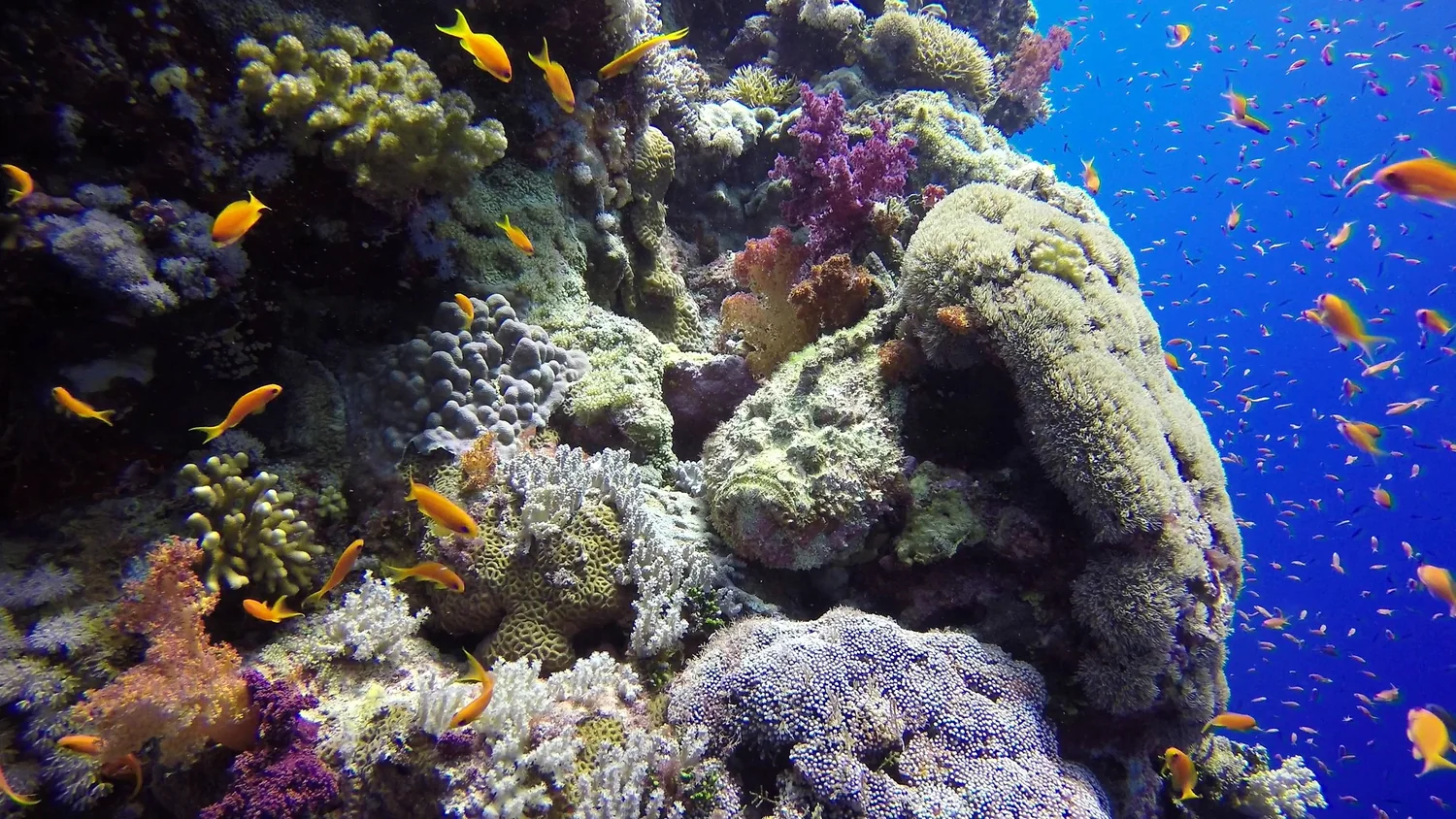
Its corals possess an extraordinary tolerance to heat, allowing them to withstand temperatures that would severely stress many reef systems elsewhere.
Scientists believe this resilience comes from the Red Sea's history.
After the last ice age, corals recolonised the region from the south, passing through some of the warmest waters in the area. Only the most heat-tolerant individuals survived that journey. The reefs found today in the northern Red Sea are descendants of those survivors.
The result is one of the most thermally resilient coral populations known anywhere in the world.
That does not make them invincible.
Recent heatwaves have pushed even these reefs closer to their limits than ever before.
But resilience matters.
Every additional year a reef survives provides more time for conservation, restoration, and adaptation.
In a world where many reefs are already struggling, the Red Sea holds something exceptionally valuable.
Ras Mohammed Shows What Is Possible
If anyone doubts the value of protection, they only need to look at Ras Mohammed.
Established in 1983, it became Egypt's first marine protected area and remains one of the country's greatest conservation successes.
The difference is visible underwater.
Healthy coral cover, abundant fish life, and thriving reef systems demonstrate what happens when a reef receives long-term protection.
The contrast between protected and heavily pressured reefs is often striking.
| Protected reef | Reef under pressure | |
|---|---|---|
| Live coral cover | Up to 90% | 20–30% |
| Fish life | Abundant | Depleted |
| Large predators | Present | Largely gone |
Nature responds when given the opportunity.
What Divers Can Do
Most threats to reefs feel enormous.
Climate change.
Overfishing.
Coastal development.
Yet many of the most important actions are surprisingly small.
Maintain good buoyancy and keep your fins well clear of the coral. Never stand on the reef, and never chase or corner the wildlife. Dive with operators who tie to mooring buoys instead of dropping anchor onto living structure. And leave the shells, the coral and everything else you find exactly where it is.
None of these actions are dramatic.
Collectively, they matter.
Every healthy reef is the result of thousands of individual decisions made over many years.
The future of the ocean is not a choice between collapse and perfection.
It is a choice between continued pressure and recovery.
The encouraging news is that recovery works.
We have seen fish populations return. We have seen predators come back. We have seen protected reefs thrive.
The Red Sea gives us even more reason for optimism. It contains some of the most heat-tolerant corals on Earth and a network of protected areas that demonstrate what long-term conservation can achieve.
The ocean does not require saving by a handful of heroes.
It requires millions of people making slightly better decisions, year after year.
Leave enough of it alone, and the sea does what it has always done.
It comes back.
Keep reading, and open the whole Atlas.
A free account unlocks every dive site guide and map, the marine life library, member reports, and the full incident log. Free to join.
Join free to keep reading