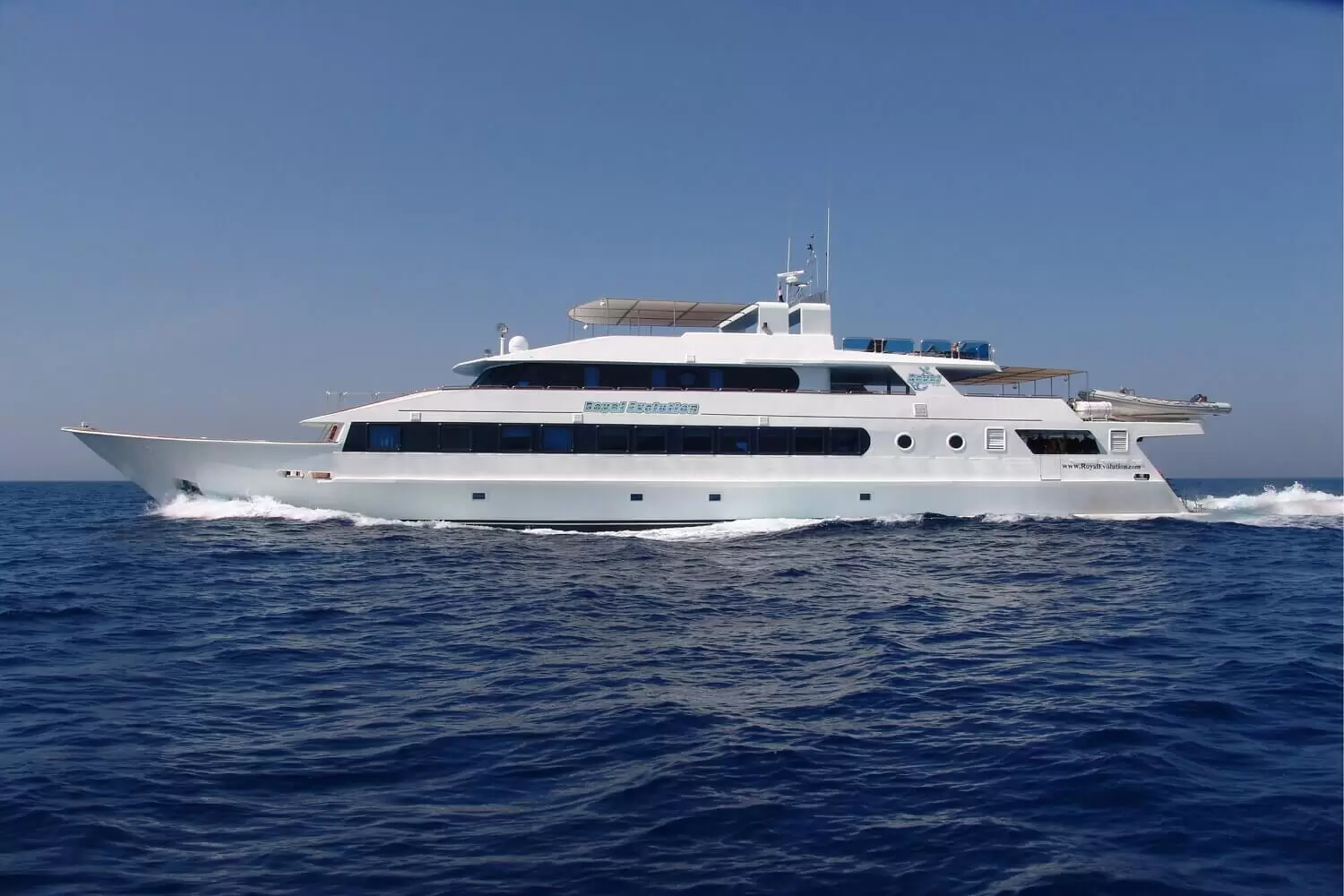
MY Royal Evolution, Three Days on Abu Dabbab Reef
MY Royal Evolution grounded on Abu Dabbab Reef on 24 October 2025. All rescued after three days stranded on the reef. Operator: Red Sea Paradise.
On the morning of 24 October 2025, the MY Royal Evolution ran aground on Abu Dabbab Reef, south of Marsa Alam, on the first day of what should have been a liveaboard itinerary from Port Ghalib. All 24 guests and between 14 and 17 crew were evacuated safely to a nearby vessel and later transferred to shore. The Royal Evolution remained on the reef for three days before being refloated and sailing away under its own power. Nobody was seriously injured.
What happened
The Royal Evolution was departing Port Ghalib, approximately 30 kilometres from Abu Dabbab , when it struck the reef. The operator, Red Sea Paradise for Cruises, released two official statements in the immediate aftermath. The company cited low tide conditions as a primary factor in the grounding. Forum discussions and preliminary reports pointed to a secondary possibility: that the autopilot unexpectedly altered course by several degrees, and that the skipper then made a deliberate decision to steer the bow toward the reef, judging a controlled bow impact to be less dangerous than allowing the vessel to strike the reef at its side. That account has not been formally confirmed by any investigation.
Post-grounding inspection found light keel contact and no hull damage, an unusual outcome for a vessel that sat on a reef for three days. The steel-hulled 39-metre boat, which holds Bureau Veritas certification and meets SOLAS safety standards, was assessed by military divers before the refloating operation began. A tugboat was positioned on standby throughout. On 27 October, three days after the grounding, the Royal Evolution was refloated and sailed from the site under its own power.
The reef
Abu Dabbab is one of the more accessible and popular reefs in the Marsa Alam area. It is best known for its resident dugong and the seagrass beds that sustain them, a site that draws divers specifically for close, non-invasive wildlife encounters. A 39-metre steel vessel sitting on the reef for three days, even with light keel contact only, exerts sustained physical pressure on the coral and seagrass below. No independent reef damage assessment has been published. The Atlas will update this record when one becomes available.
"A vessel on a reef for three days, whatever the hull condition, is three days of pressure on the corals beneath it. The absence of hull damage is good news for the boat. It is not the full story for the reef."
The operator's response
Red Sea Paradise released two statements in the 24 hours following the grounding, describing the situation as calm and under control throughout. The company stated that all guests were returned to shore with their luggage and that a thorough investigation was underway. They also offered to share underwater footage for transparency, and pushed back against what they described as misleading information circulating about the Red Sea liveaboard industry in the aftermath of the incident.
The Royal Evolution holds SOLAS certification, is surveyed by Bureau Veritas, and is certified for operations in Sudanese and Saudi Arabian waters. The vessel passed its required standards. The autopilot question, if confirmed, would point to a technical failure rather than a certification gap. No formal investigation findings have been published.
MY Royal Evolution is part of the permanent incident record maintained by the Atlas. The evacuation was orderly and all aboard were accounted for, the crew handled the situation professionally. The outstanding question is reef damage at Abu Dabbab, which has not been independently assessed. We will update this record when the investigation publishes findings. If you have been on board or have direct information about this incident, use the comment section below.
First day of itinerary from Port Ghalib. Grounded on Abu Dabbab Reef. All guests and crew evacuated.
Operator cited low tide. Preliminary reports suggest autopilot may have deviated; skipper steered bow toward reef to avoid side impact. Unconfirmed.
Royal Evolution sat on Abu Dabbab Reef from 24–27 October. Military divers assessed the hull. Refloated under own power.
All 24 guests and crew evacuated safely to Red Sea Explorer and ashore. Post-refloat inspection: light keel contact only.
No independent reef damage assessment published. Abu Dabbab supports seagrass beds and resident dugong. Atlas will update when assessment is available.
Leave a comment
Keep reading, and open the whole Atlas.
A free account unlocks every dive site guide and map, the marine life library, member reports, and the full incident log. Free to join.
Join free to keep reading