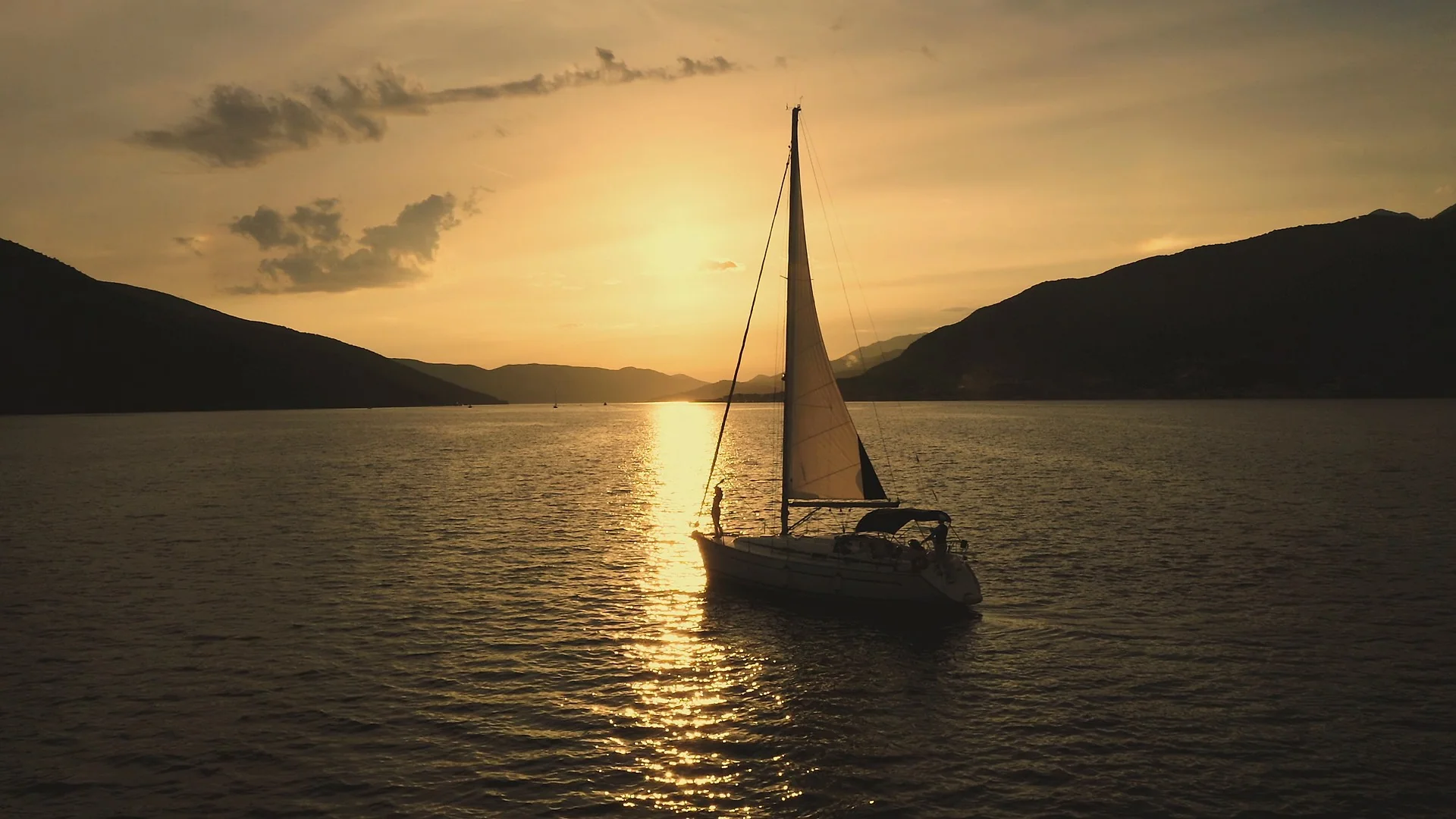
Cruising the Egyptian Red Sea, A Practical Guide
One of the great year-round sailing grounds, and one of the least sailed by private yachts. A practical guide to cruising the Egyptian coast: when to go, where to base, how clearing in actually works, the cruising grounds north to south, and the reef navigation discipline the Red Sea demands.
The Egyptian Red Sea is one of the best sailing grounds in the world, and almost nobody sails it. The water is warm and clear. The wind blows with a reliability you rarely find anywhere else. There are anchorages tucked behind reefs that most sailors will never lay eyes on. And yet the coast belongs to motor liveaboards and dive boats, not to yachts under sail. That has less to do with the sailing than with how hard it is to get a boat here in the first place, which is worth understanding before anything else.
This guide is for sailors who actually intend to come here, whether you are chartering a crewed boat or bringing your own. It covers when to go, where to base yourself, how clearing in really works, where the cruising grounds are, and the kind of navigation this sea asks of you. On anything to do with the bureaucracy, take what follows as a place to start the conversation, not the final word, and check the current position with a local agent before you commit.
Why so few yachts come
Start with geography, because that is most of the answer. The Egyptian Red Sea is not a stop on any casual cruising route. To bring a sailing yacht here you either transit the Suez Canal from the Mediterranean or make a long passage up from the Indian Ocean, and neither is a weekend decision. The cruising boats that do pass through are usually heading somewhere else, and they treat the Red Sea as a delivery to get through rather than a coast to linger on. The steady trickle of visiting yachts that fills the anchorages in Greece or the Caribbean simply never turns up here.
Then there is how you would charter, if you wanted to. There is no real bareboat market on this coast. You cannot fly in and pick up a boat to sail yourself the way you can in Greece or Croatia. Sailing here means a crewed charter or your own keel, and that alone filters out most casual sailors. Add the paperwork of bringing and keeping a foreign boat in Egypt, the hard reputation the reefs have earned, and a boat economy built almost entirely around motor dive liveaboards, and you end up with a coast that is superb to sail and, for now, mostly left to the dive boats. None of that makes the sailing worse. It just means the people who do come tend to have a reason to.
When to go, reading the calendar
You can sail here in any month, but the seasons are not equal. For most of the year the wind comes from the north, or a little west of north, and that single fact shapes how and when you move. Spring and autumn are the pick of it. Late September into November, and again March into May, the wind is steady without being brutal, the worst of the heat has gone, and the water is still warm. If you have a choice, aim for these months.
High summer, June through August, is strong wind and hard heat. On deck you are regularly past forty degrees, and the afternoon build pushes the breeze well into the twenties of knots. The sailing is good, but it asks a lot of you, and keeping the crew shaded and watered stops being a comfort and becomes a safety job. Winter, December through February, is cooler and less predictable. You get long settled spells of moderate northerly, then a stronger system sweeps down off the Mediterranean and stands up a sea state in a hurry. Spring carries one more hazard worth naming. The Khamsin is a hot southerly off the desert that fills the air with sand, drops visibility to nothing, and closes every water operation on the coast for a day or two at a stretch. If you are sailing in spring, leave slack in the plan for it.
The wind keeps daily hours too, and they are worth planning around. Mornings start light. The breeze builds through the late morning and tops out in the early afternoon, then falls away after sunset. On a longer hop this matters. An early start buys you flat water for the first miles, and it lets you be at anchor before the afternoon comes in hard.
The wind, and which way you will sail
The one fact to build your whole plan around is that the wind almost always comes from the north. Head south, toward Safaga and Marsa Alam, and you are running downwind. It is fast and easy, and it is easy to take for granted. Turn around and go north, back toward Hurghada, El Gouna and the Gulf of Suez, and now you are beating into the wind and into the short, steep chop this sea throws up. Plenty of crews plan a relaxed cruise south and forget that the way home is a different boat ride entirely. If you are on a charter with a date to be back, sail the upwind legs first while you still have time in hand, and keep the downwind miles as your reserve.
We have written the meteorology up in full elsewhere, the pressure systems that drive the wind, the way the mountains on each shore funnel it, and how it changes from Dahab down to Safaga. If you are planning a passage, that is worth reading before you open the charts.
"Sailing south is a holiday. Sailing north is the bill. Sail the beat first and keep the run in reserve."
Where to base, the marinas
There are only a handful of marinas worth the name on this coast, and they set the natural start and end points for any cruise. El Gouna is the heart of it. It has two marinas, Abu Tig and Abydos, with proper berthing, fuel, water and somewhere to provision, and it is where the country's sailing community actually lives. Most charters and sailing courses run from here, and for most people it is the obvious place to start.
Hurghada Marina, about twenty-two kilometres south, is the biggest on the coast, right in the town with restaurants and chandlery on the doorstep. It is busy and easy to reach. The catch is that the water around it is thick with dive and tourist traffic. Further south, Port Ghalib near Marsa Alam is a large modern marina and the usual gateway to the southern grounds, with an airport close by, which makes it a sensible place to join or leave a boat. Safaga, between Hurghada and the south, has port facilities and is the jumping off point for the Tobia anchorages, though it is more working harbour than cruising marina. Plan your fuel, water and stores around these few places, because the coast between them is genuinely empty.
Clearing in, the paperwork is the hard part
The sailing here is simple. The paperwork is not. Egypt keeps a close eye on where private boats go, and a foreign yacht arriving on its own keel has to clear in through customs, immigration, the coast guard and the maritime authorities. The best thing you can do is line up a good local agent before you arrive. Someone who knows the port, the officials and the forms will turn what can eat days into something you barely notice. You can clear in on your own, but it is slow, and a small mistake on a form can cost you far more time than it should.
Moving along the coast is more controlled than sailors from other parts of the world tend to expect. Some passages and anchorages need permission first, and the coast guard genuinely cares where you are and when. None of this should scare you off. The marinas and charter operators deal with it every week. But it does mean you cannot just wander down the coast on a whim, anchoring wherever the mood takes you. Settle your itinerary in advance, clear it through your agent or operator, and keep your papers in order and within reach. Charter a crewed boat through a local operator and all of it is handled for you, which is a big part of why most people see this coast that way.
Permit requirements, fees and procedures change, and they differ from port to port. Treat anything you read, here or anywhere else, as a reason to ask a current question, not as a final answer. A local agent or your charter operator will always have the live position. Confirm it before you sail, not after you arrive.
The cruising grounds, north to south
The coast breaks into a few distinct areas, each with its own feel. Up north, the Gulf of Suez and the Strait of Gubal are scattered with low islands and reef anchorages, the same water that holds the famous wrecks. It is open, exposed and tidal, and it does not reward a sloppy plan. The easiest ground to start on is the cluster of islands off Hurghada. Giftun, Abu Minqar and their neighbours give you a handful of sheltered anchorages a short hop from a full marina, which makes them ideal for a shorter cruise or for finding your feet.
South of Safaga, the Tobia islands and their reefs give you some of the best protected anchoring anywhere on the coast. Keep going and the shore opens into a long run of marsas, the natural bays the Arabic word describes, strung out toward Marsa Alam and beyond. This is the quietest, wildest part of the Egyptian coast, with anchorages where yours may be the only boat in sight. It is also the most committing. The facilities thin out, the gaps between safe havens stretch, and being able to look after yourself stops being a nice idea and becomes the whole game. The deep south is for sound boats and experienced crews. It is not where you learn the coast.
Navigation, the reefs will test you
This is where the Red Sea parts company with gentler cruising grounds. The coast is laced with coral, and a lot of it climbs almost straight up from deep water to just under the surface. Often there is no slope to warn you. The sounder reads a hundred metres, then two, inside a boat length. The charts do not save you either. They are incomplete, and in places plain wrong, with reefs drawn in the wrong spot or missing altogether. You cannot run this coast on the electronics, and a plotter track that looks clean can put you straight onto the coral.
What keeps you off the reef is your own eyes. You read the water. With the sun high and behind you, the reef shows up as a change of colour. Deep blue is water you can trust. Turquoise and brown is coral and shallows. That is why you move through reef country in the middle of the day, roughly mid morning to mid afternoon, when the sun is high enough to light the bottom. Polarised sunglasses are not a nicety, they are how you see. Put a lookout forward and high, agree your hand signals with the helm before you start, and go into any unfamiliar anchorage slowly, someone on the bow, never with the sun in your face.
Which leads to the one rule on this coast you do not break. Do not run through reef water at night or in bad light. Our incident log is full of professional boats that did. The Firebird hit a reef on a night passage toward Dahab. The Seaphoria went onto Daedalus with the captain asleep. These were crewed vessels, run by people who knew the water, and the reef took them anyway. A private yacht has far less room for error. Plan your passages to arrive while you can still see, and if you cannot reach an anchorage before the light goes, heave to in deep water or simply stay put. The reef will not move. It will not forgive you either.
"The depth goes from a hundred metres to two in a boat length. The sounder gives you no warning. The water does, in its colour, if you are looking."
Anchoring, without wrecking the reef
How you anchor matters as much for the reef as for the boat. The rule is simple. Drop on sand, never on coral. You find an anchorage the same way you sail through one, by eye. Look for the pale patch of sand between the coral heads, set the hook there, then watch how you swing so the chain does not saw across living reef when the wind shifts. Coral takes decades to grow and one careless anchor to wreck, and that damage is one of the reasons reefs on this coast have gone backwards. Use the mooring buoys where they exist. Where they do not, take the sand and a little care over an easy drop on coral every time.
The holding in sand is usually good, but most of these anchorages are open to the northerly, so your shelter tends to come from the reef in front of you, not from the land. A wind shift, or a stronger system overnight, can turn a calm spot into a lee shore against coral, which is the last place you want to be dragging. Set the anchor properly, snub the chain, and if the anchorage is exposed and the forecast is twitchy, keep an anchor watch through the night.
Water, fuel and provisioning
The further south you go, the more you carry. Around El Gouna and Hurghada you are never far from fuel, water and a full supermarket. South of Safaga the gaps open up, and by the deep south you want to leave with full tanks, full water, and stores for the whole leg with margin on top. A watermaker changes a southern cruise more than almost any other piece of kit, because fresh water is usually what turns you around. Carry more drinking water than you think you need. The heat does not let up, and dehydration sneaks up on people who feel perfectly fine.
Fresh food is easy in the resort towns and scarce everywhere else, so load the staples before you head south and treat whatever you find on the way as a bonus. Diesel is at the marinas, but arrange it through your agent or the marina office rather than trusting that a fuel dock will be open when you turn up. Carry the spares that matter, too. Chandlery is thin on this coast, and a part that is a phone call away in Europe can cost you a week here.
The Red Sea is a serious sailing ground, and most sailors only ever see it from the deck of a motor liveaboard. It deserves to be sailed. But it is not a forgiving coast, and the very things that make it worth the trip, the reefs, the distance, the wind, are the same things that catch out anyone who treats it casually. For most people the right way to start is a crewed charter with an operator who knows the water and handles the paperwork. Learn the coast like that, then come back with your own boat. However you arrive, the rules do not change. Anchor on sand, sail in good light, and leave the reef the way you found it.
Late September to November and March to May. Steady wind, eased heat, warm water.
From the north most of the year. South is downwind, north is a beat. Sail the windward legs first.
El Gouna (Abu Tig and Abydos marinas), Hurghada Marina, Port Ghalib for the south.
Reefs that climb straight out of deep water, often mischarted. Navigate by eye, not by plotter.
Do not move through reef water in poor light. Time your arrivals for high sun. The reef does not forgive.
Member Comments
Leave a comment
Keep reading, and open the whole Atlas.
A free account unlocks every dive site guide and map, the marine life library, member reports, and the full incident log. Free to join.
Join free to keep reading