Ras Hankorab, The Beach That May Not Survive 2026
One of the most intact beaches on the African continent sits inside a protected national park, and a hotel development project is threatening to end that. The Atlas documents what Ras Hankorab is, what the law says, and what divers can do.
Ras Hankorab, also known as Sharm El Luli, is a 2.5-kilometre beach on Egypt's southern Red Sea coast, 56 kilometres south of Marsa Alam, inside Wadi El Gemal National Park. The park was established in 2003 and carries IUCN Category II protected area status. The beach is primarily known as a camping and day-trip destination, people come for the beach itself, not to dive, and it is one of the most ecologically intact stretches of coastline remaining in Egypt. In 2025 it became the subject of a development dispute that Egyptian environmental activists are fighting in public.
What is here
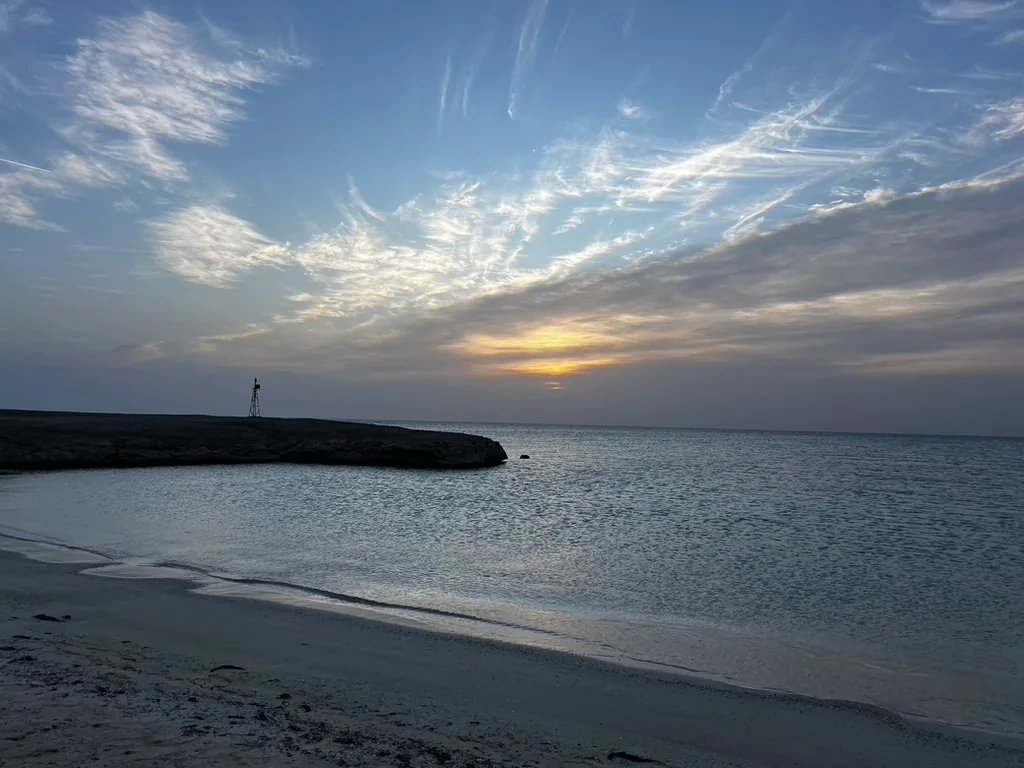
The beach itself is white sand in a naturally sheltered bay, backed by bare desert hills that run directly into the sea. There is no shade structure, no vendor, no facility of any kind. Day-trippers come from Marsa Alam and the Hamata area for the beach, arriving in the morning, spending the day on the sand, and driving back before dark. Campers stay overnight with a permit obtained from the coast guard, sleeping under a sky with no light pollution and waking to turtle tracks crossing the sand. The road in is 56 kilometres of unpaved desert, a 4x4 is required and the drive takes roughly 45 minutes. Liveaboard vessels occasionally use the bay as an overnight anchorage on the southern Red Sea circuit, but the beach is not primarily a diving destination.
The marine environment reinforces why the beach matters beyond its aesthetics. Hawksbill and green sea turtles nest on the sand. Dugongs have been sighted in the seagrass beds. The reef begins close to shore and snorkelling is accessible directly from the beach without a boat. The condition of the coral reflects the near-absence of shore-based human impact. The broader Wadi El Gemal park area contains mangrove stands, rare fish species and one of the most intact desert-to-sea ecosystems remaining on the African coast.
The development dispute
In 2025, Egyptian environmental activists launched a public campaign, Save Honorab, to halt a development project proposed for Ras Hankorab. The site sits inside a nationally designated protected area. That designation has not, historically, been an absolute barrier to development on the Egyptian coast, the history of protected zones across the country includes cases where approved projects have proceeded despite conservation objections.
The campaign mobilised divers, conservationists and travellers across Egypt and beyond. In the short term it worked: the beach was reopened to campers, and the development appears to have been delayed. What has emerged from the discussions is that the project is not a full hotel, what is being proposed is stone rooms and huts built in keeping with the desert landscape. The questions of who owns the land and what has been formally approved remain unresolved. The Atlas has been close to this story and will not publish details that cannot be verified.
The activists' argument is straightforward: any permanent infrastructure on this beach changes what the beach fundamentally is. The seagrass beds that support the dugong population, the turtle nesting sites, the coral reef accessed directly from the sand, all of these depend on the absence of permanent structure and the low visitor density that comes with a beach reachable only by those willing to make the drive. Even stone huts change that calculation permanently.
"The beach is what it is because it is hard to reach. A hotel does not add to Ras Hankorab, it replaces what Ras Hankorab is."
Protected status and what it means in practice
Wadi El Gemal National Park covers 7,450 square kilometres, 4,770 on land and 2,100 marine. It is managed under IUCN Category II, which permits educational and recreational tourism at sustainable scales but is intended to protect the ecosystem as its primary purpose. The park was established in direct response to the ecological value of this stretch of coast and the threats posed by unmanaged development.
Protected status creates a legal framework. It does not, by itself, prevent development. Enforcement and the independence of the decision-making process matter as much as the designation on paper. The 2025 campaign has brought international attention to the site, Mongabay, among others, has covered the dispute in detail. Whether that attention is sufficient to halt the project is not yet known.
Why the Atlas is documenting this
The Atlas exists in part to document what is being lost in the Red Sea, and to record threats before they become facts. Ras Hankorab has not yet been developed. The reef is still intact, the turtles still nest, the dugong still have their seagrass. This is a story about something that can still be saved, not something already gone.
We will follow the development dispute and update this page as the situation develops. If you have been to Ras Hankorab, have direct knowledge of the development plans, or are involved in the conservation campaign, the comment section below is the right place to add to the record.
Ras Hankorab is one of the last genuinely undeveloped beaches on the Egyptian Red Sea coast. It is first and foremost a beach, a destination for campers and day-trippers, not a diving hub. Its ecological value, sea turtle nesting, dugong habitat, intact reef accessible from shore, is directly tied to its current condition. The Atlas opposes development at this site and will document the progress of the conservation campaign. Anyone travelling the southern Red Sea coast is encouraged to see it while it remains as it is.
Member Comments
Leave a comment
Keep reading, and open the whole Atlas.
A free account unlocks every dive site guide and map, the marine life library, member reports, and the full incident log. Free to join.
Join free to keep reading