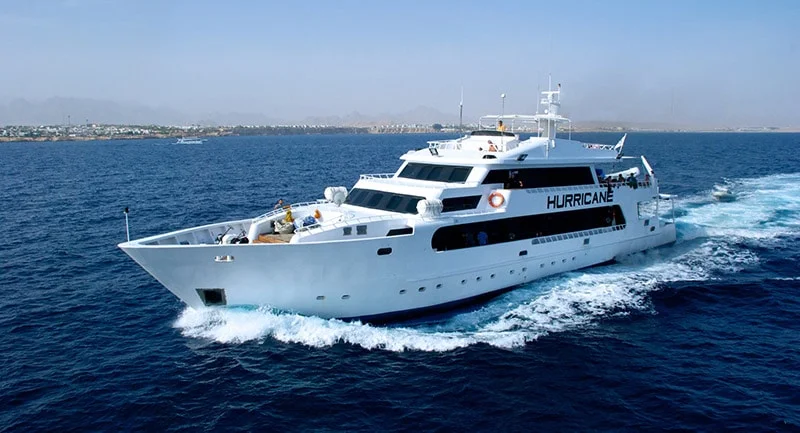
MV Hurricane, Fire at Sea
Fire broke out aboard MV Hurricane in June 2023. Three British nationals died. A detailed account of the incident and its aftermath.
In June 2023, a fire broke out on the liveaboard MV Hurricane while operating in the Red Sea. Three British nationals died. The vessel was lost. It was one of the incidents later documented in the UK Marine Accident Investigation Branch's formal safety bulletin of February 2025.
Hurricane was not an obscure or isolated event. It was, alongside Sea Legend and Sea Story, one of three Red Sea liveaboard losses involving British nationals in the space of 21 months, a pattern the MAIB documented and brought to the attention of the diving public.
How the fire spread
Fire on board a liveaboard is among the most dangerous emergencies a diver can face at sea. At anchor or underway, fire can spread from a single compartment to engulf a vessel within minutes if fire detection, suppression and emergency response systems are inadequate or absent.
The Hurricane fire spread rapidly. Fire safety standards, detection systems, suppression equipment, crew training and emergency lighting, are part of the certification requirements every licensed Red Sea liveaboard must meet. The vessel had passed its required regulatory inspections. What the incident demonstrated is that passing an inspection and having systems that perform under pressure are not always the same thing.
Fire safety on Red Sea liveaboards
Red Sea liveaboards must hold valid certificates of operation and pass required safety inspections before carrying passengers. Those requirements include fire detection, suppression systems, emergency lighting, muster drills and crew training. The Thistlegorm passed its regulatory tests. So did Sea Legend. So did Sea Story. Certification is the minimum, it is not, by itself, a guarantee of performance under emergency conditions at sea.
The UK, as a Substantially Interested State under international maritime law, has standing to formally raise concerns when its nationals are killed at sea. The MAIB exercised that standing following Hurricane, Sea Legend and Sea Story, three fatal incidents in twenty-one months involving British nationals.
"Three dive boats have sunk in the Red Sea in the last 21 months involving UK nationals, leading to the deaths of six UK nationals and one other."
What the Hurricane incident revealed
Hurricane exposed the same structural vulnerability that subsequent incidents would confirm: when a fire or critical emergency occurs on a Red Sea liveaboard, the systems that are supposed to contain it, early detection, crew response, suppression equipment, are frequently inadequate or missing. The result is a situation that escalates from manageable to fatal far faster than it should.
The full findings from the Hurricane investigation were not made widely available to the international diving community. The Red Sea Atlas documents these incidents permanently and in full, because the alternative is a record that disappears, and divers booking the same routes deserve access to what happened before them.
MV Hurricane is part of the public incident record that prompted the UK MAIB to formally intervene in December 2024. The Atlas documents all serious incidents on the Red Sea regardless of operator, and links them where patterns exist. For guidance on how to assess a liveaboard operator before booking, read the MAIB Safety Bulletin, February 2025.
Fire on board MV Hurricane. Vessel lost.
Fire spread too fast to contain. Three British nationals died.
One of three fatal Red Sea liveaboard incidents involving British citizens in 21 months.
MAIB formally notified. Incident cited in December 2024 diplomatic communication and February 2025 safety bulletin.
Leave a comment
Keep reading, and open the whole Atlas.
A free account unlocks every dive site guide and map, the marine life library, member reports, and the full incident log. Free to join.
Join free to keep reading