Five Divers Dead in Maldives, What Happened Inside the Cave
Five Italian nationals, four marine scientists from the University of Genoa and a diving instructor, died inside an underwater cave in Vaavu Atoll on 15 May 2026. A Maldivian military diver died in the recovery attempt. The liveaboard operator's licence has been suspended.
On the morning of Thursday 15 May 2026, five Italian divers entered an underwater cave system in the Vaavu Atoll of the Maldives and did not come out. One body was recovered from the cave entrance the same day. The other four were located three days later, deep inside the cave, by a specialist Finnish recovery team operating on closed-circuit rebreathers. A sixth person, a Maldivian military diver who went in to help retrieve them, died during the search.
The Maldivian government has called it the worst single diving accident in the country's history. The Italian government has opened a parallel investigation. The liveaboard that carried the group, the 36-metre Duke of York, operated by Luxury Yacht Maldives and Albatros Top Boat, has had its licence suspended indefinitely. There are more questions than answers, and the investigation is ongoing. What follows is what is known, what is speculated, and what remains genuinely unclear.
Who died
The five Italian nationals who died were not casual tourists. Four of them were connected to the University of Genoa's marine science department.
Monica Montefalcone, 51, was an associate professor of ecology and marine biology at the University of Genoa, a working marine scientist with a distinguished academic record and, by all accounts, a serious and experienced recreational diver. Her husband, Carlo Sommacal, has described her as "disciplined" and meticulous about risk assessment before entering the water.
Giorgia Sommacal, 23, was Monica's daughter and a biomedical engineering student, on what appears to have been a research and diving trip with her mother. Muriel Oddenino, 31, and Federico Gualtieri, 31, both researchers in the same department, completed the academic group. Federico had recently graduated in marine biology.
The fifth diver was Gianluca Benedetti, a diving instructor from Padua and the operations manager of the company that operates the Duke of York. His body was found at the cave entrance on the day of the incident, he appears to have been leading the dive.
The sixth death was Sergeant-Major Mohamed Mahudhee, 43, a senior Maldivian National Defence Force diver who entered the cave as part of the initial recovery effort and died, reportedly from suspected decompression illness after the nature of the mission forced an unplanned ascent profile. His death halted the search and prompted the government to bring in specialist civilian cave divers.
The cave
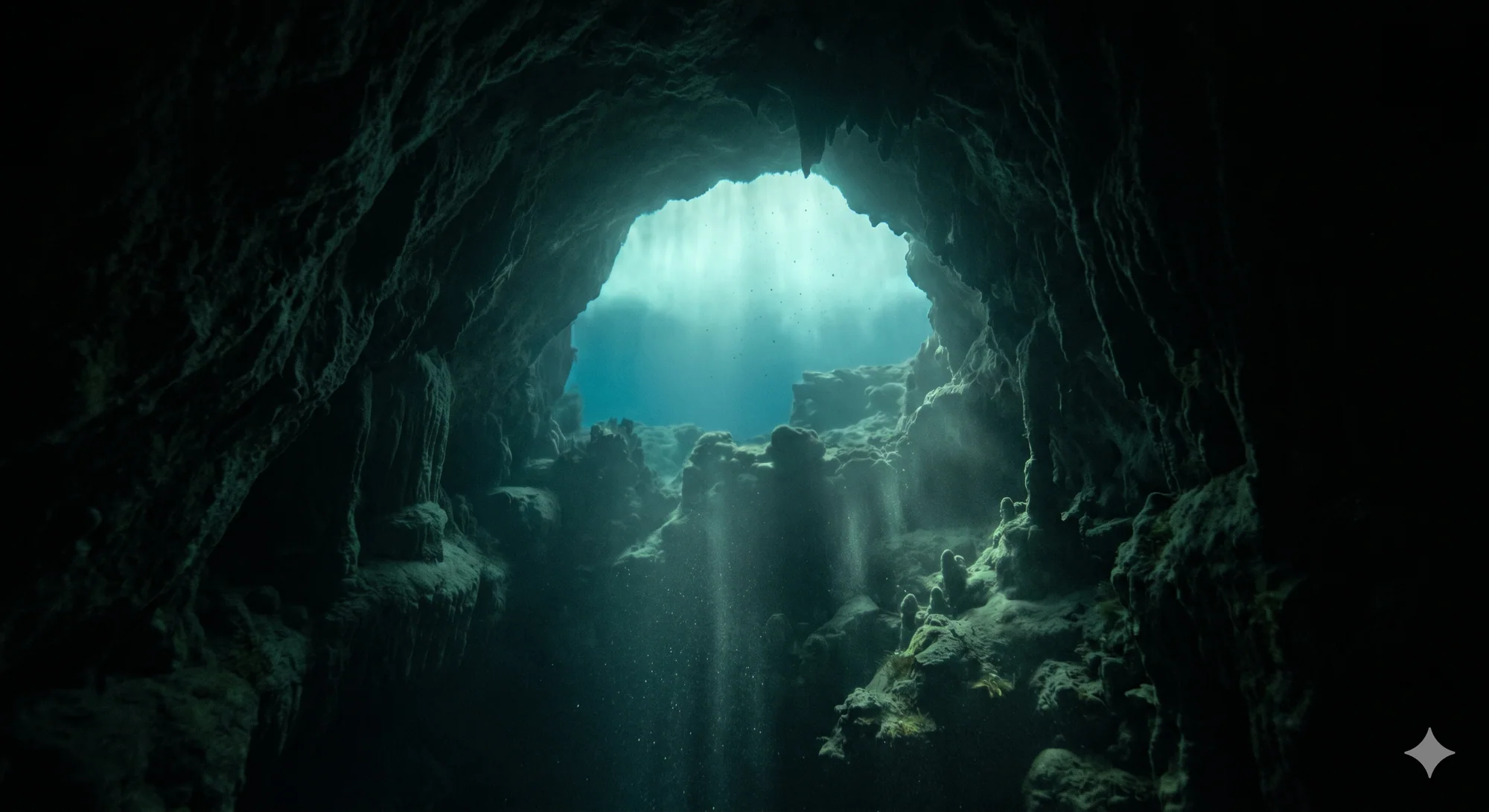
The Dhekunu Kandu cave system, known locally as "Shark Cave", sits near Alimathaa island in Vaavu Atoll, approximately 100 kilometres south of Malé. The site is reached from the channel of Devana Kandu, which is known for strong and unpredictable currents.
The cave entrance sits at between 55 and 60 metres depth. The system extends hundreds of metres through multiple chambers and internal passages, in complete darkness. For context: the Maldives places its recreational diving limit at 30 metres, and depths beyond 40 metres are classified internationally as technical diving, requiring specialist training, equipment, and gas planning.
This cave system is not a recreational dive site. Its entrance alone lies 25 metres below the legal limit for recreational diving in Maldivian waters. Any penetration of it, particularly without guideline reels, redundant gas supplies, and cave diving certification, constitutes a serious deviation from established safety practice. A yellow weather warning was in effect on the day of the dive, with rough conditions and strong winds reported at the surface.
The timeline
What the evidence suggests
The investigation is at an early stage. No official cause of death has been determined and formal findings will take months. What follows is what the available evidence indicates, not a conclusion, but an honest account of where the analysis currently points.
Gianluca Benedetti's dive tank was found empty. This is the single most significant physical clue recovered so far. It does not necessarily tell us what happened inside the cave, it may indicate that he attempted to help another diver who had run low, that he became disoriented and consumed his gas searching for the exit, or that the dive was simply longer than the gas supply could support. What it rules out is a rapid, early incapacitation, the tank being empty suggests he was breathing, moving, and consuming gas for a sustained period after entering the cave.
The depth compounds everything. At 55–60 metres, nitrogen narcosis becomes a significant impairment for a diver on recreational equipment breathing air. Cognitive capacity is substantially reduced, decision-making slows, spatial reasoning degrades, and the ability to problem-solve under pressure is compromised. Inside a dark, confined, unfamiliar cave system at that depth, a single diver in difficulty is a crisis. Five divers, four of whom appear to have been equipped for recreational, not technical, diving, attempting to manage that crisis together creates conditions where a domino effect of gas consumption, disorientation, and reduced visibility from disturbed sediment becomes a real and documented risk.
The strong current in Devana Kandu is a further variable. Whether the group entered the cave to shelter from current, were carried into it, or chose to enter it deliberately as part of a planned exploratory dive is not yet established. The distinction matters for understanding the degree of intent involved and the culpability of whoever planned the dive.
The families have been careful to resist blaming the divers themselves. Carlo Sommacal, Monica Montefalcone's husband, who also lost his daughter, has said that his wife was careful, disciplined, and thorough in evaluating risk before any dive. "Something must have happened down there," he has said, implying that whatever sequence of events took their lives may have begun with a factor outside the group's control. That may be true. It may also be that the true cause was the entry itself, into an environment for which recreational equipment and training are categorically insufficient, regardless of how experienced or disciplined the individual divers were.
What is not yet known
There is a significant amount of information that has not been established, and the gaps matter. Whether this dive was a planned cave penetration or an opportunistic one, and who made that decision, is central to the investigation. Whether Benedetti, as the professional on the boat and the person leading the dive, proposed, approved, or permitted the entry is unknown. Whether the other four divers understood the nature and risk of what they were entering is unknown. Whether the Duke of York's operators had any knowledge that this kind of dive was being planned is unknown.
The four academics were marine scientists. They were comfortable in the water, knowledgeable about the ocean, and by all accounts serious about their diving. But marine science experience does not translate to cave diving competence, these are categorically different disciplines, and one does not confer the other. Whether any of the five held cave diving certification is not yet publicly known.
The bodies were found deep inside the cave system. The Finnish team's three-hour penetration using CCRs and DPVs, the most capable configuration available for this kind of environment, gives some indication of how far inside the system the group had travelled. The fact that four of five ended up that deep, rather than at or near the entrance, suggests the group was moving further into the cave rather than attempting to exit it when they ran out of gas or became incapacitated.
The recovery
The Finnish divers who located the bodies are not unknown names in the cave diving world. Sami Paakkarinen and Patrik Grönqvist became internationally recognised through the 2016 documentary Diving Into The Unknown, which documented their recovery of two friends from a cave system in Norway, a dive that required weeks of planning and pushed the limits of what civilian cave divers are capable of. Jenni Westerlund accompanied them to the Maldives. All three operate on closed-circuit rebreathers, the equipment that allows extended cave penetrations that would be impossible on open-circuit gear.
The contrast is instructive. The people who went into that cave to find the bodies were among the most qualified cave divers in the world, equipped with the most capable technology available, operating with full redundancy and meticulous preparation. The people who entered that same cave eleven days earlier appear to have been equipped for a recreational dive to 30 metres.
What this means for liveaboard divers
This incident happened in the Maldives, not the Red Sea. But it is directly relevant to anyone who dives from a liveaboard anywhere, and it raises questions that apply to the Red Sea as much as to any offshore environment where divers are operating away from shore support, away from easy rescue, and in conditions that may exceed the certification and equipment they are carrying.
The specific question is one of oversight. A liveaboard dive guide or operations manager who takes clients into an overhead environment, a cave, a wreck, an arch, at a depth that exceeds recreational limits, on recreational equipment, bears a responsibility that goes beyond what a dive briefing can satisfy. That responsibility is either structural, built into the operator's protocols, or it is not there at all. The Duke of York investigation will eventually establish what the operating company knew, what Benedetti was authorised to do, and whether the group entered the cave with or without the knowledge of anyone ashore.
The rule that keeps recreational divers safe in caves and wrecks is not a guideline: it is a hard limit. Overhead environments without direct access to the surface require cave or wreck penetration certification, guideline reels, minimum three light sources, and gas planning built on the rule of thirds. These are not bureaucratic requirements. They are the distillation of what happens when divers enter these environments without them.
Five people died inside an underwater cave in the Maldives. A sixth, a soldier who went in to bring them home, also died. The investigation will produce findings, the operator will face consequences, and the Maldives will review its oversight of diving at sites like this. What will not change is the physics: overhead environments below 40 metres are technical environments, regardless of how experienced the people entering them are, regardless of the proximity of a liveaboard above, and regardless of how familiar any of them are with the ocean. The equipment and training required for these environments exist because the alternative is what happened in Vaavu Atoll on 15 May 2026.
This article was written on 18 May 2026. The bodies of the four divers were located by the Finnish CCR team earlier today but retrieval is ongoing. The Maldivian police investigation and Italy's parallel inquiry are both at early stages. We will update this article as confirmed information becomes available. Speculation beyond the established record has been deliberately excluded.
Dhekunu Kandu (Shark Cave), near Alimathaa island, Vaavu Atoll, 100km south of Malé.
Duke of York, 36m liveaboard. Operated by Luxury Yacht Maldives / Albatros Top Boat. Licence suspended.
55–60 metres. Maldives recreational limit is 30m. Cave extends hundreds of metres through multiple chambers.
Yellow weather warning in effect. Strong currents in the channel. Rough seas, strong winds at surface.
Five Italian nationals, four from University of Genoa marine science dept., one diving instructor and liveaboard ops manager.
Finnish CCR divers Paakkarinen, Grönqvist, Westerlund, using rebreathers and DPVs. Three-hour penetration on 18 May.
Criminal investigation open. Operator licence suspended. No charges announced.
Italy's government has opened a parallel investigation. Embassy in Colombo supporting families.
Whether cave entry was planned or spontaneous. Whether any diver held cave certification. What role the operator had.
Leave a comment
Keep reading, and open the whole Atlas.
A free account unlocks every dive site guide and map, the marine life library, member reports, and the full incident log. Free to join.
Join free to keep reading