MAIB Safety Bulletin, What Divers Need to Know
In February 2025, the UK Marine Accident Investigation Branch issued a formal safety bulletin warning divers to book only through reputable operators. Sixteen accidents in five years. Here's what the bulletin actually says.
On 6 February 2025, the UK Marine Accident Investigation Branch published a formal safety bulletin directed at divers booking Red Sea liveaboard trips. The bulletin followed a December 2024 formal communication in which the MAIB raised the matter with the relevant maritime authorities.
The bulletin was the result of years of accumulating incidents. The MAIB documented sixteen accidents across five years, three vessel losses in twenty-one months, and the deaths of six British nationals, a record it described as requiring urgent attention, and one that every diver booking a Red Sea liveaboard should be aware of.
What the MAIB actually is
The Marine Accident Investigation Branch is the UK government's independent marine accident investigation body. It investigates maritime accidents involving UK-flagged vessels and accidents involving non-UK vessels where British nationals are killed or seriously injured. It has no jurisdiction over operators in other countries, but it has standing under international maritime law to formally raise concerns with the relevant authorities when British citizens are killed at sea.
Its safety bulletins are advisory. They carry no enforcement power outside the UK. Their value is in the authority of the institution issuing them, the formal record they create, and the information they place in the public domain for divers to use when making booking decisions.
The incidents behind the bulletin
The three vessel losses cited by the MAIB as the immediate trigger for its December 2024 intervention were MV Hurricane (June 2023, fire, three British nationals dead), MY Sea Legend (February 2024, fire, one German national dead), and MV Sea Story (November 2024, capsized, eleven confirmed dead including two British nationals). Taken together they represented three separate operators, three different types of incident, fire, fire, capsize, and a death toll of fifteen people across twenty-one months.
What the bulletin recommends
The MAIB's bulletin is directed at British divers but its recommendations are relevant to anyone booking a Red Sea liveaboard trip. The core guidance is practical and worth reading in full. In summary:
"The MAIB has written to the Egyptian Authority for Maritime Safety and urges UK divers to be aware of the safety risks and take appropriate precautions."
New requirements for liveaboard operators
Following the Sea Story disaster, new mandatory requirements were introduced for liveaboard operators. Each vessel is now required to carry two licensed captains, one holding a master mariner patent and one with a minor marine patent, and two mechanics with formal engineering qualifications. All crew must be formally registered on the vessel's operational permit.
These requirements, introduced in December 2024, represent a meaningful step forward. When asking about a liveaboard before booking, verifying that the vessel carries two qualified captains is now a minimum standard question, and one that reputable operators will have no problem answering.
What this means for your next trip
The MAIB bulletin does not say don't dive the Red Sea. Neither does the Atlas. The Red Sea is one of the finest diving destinations on earth and the vast majority of liveaboard trips complete without incident. The issue is not the diving, it is the uneven standard of vessels and operators that divers are booking without adequate information.
The Atlas's recommendation is straightforward: use the incident record in this Log, read operator histories before booking, and apply the MAIB's checklist before you step on board. The information now exists. There is no longer any reason to book blind.
The Atlas compiles and maintains the most complete public incident record for Red Sea liveaboards currently available. We do not list operators who have not met our standards, and we document incidents permanently regardless of commercial relationships. The MAIB bulletin and the Atlas Log exist for the same reason: because divers deserve the information that the industry has historically withheld.
MAIB safety bulletin published, following December 2024 formal diplomatic communication.
The scale of incidents in the MAIB's review period that prompted the bulletin.
MV Hurricane (Jun 2023), MY Sea Legend (Feb 2024), MV Sea Story (Nov 2024).
The MAIB has no jurisdiction over operators in other countries. The bulletin is practical guidance for UK divers and anyone else booking Red Sea liveaboards.
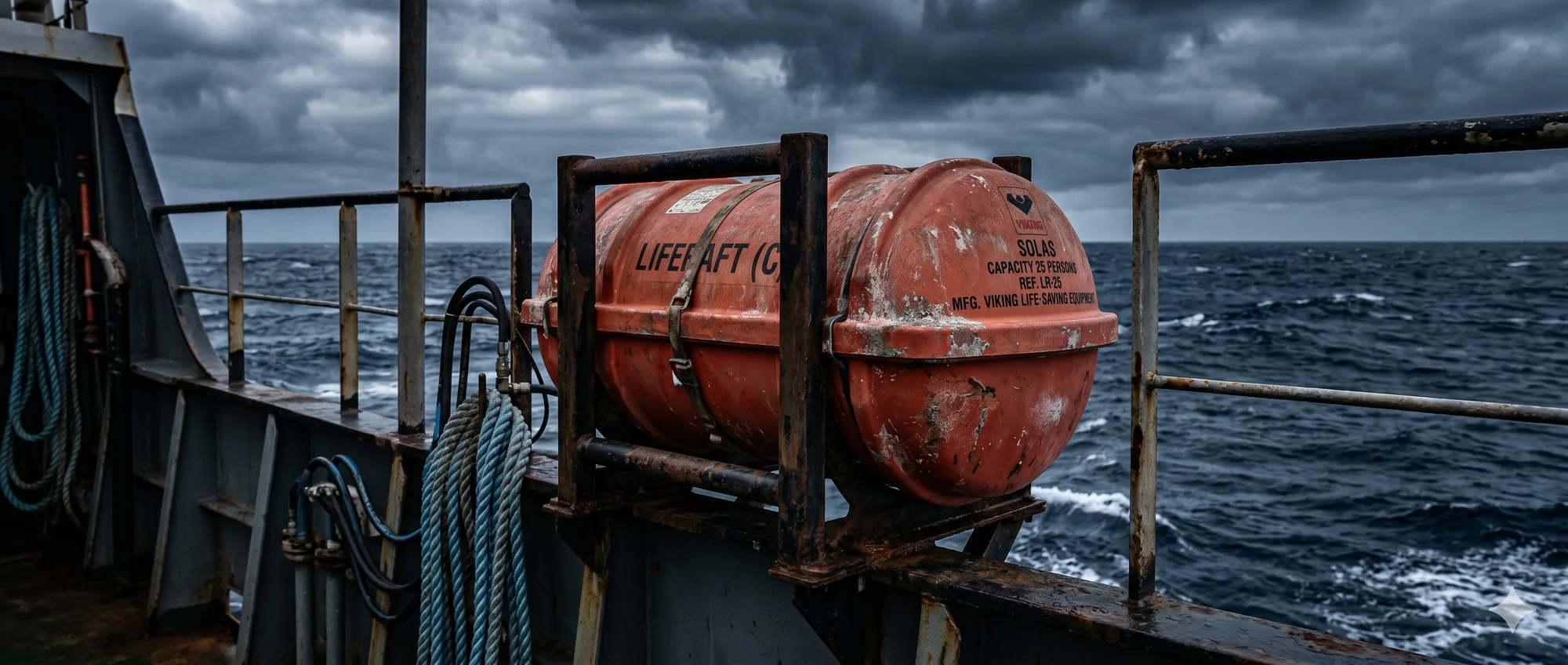
Inspect the vessel, attend the muster drill, verify life jacket locations before departure.
The Atlas recommends reading the full incident record for any operator before booking. Use the Log's incident filter to search by operator name.
Member Comments
Leave a comment
Keep reading, and open the whole Atlas.
A free account unlocks every dive site guide and map, the marine life library, member reports, and the full incident log. Free to join.
Join free to keep reading